News
The Truth About Which Kenyans Will Be Affected by Trump’s Latest H-1B Executive Order

BY BMJ MURIITHI
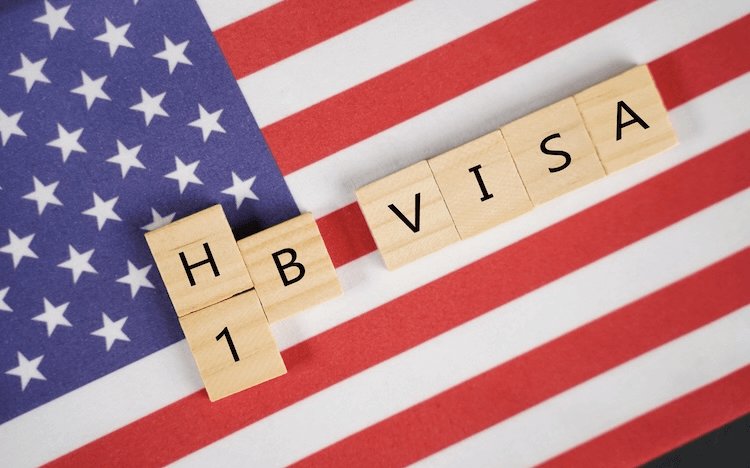
WASHINGTON DC -The Trump H-1B executive order announced on September 19, 2025, has sent shockwaves through immigrant communities and U.S. employers alike. For many Kenyans working in America’s healthcare, IT, finance, and engineering sectors, the immediate question is simple: Does this new $100,000 visa petition fee apply to me?
While headlines shortly after the order was signed painted a picture of blanket retroactive fees and looming job losses, official clarifications from the White House reveal a narrower scope. The reality is that not all Kenyans under the H-1B visa program will be affected.
What the Executive Order Actually Says
President Donald Trump’s latest immigration directive, formally titled “Restriction on Entry of Certain Nonimmigrant Workers,” imposes a $100,000 processing fee on new H-1B visa petitions. The rule takes effect on September 21, 2025, at 12:01 a.m. Eastern Daylight Time.
You can read the full text of the proclamation on the White House official website.
The H-1B visa program allows U.S. employers to hire foreign nationals in specialized fields such as technology, medicine, finance, architecture, and research. More details about the program are available from the U.S. Citizenship and Immigration Services (USCIS).
Clarifications from the White House
Initial reactions to the announcement suggested widespread disruption, with fears that all current H-1B holders—including those briefly outside the U.S.—would be required to pay the fee before reentry. However, senior administration officials quickly walked back this interpretation.
The White House confirmed via multiple outlets, including Reuters, that:
The fee is not retroactive. Existing H-1B holders will not be forced to pay $100,000 simply to maintain their current visa status.
Renewals and extensions are exempt. Workers who already hold approved H-1B visas and are seeking routine extensions will not be charged the new fee.
The rule primarily affects new petitions filed after September 21. This means that Kenyan professionals already working in the U.S. under valid H-1B status will not be subject to the fee, unless their employer files an entirely new petition after the rule takes effect.
This clarification dramatically narrows the impact of the order, offering reassurance to thousands of Kenyan workers who feared imminent job loss.
Which Kenyans Will Be Affected
New Applicants Outside the U.S.
Kenyans seeking fresh H-1B sponsorship after September 21 will face a significantly tougher path. U.S. employers considering foreign hires in specialized fields will now weigh the $100,000 fee before proceeding, likely reducing the number of new Kenyan professionals brought into the country.Employers Filing Brand-New Petitions
U.S. companies starting new petitions for Kenyan workers—even if those workers are already in the U.S. on a different visa—will be required to pay the fee. This could affect Kenyans transitioning from student visas (F-1) or other temporary statuses into H-1B roles.Dependents of H-1B Holders
While dependents on H-4 visas are not directly charged, their status depends on the primary H-1B petition. Any disruption in the employer’s willingness to pay the new fee could indirectly impact Kenyan families.
Who Is Not Affected
Current H-1B Holders in Valid Status
Kenyans already employed under an approved H-1B visa before September 21 will not face the $100,000 requirement, as long as they remain with the same employer.Renewals and Extensions
Existing H-1B workers applying for time extensions will not be subject to the fee, according to administration clarifications.Travelers Returning on Approved Petitions
Kenyans who temporarily leave the U.S. and re-enter under a previously approved petition will not be forced to pay the fee, countering earlier speculation.
Impact on U.S. Industries and Kenyan Professionals
The executive order is framed as a measure to prioritize American workers and reduce what the Trump administration calls “wage undercutting” by foreign labor. Yet critics warn it could backfire, particularly in industries already facing severe talent shortages.
Technology: Silicon Valley companies heavily reliant on H-1B talent may cut back on hiring, affecting Kenyan software developers and engineers.
Healthcare: Kenyan doctors, nurses, and medical researchers—already in demand—could see fewer opportunities as hospitals absorb the higher costs. The American Hospital Association has consistently argued that immigration restrictions worsen staffing shortages.
Finance and Research: Multinational firms that traditionally recruit global talent may redirect opportunities to other countries with friendlier immigration policies, such as Canada, which maintains a more open skilled worker program.
For Kenyan professionals, the key concern is whether U.S. employers will continue to see value in international hiring when faced with such steep fees.
Broader Immigration Context
This executive order fits into Trump’s broader policy agenda of restricting immigration and emphasizing “America First” labor policies. It also comes at a politically sensitive time, with debates over workforce needs, wage protection, and economic growth shaping the 2026 election cycle.
Immigration attorneys have told outlets such as Axios that the $100,000 fee could be challenged in court, especially by industries arguing it harms U.S. competitiveness. Until then, Kenyan workers and employers will need to carefully navigate the new landscape.
Conclusion: Separating Fact from Fear
The Trump H-1B executive order undeniably raises the stakes for new foreign workers, including Kenyans seeking opportunities in the United States. However, the fear that current H-1B holders will be retroactively charged or barred from returning to their jobs is unfounded.
In truth, the rule primarily affects new petitions filed after September 21, 2025. For Kenyans already living and working in the U.S. under approved visas, the immediate impact is minimal. Still, the long-term consequences for job prospects, employer willingness to sponsor, and America’s global competitiveness remain to be seen.








Veteran Kenyan diplomat and former Cabinet Minister Burudi Nabwera has died aged 99, marking the end of a long career in public service that spanned diplomacy, national politics and governance.
Nabwera was among the pioneers who helped establish Kenya’s diplomatic presence abroad following independence in 1963. His work in international relations placed him at the forefront of the country’s early engagement with the global community.
In December 1963, he became Kenya’s first Permanent Representative to the United Nations, a position he held until September 1970. During the same period, he also served as the country’s first ambassador to the United States, representing the newly independent nation as it established relationships with key international partners.
After his diplomatic assignments, Nabwera returned to domestic politics, where he continued to serve in senior government and party positions.
During the administration of former President Daniel arap Moi, he served as Minister of State in the Office of the President. He also held the position of Secretary-General of the Kenya African National Union (KANU), the party that governed Kenya for much of the period following independence.
Nabwera later made history in elective politics when he became the first Member of Parliament for Lugari Constituency in 1988. His election followed the creation of the constituency, giving him a place in the political history of the area.
His decades in public service reflected the changing landscape of Kenya’s political and diplomatic institutions, from the early years of independence to the era of multiparty politics.
Following news of his death, leaders began paying tribute to his contribution to the country, remembering his involvement in diplomacy, governance and national development.
Cooperatives Cabinet Secretary Wycliffe Oparanya expressed sorrow over the veteran diplomat’s passing, describing him as a leader who served Kenya with dedication and honour.
Oparanya noted that Nabwera’s contribution to the country’s international relations and public affairs would remain part of Kenya’s history.
Nabwera’s death marks the passing of a figure whose career connected Kenya’s formative years as an independent state with decades of political and institutional change.
As tributes continue, his legacy is likely to be remembered through his role in establishing the country’s early diplomatic missions, his service in government and his representation of Lugari constituents in Parliament.

By Staff Reporter
The death of 18-year-old Joy Wangui, a Form Four student whose ambitions included completing secondary school and joining university, has plunged her family into mourning and renewed concerns about how young people can be protected from potentially dangerous relationships.
Wangui was found dead inside her family home in Kiambaa, Moto Location, in Molo Sub-County, Nakuru County. Her death triggered a police investigation and a search for a suspect, who was later arrested in neighbouring Kuresoi North.
For her mother, Trizah Wairimu, the loss is particularly painful. Wangui was her firstborn child, a young woman whose education and future had represented years of hope for the family.
A student at Molo Secondary School, Wangui was preparing for the 2026 Kenya Certificate of Secondary Education (KCSE) examinations. Completing her secondary education was expected to bring her closer to her dream of pursuing university studies.
Her mother described her as hardworking and academically gifted, recalling a young woman whose potential had given the family reason to look forward to the years ahead.
Instead, the family is now seeking answers about the circumstances surrounding her death.
According to reports published by Kenyan media, Wangui’s brother had briefly left home to visit a nearby shop. When he returned, he discovered that his sister had died.
Detectives who visited the scene reportedly recovered an axe, a panga and two knives bearing suspected bloodstains. Investigators also examined other evidence as they sought to establish what happened before the teenager’s death.
On October 6, 2026, the Directorate of Criminal Investigations (DCI) announced the arrest of 23-year-old Walter Kipkoech in connection with Wangui’s murder.
Detectives reportedly traced him to a hideout in Lagwenda village, Kuresoi North, following a manhunt involving officers from Molo and the regional Crime Research and Intelligence Bureau.
According to investigators, the suspect was allegedly wearing clothing with suspected bloodstains when he was arrested. A white T-shirt bearing Wangui’s name was also reportedly found among his clothing.
Preliminary investigations indicated that the two had been in a romantic relationship. Detectives were investigating whether a dispute within that relationship played a role in the killing.
However, the motive must be established through the investigation and court process. An arrest does not, by itself, establish criminal guilt. Kipkoech is entitled to the presumption of innocence unless proven guilty in court.
A report published by The Standard on October 7 indicated that a court had authorised his detention for 21 days to allow investigators to continue their inquiries.
As investigators pursue the case, Wairimu is left to confront a loss that has changed her family’s life forever.
Media reports indicate that the family had previously expressed concern about Wangui’s relationship. Wairimu has spoken about wanting justice for her daughter and described the young student as someone who deserved the opportunity to fulfil her ambitions.
Her account raises difficult questions about how families and institutions respond when they become concerned about a young person’s relationship.
For parents, discovering that a child may be involved in an unhealthy relationship can be challenging. Teenagers and young adults may be reluctant to discuss personal matters, particularly when they fear criticism, punishment or restrictions on their independence.
But concerns about controlling behaviour, threats, intimidation or persistent harassment should not be dismissed as ordinary relationship disagreements.
The tragedy also underlines the importance of taking reports seriously and ensuring that young people have access to adults who can help them assess risks and seek protection when necessary.
Preventing relationship violence requires more than advising young people to choose their partners carefully. It demands a coordinated response from families, schools, communities and the authorities.
Parents must create safe spaces for honest conversations. Young people should be able to discuss their relationships without immediately fearing blame or punishment. When a child reports threats, stalking, controlling behaviour or intimidation, parents should listen carefully, document concerns where appropriate and seek professional or police assistance when necessary.
Schools also have an important role to play. Teachers, counsellors and school administrators should know how to respond when students disclose relationship problems or fear for their safety. Reports should be handled sensitively, with appropriate referrals and follow-up rather than dismissed as distractions from academic work.
Young people need practical education about respect, consent, personal boundaries, emotional regulation and conflict resolution. They should understand that jealousy, threats and coercive control are not proof of love, and that seeking help is not a sign of weakness.
Communities must also challenge attitudes that excuse violence or treat it as a private relationship matter. Relatives, neighbours, religious leaders and other trusted community members can help by taking warning signs seriously and directing those at risk towards appropriate support.
Authorities, meanwhile, must respond to reports of threats and violence promptly. Credible concerns should be assessed, protective measures considered and cases followed up. Accountability and accessible support services are essential to protecting those at risk.
Kenya’s State Department for Gender and Affirmative Action lists 1195 as the national toll-free Gender-Based Violence helpline, which provides round-the-clock counselling and referral services for survivors.
Joy Wangui’s death is a devastating loss for her family and a reminder of the importance of recognising warning signs and responding before a situation becomes life-threatening.
Her mother is now seeking justice while grieving a daughter whose educational journey was approaching a crucial milestone. The legal process must establish the facts, determine responsibility and ensure that the case is handled fairly.
For other families, the challenge is to turn concern into meaningful action: listen when young people speak, take threats seriously, strengthen school safeguarding systems and ensure that help is available when relationships become unsafe.
Wangui’s university ambitions may never be realised, but her story has prompted an urgent conversation about protecting young people and preventing relationship violence.
How can parents, schools, communities and law enforcement work together to recognise danger earlier and ensure that no young person has to lose their life before their concerns are taken seriously?

NAIROBI, October 9, 2026 — Kenya Airways is set to receive US$350 million (approximately Sh45.4 billion) in government shareholder financing after Cabinet approved the funding to address urgent operational costs and support the national carrier’s recovery.
The funding, announced following a Cabinet meeting at State House in Nairobi, is intended to help the airline meet pressing financial obligations, including aircraft maintenance and efforts to return grounded planes to service.
The approval marks a fresh intervention by the government, Kenya Airways’ largest shareholder, as the airline works to restore fleet capacity, strengthen its finances and pursue potential investment partnerships.

According to Reuters’ report on the Cabinet decision, the financing will be released in instalments under National Treasury oversight, with a repayment period of up to 10 years. The arrangement also allows for possible conversion into equity, subject to the required approvals.
Government targets aircraft availability and financial stability
A key priority for the new funding is to address aircraft maintenance requirements that have constrained the airline’s operational capacity.
Returning grounded aircraft to service could enable Kenya Airways to increase available capacity and improve operational flexibility. However, the Cabinet approval does not establish when individual aircraft will return to service or how quickly the funding will translate into additional flights.
The airline has previously identified global supply-chain disruptions and shortages of critical spare parts as factors affecting aircraft availability and operational reliability.
In its August 2026 financial results announcement, Kenya Airways reported that revenue increased by 9 per cent to Sh81 billion in the six months ended June 30, 2026, despite operating with 9 per cent less capacity.
The airline attributed the operating environment’s challenges partly to higher fuel costs and supply-chain constraints. It reported a loss after tax of Sh16.1 billion for the half-year, compared with Sh12.2 billion in the corresponding period a year earlier.
The latest financing is therefore intended to address immediate cash requirements while supporting the broader effort to improve fleet availability and financial resilience.
Sh122 billion in government loans targeted for restructuring
Beyond the fresh financing, Cabinet endorsed a proposal to convert approximately Sh122 billion in existing government loans, together with accrued interest, into an equity-qualifying tradable instrument.
The proposed restructuring is designed to strengthen Kenya Airways’ balance sheet and potentially improve its ability to attract new capital.
The measure is significant because the airline has been seeking strategic investors while considering options to restructure its debt and support its longer-term recovery.
However, the proposed conversion has not been completed. It remains subject to the necessary corporate, shareholder and regulatory approvals.
The government has not, through the reported decision, established that the new financing will automatically become equity or that prospective investors have committed funds under the arrangement.
A carrier under pressure to restore capacity
Kenya Airways remains an important link between Kenya and regional and international markets, supporting passenger travel, cargo transport, tourism and trade.
Its financial performance has nevertheless been affected by operating costs, aircraft availability challenges and the need to maintain its fleet.
The airline reported a net loss of Sh17.2 billion for the year ended December 2025, according to its 2025 annual report.
The government has framed the new funding and proposed debt restructuring as components of the carrier’s longer-term turnaround plan. The stated objective is to address immediate obligations while creating room for future capital raising.
The extent to which the intervention improves the airline’s financial position will depend on how the funds are deployed, the pace of aircraft restoration, operating-cost pressures and progress on the proposed balance-sheet restructuring.
Implementation remains subject to approvals
The Cabinet decision authorises a financing arrangement, but it does not by itself complete every step required to implement the measures.
The National Treasury is expected to oversee the release of the funds in tranches, while the proposed conversion of existing loans must proceed through the required approval processes.
Further details on the disbursement schedule, aircraft maintenance timelines and implementation of the debt restructuring will be important in assessing the impact of the intervention.
For now, the Sh45.4 billion financing provides Kenya Airways with an approved source of additional shareholder funding as it seeks to restore aircraft capacity, meet urgent obligations and advance its turnaround strategy.

Veteran Kenyan Diplomat and Politician Burudi Nabwera Dies at 99

Molo Student’s Murder: Grieving Mother Seeks Justice as Questions Over Warning Signs Emerge

Kenya Airways Gets Sh45.4 Billion Government Financing Boost as Turnaround Plan Advances

VIDEO: iPhone 17 Air Leak Reveals Ultra-Thin Design: A Bold Leap Beyond the iPhone 16 Pro

How U.S. Remittance 5% Tax Bill Could Impact Kenyan Diaspora: What You Need to Know

Motorola Launches $1,300 Razr Ultra Foldable Smartphone with AI Features, Swarovski-Enhanced Earbuds

 Tech1 year ago
VIDEO: iPhone 17 Air Leak Reveals Ultra-Thin Design: A Bold Leap Beyond the iPhone 16 Pro
- News1 year ago
How U.S. Remittance 5% Tax Bill Could Impact Kenyan Diaspora: What You Need to Know
- Tech1 year ago
Motorola Launches $1,300 Razr Ultra Foldable Smartphone with AI Features, Swarovski-Enhanced Earbuds
- Insurance Basics1 year ago
Popular Apps May Be Secretly Tracking Your Driving – And Raising Your Insurance Rates
- Tech1 year ago
Motorola Razr Ultra (2025) Launches With Free 1TB Storage Upgrade
- News1 year ago
What would you do if your Gold Digger girlfriend behaved like this?
- News1 year ago
Box Office: ‘Sinners’ Holds No. 1 Spot With $13M Friday; ‘The Accountant 2’ Debuts With $9.4M
- Insurance Basics1 year ago
Florida House Passes ‘Pam Rock Act’ Requiring Dog Registry and $100K Liability Insurance