Diaspora
Why some Kenyans living in America are worried as Up to 200,000 asylum seekers face visa revocation

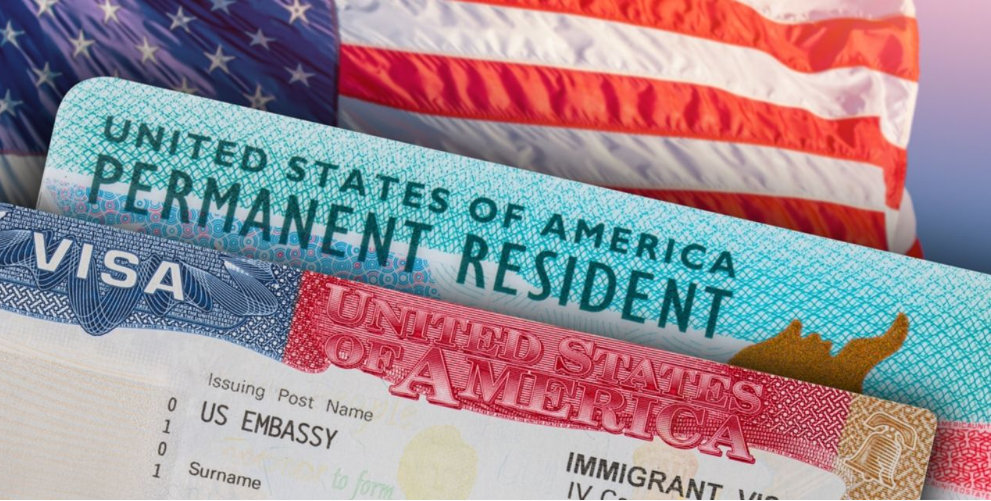
A new immigration policy being prepared by the Trump administration is sending a wave of uncertainty through immigrant communities in the United States, including some Kenyans who entered the country legally on visitor or business visas before seeking asylum.
The United States is preparing to revoke the B-1 and B-2 visas of foreign nationals who entered the country on business or tourist visas and later applied for asylum, according to U.S. government documents and officials cited by major American news organizations.
The potential scale of the action is what has attracted widespread attention.
The Associated Press reported that up to 200,000 visas could eventually be revoked, potentially making it the largest single mass visa revocation in U.S. history. The exact number, however, has not been confirmed by the State Department, which says the revocations will be carried out on a rolling basis and that the number remains dynamic.
For Kenyans living in the United States, the announcement has raised an uncomfortable question: Could people who came to America legally as visitors and subsequently sought asylum now find themselves facing a new immigration crisis?
What the Trump administration is proposing
The policy targets holders of B-1 and B-2 visas.
A B-1 visa is generally used for temporary business travel, while a B-2 visa covers tourism, family visits, medical treatment and similar temporary purposes.
Under the plan, the State Department is expected to identify holders of B-1 and B-2 visas issued between 2016 and 2026 who have subsequently sought asylum in the United States.
The State Department is coordinating with the Department of Homeland Security to identify those individuals and revoke their nonimmigrant visas.
State Department spokesman Tommy Pigott said the administration is targeting foreigners who entered the country claiming to be short-term visitors and subsequently filed asylum applications to remain permanently.
Deputy Secretary of State Christopher Landau has also criticized what the administration considers fraudulent or “bogus” asylum claims, arguing that asylum should not be used as a way of circumventing U.S. immigration laws.
That argument is at the center of the administration’s justification for the policy.
But immigration law is more complicated than simply saying that someone entered America on a tourist visa and later applied for asylum.
Applying for asylum after entering America is not automatically illegal
This is an important distinction for immigrants to understand.
Under U.S. law, a foreign national who is physically present in the United States can generally apply for asylum if they fear persecution in their home country because of factors such as race, religion, nationality, membership in a particular social group or political opinion.
USCIS says a person may apply for asylum regardless of their current immigration status, subject to the applicable legal requirements, including generally filing within one year of arrival.
That means the mere fact that someone entered the United States on a B-1 or B-2 visa and later sought asylum does not, by itself, establish that the person committed fraud.
The circumstances surrounding each person’s visa application and asylum claim matter.
Someone could, for example, enter the United States as a visitor and subsequently decide to seek protection after circumstances change or after becoming convinced that returning home would expose them to persecution.
The administration, however, is taking the position that people who represented themselves as temporary visitors and then used the asylum system to remain permanently should face consequences.
That difference in interpretation could become important if the policy is challenged in court.
Why some Kenyans are nervous
The policy does not specifically target Kenyans.
It is not a Kenya-specific visa ban.
Instead, it applies to foreign nationals who fall within the administration’s stated criteria.
Nevertheless, Kenyans can potentially be affected because the United States has a significant Kenyan immigrant population, and some Kenyans have entered America through temporary visas before pursuing other immigration options.
The uncertainty is particularly relevant to people who have pending asylum applications, families whose immigration situations are complicated, or individuals whose original B-1 or B-2 visas remain part of their immigration history.
For such people, the headline can sound frightening:
“The U.S. is revoking visas of asylum seekers.”
But that headline does not necessarily mean that everyone affected will suddenly be arrested or deported.
According to officials cited by AP, revocation of the visitor visa would not necessarily result in immediate deportation.
People with pending asylum cases could instead be placed into a different immigration category while their cases continue.
That distinction is extremely important.
A visa and legal status are not the same thing
One reason the announcement has created confusion is that many people use the words “visa” and “immigration status” interchangeably.
They are not the same.
A visa generally allows a foreign national to seek entry into the United States for a particular purpose. Once inside the country, a person’s immigration status and any subsequent immigration proceedings become separate legal questions.
Consequently, revoking a B-1 or B-2 visa does not automatically mean that an individual has been ordered removed from the United States.
It can nevertheless have serious consequences.
A person could lose the ability to use that visa for future travel, and the government could take additional immigration action depending on the person’s circumstances.
For anyone with an active asylum or immigration case, the details of that individual case therefore matter enormously.
Why the number 200,000 is attracting attention
The figure of 200,000 should be treated carefully.
It is a potential number, not a confirmed list of 200,000 people who have already been ordered out of America.
The State Department has not confirmed that exactly 200,000 visas will be revoked.
Instead, officials say the process will be conducted on a rolling basis and that the number remains subject to change.
If the maximum estimate materializes, however, it would represent an extraordinary expansion of visa enforcement.
The United States has already revoked more than 175,000 visas since President Donald Trump returned to office, according to figures released by the State Department.
Those revocations have involved a range of circumstances, including people accused or convicted of crimes and individuals whom the administration says violated U.S. immigration or foreign-policy rules.
The proposed asylum-related action would therefore form part of a much broader immigration enforcement campaign.
The Trump administration is tightening immigration rules on multiple fronts
The visa proposal did not emerge in isolation.
The Trump administration has introduced a series of measures intended to make immigration to the United States more restrictive.
These include greater scrutiny of visa applicants, demands for additional information about applicants’ social-media activity, higher costs for some immigration processes and restrictions affecting nationals of certain countries.
The administration has also pursued policies based on concerns that some immigrants could become dependent on public benefits.
Just days before the asylum-related visa announcement, a federal judge in New York struck down a Trump administration policy that had suspended immigrant-visa processing for nationals of 75 countries on public-charge grounds. The judge found that the policy exceeded the secretary of state’s authority.
The decision demonstrates something important about the current immigration environment:
The administration is pushing aggressively, but some of its immigration policies are being challenged in court.
The proposed mass visa revocations could face similar legal scrutiny.
What happens to people whose visas are revoked?
This is perhaps the question causing the greatest concern.
The answer will depend heavily on the individual’s immigration circumstances.
A person with a pending asylum application is not necessarily in the same position as someone whose asylum claim has already been denied.
Likewise, someone with another lawful immigration status may be treated differently from someone whose only immigration basis is a visitor visa.
The administration has not indicated that every person whose B-1 or B-2 visa is revoked will immediately be deported.
AP reported that officials said most people with pending asylum cases would be recategorized but would lose their status as business or tourism travelers.
That means affected immigrants should not automatically interpret a visa-revocation notice as a deportation order.
At the same time, they should not ignore it.
An immigration document from the U.S. government can have significant consequences, and anyone who receives one should consider obtaining professional legal advice.
Why the policy could become a legal battle
The scale of the proposal alone is likely to attract legal challenges.
The administration is essentially arguing that the government can revoke visitor visas from people who used those visas to enter the country before seeking asylum.
Immigration advocates and attorneys could challenge the government’s interpretation of the law, particularly in cases where there is no evidence that the individual lied when applying for the original visa.
That distinction could prove critical.
There is a difference between planning to seek asylum when applying for a tourist visa and later deciding that asylum is necessary after entering the United States.
Whether the government can treat the two situations in the same way could become a major point of legal disagreement.
And recent court decisions show that the administration’s immigration policies are not immune from judicial review.
What this means for Kenyans considering America
For Kenyans outside the United States who are planning to visit, study, work or immigrate, the developments offer another reminder that U.S. immigration rules are becoming increasingly stringent.
A visitor visa should be used for the purpose for which it was granted.
Applicants should provide truthful information and should never assume that a visa guarantees entry into the United States or permanent residence.
At the same time, people should not be discouraged from seeking legitimate legal protection if their circumstances genuinely qualify them for asylum.
The safest approach is to understand the rules before making an immigration decision.
The fear is about more than visas
For many immigrants, the anxiety surrounding the announcement is not simply about losing a piece of paper.
It is about uncertainty.
People who have built lives in the United States may have homes, jobs, children, businesses and communities there.
An immigration policy that potentially affects hundreds of thousands of people can therefore create fear even among people who ultimately may not be affected.
For Kenyans, the message is particularly relevant because immigration to the United States has become an important part of the lives of many families separated between Kenya and America.
A relative in Nairobi may be following the story because a brother, sister, parent or child lives in the United States.
An asylum applicant may be wondering whether their case is still safe.
A visitor may be questioning whether immigration rules could change while they are in America.
And families planning future travel may simply be asking what the increasingly restrictive immigration environment means for them.
What affected immigrants should do
Anyone who believes they could fall within the policy should avoid making decisions based solely on social-media claims or sensational headlines.
The first step is to determine exactly what immigration status they currently hold and whether they have an active asylum or other immigration case.
They should also keep copies of their immigration documents, notices and previous applications.
Most importantly, people with pending immigration cases should consider consulting a qualified U.S. immigration attorney who can review their individual circumstances.
No two cases are necessarily identical.
The bottom line
The proposed action involving up to 200,000 B-1 and B-2 visa holders is significant, but it is important not to confuse visa revocation with automatic deportation.
The administration says it is targeting people who entered the United States as temporary visitors and subsequently sought asylum, arguing that some have abused the immigration system.
Critics are likely to question whether the government can broadly treat such cases as violations, particularly where individuals had legitimate reasons for seeking asylum after entering the country.
For now, the exact number of affected people remains uncertain, and the policy could face legal challenges.
But for Kenyans and other immigrants living in America, the development is another sign of how dramatically the U.S. immigration landscape is changing.
The immediate question for many will not simply be whether their visa remains valid.
It will be whether a decision they made years ago — entering America legally as a visitor — could now affect their future in the country.







Diaspora
PHOTOS: Kenyan Diaspora in Chicago Celebrates National Pride as Amos Kipruto Wins 2026 Marathon

Kenyans living in the United States turned the 2026 Bank of America Chicago Marathon into an opportunity to celebrate their country’s sporting heritage, rallying behind Kenyan athletes competing in one of the world’s biggest road races.
The marathon, held on Sunday, October 11, brought together more than 54,000 participants across 29 Chicago neighbourhoods. For Kenyan supporters, the event offered an opportunity to celebrate the country’s reputation in long-distance running while connecting with fellow Kenyans living thousands of kilometres from home.
According to a report published by Mwakilishi, members of the Kenyan diaspora gathered to support their compatriots, with national colours, flags and enthusiastic cheering reflecting their pride in the athletes.
The celebrations came as Kenyan runners delivered notable performances in the men’s and women’s elite races, giving supporters additional reasons to celebrate their country’s presence on the international athletics stage.
Amos Kipruto leads Kenya’s success in Chicago
Kenya’s Amos Kipruto emerged as the men’s marathon champion, crossing the finish line in 2:01:09 to secure victory in the 48th edition of the Chicago Marathon.
According to World Athletics, Kipruto produced a strong second-half performance to pull away from Uganda’s Jacob Kiplimo before completing the race in one of the fastest marathon times recorded in history.
Kipruto’s victory continued his progression at the Chicago event. He finished third in 2024 and second in 2025 before claiming the title in 2026.
His latest performance also improved his personal best and moved him into a tie for fifth on the men’s all-time marathon list, according to World Athletics.
The victory provided a major highlight for Kenyan supporters who had travelled to watch the race or followed the competition from different parts of the United States.
Sharon Lokedi and Brigid Kosgei finish on the women’s podium
Kenyan athletes also delivered strong performances in the women’s elite race, although Ethiopia’s Hawi Feysa successfully defended her Chicago Marathon title.
Feysa won in 2:13:33 after a competitive battle with Kenya’s Sharon Lokedi, who finished second in 2:14:07.
Former women’s marathon world-record holder Brigid Kosgei, also from Kenya, finished third in 2:14:55.
World Athletics reported that the race produced a historic result, with three women finishing in less than two hours and 15 minutes for the first time in marathon history.
Lokedi’s performance was particularly notable given her recent success at major international marathons, while Kosgei once again demonstrated her ability to compete among the world’s leading distance runners.
Full event information and results are available on the official Chicago Marathon website.
Chicago marathon weekend brings Kenyans together
Beyond the competition itself, the Chicago Marathon has become an important gathering point for members of the Kenyan community in the United States.
One established event is the Kenya Marathon Dinner, which has welcomed Kenyan elite athletes and supporters in Chicago since 1998. The annual gathering celebrates Kenyan food, culture and athletic achievement while providing opportunities for athletes and members of the wider community to interact.
According to the organisers’ official website, the event brings together marathon runners, athletics enthusiasts, community leaders and other guests to celebrate Kenya’s sporting heritage.
Such gatherings provide an opportunity for Kenyans abroad to maintain cultural connections, strengthen community relationships and introduce younger generations to the country’s traditions.
For supporters watching the marathon, cheering for Kenyan athletes can also serve as a reminder of home and the shared experiences that connect people living in different countries.
Kenya’s global reputation in distance running
Kenya has established a strong international reputation in distance running through generations of athletes who have excelled at Olympic Games, world championships and major road races.
Athletes such as Eliud Kipchoge, Brigid Kosgei and many others have helped bring international attention to Kenya’s running culture and training communities.
The country’s success has also generated interest in its athletics development programmes, high-altitude training locations and the communities that nurture elite runners.
However, maintaining that reputation requires continued investment in grassroots athletics, coaching, training facilities, athlete welfare and transparent sports administration.
International competitions such as the Chicago Marathon provide a platform for established athletes to demonstrate their abilities while inspiring young runners who hope to compete at the highest level.
Diaspora support creates opportunities beyond sport
The enthusiasm surrounding major international races also highlights the potential contribution of diaspora communities to Kenya’s wider development.
Kenyans living abroad can support sporting initiatives through mentorship, charitable programmes, partnerships with athletics organisations and investment in opportunities for young people.
The connection between international athletes and Kenyan communities overseas may also create opportunities to promote tourism, cultural exchange and greater awareness of the country.
For younger members of the diaspora, watching Kenyan athletes compete internationally can provide a way to connect with their heritage and learn more about the country’s sporting achievements.
These opportunities extend beyond marathon weekend and can help sustain relationships between communities abroad and organisations working in Kenya.
A celebration of Kenya beyond the finish line
The 2026 Chicago Marathon offered Kenyan supporters an opportunity to celebrate both individual achievement and a shared national identity.
Kipruto’s victory in the men’s race, alongside Lokedi and Kosgei’s podium finishes in the women’s competition, provided memorable sporting moments for Kenyan athletics fans.
For members of the diaspora, the event also served as a reminder that national pride can remain strong across geographical boundaries.
As Kenya’s athletes continue to compete on the international stage, the support of communities abroad remains an important part of the wider story surrounding the country’s sporting heritage.
In Chicago, the marathon was therefore more than a contest over 26.2 miles. It was also an opportunity for Kenyans to celebrate their athletes, share their culture and maintain a connection with home.
Diaspora
Machakos Father Shares Heartbreak After Wife Reportedly Moves to the US, Leaving Him With Two Children

A father from Machakos County, Wellington Ngothe Ndembwa, has shared his emotional experience following the reported departure of his wife, Diana Syokau, to the United States, saying he has been left caring for their two children.
Speaking during an interview with Jamba TV, Wellington described the challenges he has faced since the reported separation, including the responsibility of raising the children, aged 12 and eight, while struggling to earn a living.
According to his account in the interview, Diana left Kenya with assistance from her sister. Wellington said communication between them had been difficult since her departure, with feelings of anger and disappointment making it hard for him to speak to her directly.
The circumstances surrounding the couple’s separation have not been independently established, and Diana’s account was not included in the information available for this report.
Father struggles to provide for his children
Wellington reportedly earns a living by collecting recyclable bottles in Nairobi, an undertaking he uses to support himself and his two children.
The responsibility of providing for the family has become more challenging following an accident he says occurred approximately six months ago.
According to his account, the accident left him with a persistent leg injury and ongoing pain, affecting his efforts to rebuild his life while meeting his children’s needs.
Despite these difficulties, Wellington continues to focus on caring for the children as he navigates the financial and personal challenges facing the family.
Says he still has feelings for his wife
In the interview, Wellington also spoke about his feelings for Diana, describing her as his first love.
He said he has not remarried and has little interest in pursuing another relationship, explaining that his feelings for his wife remain strong despite their separation.
In one of the most emotional parts of his account, Wellington said he would be willing to welcome Diana back if she returned to Kenya.
His remarks reflect the emotional complexity of a relationship that, according to his account, remains unresolved in his mind.
However, whether the couple will reconcile remains uncertain. No independent confirmation was available regarding Diana’s intentions or her perspective on the separation.
A family facing an uncertain future
Wellington’s account highlights the difficulties some families face when a relationship breaks down and one parent assumes much of the responsibility for raising children.
For families in such circumstances, financial pressure, health challenges and strained communication can make an already difficult situation even harder.
The needs and wellbeing of the two children remain an important consideration as the family navigates its circumstances.
While Wellington has expressed hope that he and Diana might reunite, the future of their relationship remains unclear.
His story has also prompted a broader conversation about love, separation, parental responsibilities and the difficult decisions people face when relationships change.
As the account shared with Jamba TV illustrates, moving forward after a separation can be complicated, particularly when children and unresolved feelings are involved.
Source attribution: This article is based on an account attributed to Wellington Ngothe Ndembwa during an interview with Jamba TV. Details about the separation and family circumstances have not been independently verified. Diana Syokau’s perspective was not available in the material reviewed for this report.
Diaspora
Family of Kenyan man who died in North Carolina, U.S.A. seeks Support to repatriate his body

The family of Henry Mukolwe Macharia, a 28-year-old Kenyan man who died in North Carolina, United States, is seeking support to repatriate his body to Kenya for burial.
Macharia died in Spring Lake, North Carolina, on September 11, 2026, with authorities reporting that preliminary findings indicated natural causes.
His death came to wider public attention on October 3, when the Spring Lake Police Department appealed for help locating his family after efforts to reach his next of kin proved unsuccessful. The appeal was widely shared by Kenyans online and across diaspora networks.
On October 6, Kenyan media outlets reported that authorities had connected with Macharia’s mother following the community’s efforts to circulate the appeal.
Macharia was the son of James Mboci Macharia and Lillian Mukolwe, and brother to Nelly Wanjiru, Paul Macharia and Diana Macharia, according to the family announcement. His family has ties to Nakuru, Kenya.
The family says it plans to transport his remains home for burial, with funeral arrangements to be announced later.
The circumstances surrounding Macharia’s death have not been publicly detailed beyond the preliminary report of natural causes.
His case has drawn attention to the challenges families can face when a loved one dies abroad, including the logistical and financial demands of international repatriation.
The family has appealed for prayers as it navigates the arrangements, asking the community to trust in God for comfort, strength and peace during the difficult period.
As relatives prepare to lay Macharia to rest, their immediate priority is to bring him home to Kenya.
Below is a verbatim message from the family
……………………………………………………………………………………
It is with profound sorrow and humble acceptance of Gods will we announce the promotion to glory of Henery Mukolwe Macharia.
He was the son of James Mboci Macharia and Lillian Mukolwe and brother to Nelly Wanjiru, Paul Macharia and Diana Macharia of Nakuru Kenya.
He passed away from natural causes in spring lake, North Carolina, USA, on September 11th, 2026.
We kindly ask the community to keep his family in prayer, trusting God to grant them comfort, strength and peace during this difficult time.
Funeral arrangements will be communicated later. The family plans to repatriate Henry to Kenya for burial.
For financial support:
Zelle / Cash app
Eliud Ngei
Phone: 4049539527

Federal Judge Revokes Citizenship of North Carolina Man Convicted of Child Sex Crimes

Woman Interrupts Church Wedding With Children, Claims Groom Is Her Husband

Fred Machoka Breaks Silence Over Golden Jubilee Rhumba Concert Drama Involving His Niece, Gloria Owoba

VIDEO: iPhone 17 Air Leak Reveals Ultra-Thin Design: A Bold Leap Beyond the iPhone 16 Pro

How U.S. Remittance 5% Tax Bill Could Impact Kenyan Diaspora: What You Need to Know

Motorola Launches $1,300 Razr Ultra Foldable Smartphone with AI Features, Swarovski-Enhanced Earbuds

 Tech1 year ago
VIDEO: iPhone 17 Air Leak Reveals Ultra-Thin Design: A Bold Leap Beyond the iPhone 16 Pro
- News1 year ago
How U.S. Remittance 5% Tax Bill Could Impact Kenyan Diaspora: What You Need to Know
- Tech1 year ago
Motorola Launches $1,300 Razr Ultra Foldable Smartphone with AI Features, Swarovski-Enhanced Earbuds
- Insurance Basics1 year ago
Popular Apps May Be Secretly Tracking Your Driving – And Raising Your Insurance Rates
- Tech1 year ago
Motorola Razr Ultra (2025) Launches With Free 1TB Storage Upgrade
- News1 year ago
What would you do if your Gold Digger girlfriend behaved like this?
- News1 year ago
Box Office: ‘Sinners’ Holds No. 1 Spot With $13M Friday; ‘The Accountant 2’ Debuts With $9.4M
- Insurance Basics1 year ago
Florida House Passes ‘Pam Rock Act’ Requiring Dog Registry and $100K Liability Insurance