Diaspora
US Orders Millions of Immigrants to Register: Who Must Comply and What Happens Next


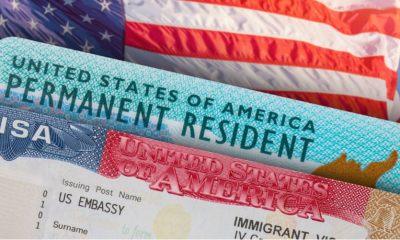
Millions of foreign nationals living in the United States could soon face a renewed legal obligation to register with federal immigration authorities after the Department of Homeland Security (DHS) finalized regulations implementing a decades-old requirement that had rarely been enforced.
The new regulation establishes a formal nationwide registration process for certain non-citizens who have never previously completed immigration registration. Eligible individuals may be required to submit personal information, undergo biometric collection—including fingerprinting—and carry proof of registration while living in the United States.
Although the registration requirement has existed for decades under Section 262 of the Immigration and Nationality Act (INA), immigration experts say the federal government has historically devoted little attention to enforcing it. That changed after the Trump administration directed DHS in early 2025 to prioritize compliance as part of a broader immigration enforcement strategy.
Importantly, immigration attorneys note that completing registration does not provide lawful immigration status, work authorization or protection from deportation. Instead, it serves as a federal identification and tracking requirement for individuals who have not previously been documented through existing immigration processes.
Who Must Register?
Under the finalized rule, registration generally applies to foreign nationals aged 14 and older who remain in the United States for more than 30 days and who have never previously been registered through the immigration system.
Parents or legal guardians are responsible for registering children younger than 14. Once those children reach age 14, they must generally register again and complete fingerprinting requirements.
DHS estimates that between 2.2 million and 3.2 million people could fall into this category, including individuals who entered the country without inspection and certain others whose previous immigration filings did not involve biometric processing.
RALATED LINKS:
- DHS Alien Registration guidance (USCIS)
- Federal Register: Alien Registration Form and Evidence of Registration
- Federal Register homepage
Who Is Already Considered Registered?
Many non-citizens will not need to complete another registration because they have already been processed through existing immigration procedures.
Generally, these include:
- Lawful permanent residents (green card holders)
- Individuals admitted on visas who completed inspection at a U.S. port of entry
- Many people who previously submitted biometric information during immigration applications
- Others who already possess qualifying federal immigration registration documents
Immigration attorneys advise individuals to carefully review DHS guidance before assuming they are exempt.
What Information Must Be Submitted?
The finalized regulations require eligible individuals to provide identifying information and may require:
- Full legal name
- Date and place of birth
- Current address
- Immigration history
- Biometric information such as fingerprints
- Other identifying information as required by DHS
The rule also allows DHS to expand biometric collection procedures in the future if necessary.
Registration Does Not Create Legal Status
Perhaps the biggest misconception surrounding the new policy is that registration offers some form of legal protection.
It does not.
DHS has made clear that registration is an administrative requirement—not an immigration benefit. Individuals who register remain subject to all applicable immigration laws, including removal proceedings if they lack lawful status.
Immigration attorneys caution that while failure to register may carry legal consequences, compliance alone does not prevent federal immigration enforcement.
Penalties for Failing to Register
Federal law authorizes penalties for individuals required to register who knowingly fail to do so.
Potential consequences include:
- Criminal fines
- Misdemeanor prosecution
- Possible short-term imprisonment
- Additional immigration consequences in certain cases
Although these penalties have long existed under federal law, they have historically been enforced only sparingly.
Part of a Broader Immigration Enforcement Strategy
The registration rule arrives as the administration continues expanding immigration enforcement through executive actions and court victories.
On June 25, 2026, the U.S. Supreme Court ruled that the administration could proceed with ending Temporary Protected Status (TPS) for Haitians and Syrians while also allowing a more restrictive asylum policy affecting migrants arriving at the southern border. Those decisions strengthened executive authority over key immigration programs and limited judicial intervention in several areas of immigration policy. Reuters and the Associated Press reported that the rulings could ultimately affect more than one million people.
While legally separate from the registration rule, the decisions reflect the administration’s broader effort to increase immigration enforcement using existing statutory authority.
Legal Challenges Continue
The registration system itself continues to face legal challenges in federal court.
Opponents argue that implementation could discourage immigrants from interacting with government agencies and may raise constitutional concerns. Supporters counter that Congress enacted the registration requirement decades ago and that DHS is simply enforcing existing law.
Unless a federal court blocks implementation, DHS is expected to move forward with enforcement.
What Immigrants Should Do
Immigration lawyers recommend that foreign nationals determine whether they have already satisfied federal registration requirements before taking action.
Individuals who are uncertain about their status should review official DHS and USCIS guidance or consult a qualified immigration attorney before submitting new registration information.
Because registration requirements vary depending on a person’s immigration history, assumptions about eligibility could lead to unnecessary complications.
What Happens Next?
DHS is expected to continue rolling out enforcement procedures while defending the regulation in court.
Future litigation could alter how the rule is implemented or delay certain enforcement actions. However, unless courts intervene, federal officials are expected to begin actively enforcing a registration requirement that has remained largely dormant for decades.
For millions of immigrants living in the United States, the final rule signals a significant shift from a little-enforced statutory obligation to an active component of the federal government’s broader immigration enforcement agenda.







Diaspora
U.S. Delays 2027 Green Card Lottery Registration as New Rules Add Costs and Passport Requirement
U.S. Delays 2027 Green Card Lottery Registration as New Rules Add Costs and Passport Requirement
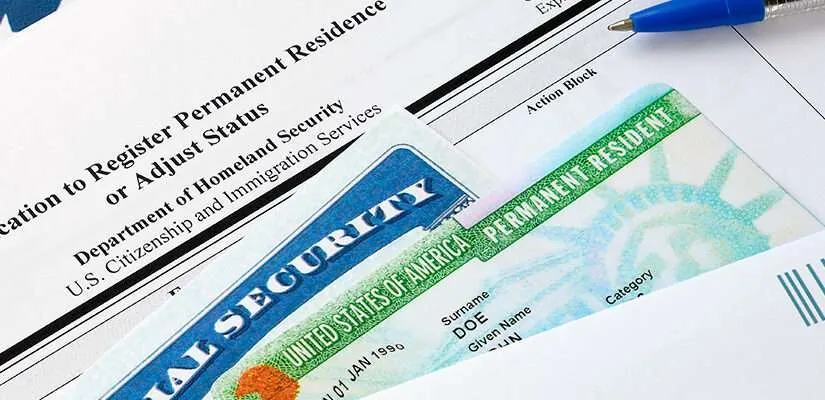
WASHINGTON D.C. — Prospective immigrants from Kenya and other eligible African countries are facing an uncertain wait for the next U.S. Diversity Visa lottery after the Department of State delayed the opening of the 2027 registration period and introduced new requirements for applicants.
The State Department has not yet announced the opening or closing dates for DV-2027 registration. It said in November 2025 that it was making changes to the entry process and would announce the registration date “as soon as practicable.” The department also said the delay would not change the visa application period for people selected in the program, which is scheduled to run from October 1, 2026, through September 30, 2027.
State Department: Changes to the DV-2027 Entry Period
That means reports that the DV-2027 registration window has already been shortened should be treated with caution. No official registration duration has been published by the State Department as of September 29, 2026.
The delay comes as the department implements two significant changes: a $1 registration fee and a new requirement that most applicants provide information from a valid, unexpired passport and upload a scan of the passport’s biographical and signature page.
New $1 fee for lottery registration
A State Department final rule published in September 2025 established a $1 fee for registering for the Diversity Visa lottery. The department said the charge is intended to shift some of the costs of operating the lottery—including maintaining the electronic entry system, storing data, conducting the randomized selection process and performing security reviews—to people entering the lottery.
Federal Register: Diversity Visa Program Fee
The fee is separate from the visa application fee paid later by people who are selected and proceed with the immigration process.
The department’s subsequent Diversity Visa rule makes clear that the $1 fee will be collected when an entrant submits the lottery registration. No waiver is provided for the registration fee.
Federal Register: DV-2027 Passport Requirement and Entry Changes
Applicants should therefore be cautious about websites or agents claiming to offer an official DV-2027 registration before the State Department announces the registration period. The department’s official Diversity Visa entry instructions state that entries must be submitted electronically during the designated period and that there is only one permitted entry per person.
Passport requirement creates a new hurdle
The more consequential change for many prospective applicants is the passport requirement.
Under a final rule implementing changes for DV-2027, applicants generally must provide information from a valid, unexpired passport and upload a scan of its biographical and signature page when registering. The State Department said the requirement is intended to combat fraudulent and duplicate entries and allow earlier identity verification.
Federal Register: DV-2027 Passport Requirement and Entry Changes
The department acknowledged that obtaining a passport can present financial and logistical difficulties, particularly in countries where passport processing is slow or services are difficult to access.
Its regulatory analysis estimated that obtaining and supplying the passport information would add time and costs for applicants. The department estimated the average passport cost across eligible countries at $74.43, while also noting that actual costs and additional expenses vary by country.
The rule contains limited exemptions, including certain stateless applicants, some nationals of Communist-controlled countries who cannot obtain passports from their governments, and people covered by specified government-approved waivers. Applicants seeking an exemption must provide supporting evidence.
The State Department has said the passport rule will apply globally rather than specifically targeting African applicants. It nevertheless acknowledged that people without passports could be deterred from entering the program.
Kenya remains an eligible country
Kenyan-born applicants have been among the beneficiaries of the Diversity Visa program in recent years.
Kenya was listed among the African countries eligible for DV-2026, while Nigeria was among the countries excluded from that year’s program because of the statutory high-admission formula.
State Department: DV-2026 Instructions
The State Department selected 3,949 Kenyan entrants for DV-2026. The figure includes selected entrants and their eligible derivatives and does not mean that all of those people ultimately received visas.
State Department: DV-2026 Selected Entrants
Other African countries also recorded substantial numbers of DV-2026 selectees, including Ethiopia, Egypt, Cameroon, Morocco, Sudan, the Democratic Republic of Congo and Ghana.
Eligibility for DV-2027, however, must be confirmed against the official instructions when they are issued. A country’s eligibility can change from one program year to another under the statutory formula.
What applicants should expect
For now, the most important fact for prospective DV-2027 applicants is that there is no confirmed registration deadline to work toward.
The State Department has said it will publish the registration dates and the date on which DV-2027 selection results will become available through the Electronic Diversity Visa system.
State Department: Changes to the DV-2027 Entry Period
Once registration opens, applicants will have to comply with the new requirements, including the $1 payment and, in most cases, submission of valid passport information and a passport scan.
The official State Department DV entry guidance remains the appropriate source for registration instructions. The department says the registration system does not become active until the officially specified date and warns applicants to retain their confirmation number after submitting an entry.
The Federal Register rule on passport requirements provides the legal details of the new DV-2027 entry requirements, while the State Department’s DV-2027 announcement is the authoritative source for the delayed registration schedule.
A separate issue for current DV applicants
The DV-2027 delay is occurring alongside continuing uncertainty for people selected in the previous lottery.
In August 2026, the State Department announced that it was again pausing issuance of Diversity Visas while reviewing screening and vetting procedures. The department said applicants could continue submitting applications and attending interviews, but that no Diversity Visas would be issued while the pause was in effect.
State Department: Diversity Visa Issuance Guidance
That development concerns DV-2026 selectees, rather than people waiting to register for DV-2027, and should not be conflated with the delayed registration schedule.
For prospective applicants in Kenya and elsewhere in Africa, the immediate task is therefore preparation rather than rushing to meet an unannounced deadline. The registration dates, eligible-country list and complete DV-2027 instructions must come from the State Department before applicants can know the precise requirements and timeframe.
Diaspora
Kenyan Man Finds Love in Dubai After Heartbreak, Marries Filipino Woman and Raises Four Children

DUBAI — What began as a chance conversation between two hospitality workers in Dubai eventually developed into a marriage built on friendship, faith and family for Kenyan man Eric Mwangi Maina and his Filipino wife, Grace.
Eric had moved to the United Arab Emirates after experiencing heartbreak in Kenya. He had once hoped to marry a woman back home, but after the relationship ended, he decided to leave the country and begin a new chapter of his life in Dubai.
It was there, in 2015, that he met Grace, a Filipino woman who was also working in the hospitality industry.
According to the couple, their first interactions began at their workplace. Eric noticed Grace’s name tag and used her name as an opening to start a conversation.
He asked whether she knew the meaning of the name “Grace” and used the conversation to talk about his Christian faith and evangelism.
That initial exchange gradually developed into a friendship.
At the time, Grace was in a relationship with a French man. She later turned to Eric for advice about the relationship, giving the two more opportunities to talk. Eric said he encouraged her spiritually and prayed with her.
Grace also had a history of heartbreak. Before meeting Eric, she had been engaged to a man from Israel whom she had met online. The pair had been together for nearly four years before their relationship ended.
As their friendship deepened, Eric and Grace began to realize that their feelings for each other were becoming more serious.
Grace has said that she was still a virgin at the age of 26. The couple subsequently decided to remain sexually abstinent until marriage, saying their Christian faith played an important role in the way they approached their relationship.

Rather than rushing into marriage, they said they spent time fasting and praying before making their decision.
Their relationship eventually led to marriage, and the couple went on to build a family together.
Today, Eric and Grace are parents to four children.
The couple recently shared details of their journey during an interview with Jeff Kuria TV, reflecting on how a friendship that began in a workplace in Dubai ultimately became a marriage and family.
Their story traces a journey from separate experiences of heartbreak to a relationship they say was shaped by friendship, faith, prayer and a shared commitment to family.

For Emily Ann, winning the United States Diversity Visa Lottery was the kind of news that could easily have turned into a family-wide celebration.
But instead of calling relatives, posting the news online or telling everyone she knew, Emily made a different decision.
She kept quiet.
The Kenyan woman had received news that could potentially change the direction of her life, but she understood that receiving the lottery notification was not the same as having the visa safely in her hands.
So she told only a few people she trusted.
For everyone else, life continued as normal.
Emily kept working, going through the necessary procedures and waiting for the moment when she could finally say, without hesitation, that the opportunity had become a reality.
And that moment eventually came.
After securing her United States visa, Emily decided it was finally time to open the door and let the rest of her family and friends in on the secret.
The reaction was understandably filled with excitement.
But one of the funniest moments came from her mother.
Like many proud mothers, she wanted to celebrate the achievement in her own way.
She asked to take Emily’s precious visa document to church so that the pastor could see it and pray over it.
For her mother, it was a moment worthy of prayer and thanksgiving.
For Emily, however, there was one small problem.
That visa was not just another piece of paper.
It represented months of anticipation, a major opportunity and a document that had to be protected carefully.
So Emily jokingly reminded her mother to guard it as carefully as she used to guard sweets and cookies from the children.
The comparison brought humour to what was otherwise a very serious moment.
Emily did not want people passing the document around, touching it unnecessarily or simply satisfying their curiosity by looking at it.
She wanted it kept safe.
And perhaps that is what makes her story particularly interesting.
In a world where major life announcements can quickly find their way onto WhatsApp groups, Facebook pages and other social platforms, Emily chose a different path.
She decided that some news is better kept within a small circle until everything is certain.
Her experience also touches on a reality familiar to many people who pursue opportunities abroad.
The journey does not necessarily end when the good news arrives.
There can be paperwork, interviews, medical requirements, documentation, waiting periods and other steps before someone can finally pack their bags and prepare to leave.
For that reason, Emily did not want to celebrate too early.
She preferred to protect the opportunity first and celebrate afterwards.
And when she finally had her visa, she was able to share the news with confidence.
Her story has since prompted an interesting conversation among Kenyans.
Should people announce every major achievement as soon as it happens?
Or is there wisdom in keeping some things private until they are fully secured?
There is no single answer.
For some people, sharing good news with family and friends creates encouragement and allows loved ones to celebrate with them.
For others, privacy provides room to concentrate, avoid unnecessary pressure and protect important personal information.
Emily’s experience has made her an advocate of the second approach.
Her message is simple: not every blessing needs an announcement before it arrives.
Sometimes, she suggests, it is enough to pray, work hard and keep moving quietly toward the goal.
There is also a practical lesson in her story.
Important immigration documents should be treated with care. They contain sensitive personal information and can be extremely difficult to replace if lost or damaged.
So while Emily’s story is filled with laughter, family excitement and the joy of finally receiving her visa, there is a serious message underneath it.
Protect what matters.
Don’t feel pressured to tell everyone everything.
And when you are pursuing a major goal, allow yourself the space to work toward it without constantly seeking outside validation.
Emily’s mother may have wanted to take the visa to church, but Emily’s playful warning ensured that the precious document remained under careful watch.
And then came the punchline.
Emily joked that if she ever becomes wealthy enough to buy a private jet, she will probably keep that news even more secret.
That line captures the spirit of her entire story.
She celebrated — but only when the time was right.
She prayed — but she also took practical steps.
She trusted people — but only a few.
And perhaps most importantly, she learned that sometimes the best way to protect a dream is to quietly work on it until the dream becomes reality.
For Emily Ann, the Diversity Visa Lottery did not begin with a loud announcement.
It began with a secret.
And by the time she finally told everyone, she already had the document that mattered most in her hands.

Undergraduate Scholarships for Kenyan Students: Bob Mwiti’s Powerful Guide to a Brighter Future

Study Abroad Success Story from Kenya: Donald’s Inspiring Journey from Struggle to a Powerful New Beginning

Doreen Njoki’s Journey to the USA: An Inspiring Flight Backed by a Powerful Community

VIDEO: iPhone 17 Air Leak Reveals Ultra-Thin Design: A Bold Leap Beyond the iPhone 16 Pro

How U.S. Remittance 5% Tax Bill Could Impact Kenyan Diaspora: What You Need to Know

Motorola Launches $1,300 Razr Ultra Foldable Smartphone with AI Features, Swarovski-Enhanced Earbuds

 Tech1 year ago
VIDEO: iPhone 17 Air Leak Reveals Ultra-Thin Design: A Bold Leap Beyond the iPhone 16 Pro
- News1 year ago
How U.S. Remittance 5% Tax Bill Could Impact Kenyan Diaspora: What You Need to Know
- Tech1 year ago
Motorola Launches $1,300 Razr Ultra Foldable Smartphone with AI Features, Swarovski-Enhanced Earbuds
- Insurance Basics1 year ago
Popular Apps May Be Secretly Tracking Your Driving – And Raising Your Insurance Rates
- Tech1 year ago
Motorola Razr Ultra (2025) Launches With Free 1TB Storage Upgrade
- News1 year ago
What would you do if your Gold Digger girlfriend behaved like this?
- News1 year ago
Box Office: ‘Sinners’ Holds No. 1 Spot With $13M Friday; ‘The Accountant 2’ Debuts With $9.4M
- Insurance Basics1 year ago
Florida House Passes ‘Pam Rock Act’ Requiring Dog Registry and $100K Liability Insurance