News
Why Solar-Powered EV Infrastructure Could Become Africa’s Next Competitive Advantage

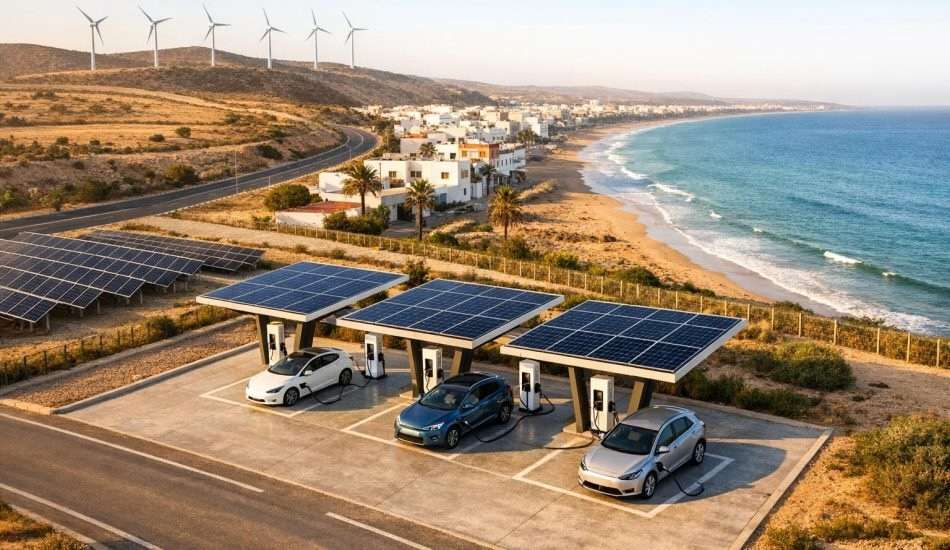
For businesses that depend on transportation fleets, logistics networks, industrial facilities, or large commercial developments, energy reliability has emerged as one of the most important factors influencing profitability. Rising fuel costs, recurring power disruptions, and growing pressure to reduce emissions are forcing companies to rethink how they power both buildings and mobility.
As a result, a new infrastructure model is gaining traction across the continent: the integration of solar energy, battery storage, and electric vehicle charging systems into a single operational ecosystem.
The shift is still in its early stages, but it reflects a broader realization that energy resilience is becoming a competitive asset rather than a technical consideration.
The Cost of Unreliable Energy
For many African businesses, the hidden cost of electricity extends far beyond monthly utility bills.
Unexpected outages disrupt production schedules, delay deliveries, damage equipment, and force organizations to rely on expensive backup generation. In sectors such as logistics, manufacturing, telecommunications, and commercial real estate, even short interruptions can translate into significant financial losses.
Diesel generators have traditionally filled the gap. Yet the economics of that model are becoming increasingly difficult to justify.
Fuel prices remain vulnerable to geopolitical shocks, supply chain disruptions, and currency fluctuations. Every increase in diesel costs directly affects operating expenses, making long-term budgeting more difficult for businesses already navigating uncertain economic conditions.
This challenge is particularly acute for fleet operators, where fuel often represents one of the largest recurring expenses. For logistics companies, delivery services, and public transport operators, reducing exposure to fuel volatility has become a strategic priority.
From Sustainability Project to Business Infrastructure
The conversation around solar energy has evolved considerably over the past decade.
Earlier adoption was often driven by environmental commitments or corporate sustainability programs. Today, many investment decisions are being justified primarily on financial and operational grounds.
Unlike fossil fuels, solar energy offers predictable long-term costs once infrastructure is installed. Businesses gain greater control over their energy supply while reducing exposure to market volatility.
When paired with battery storage and electric vehicle charging infrastructure, solar installations can support both facilities and transportation assets simultaneously. This creates a self-reinforcing ecosystem in which electricity generated on-site powers buildings during the day and charges vehicles when demand allows.
For organizations operating large fleets, the model has the potential to transform transportation from a recurring fuel expense into an energy-management challenge that can be optimized and controlled.
Africa’s Unique Opportunity
Many regions are attempting to transition toward cleaner transportation systems, but Africa’s circumstances create a distinct opportunity.
Unlike mature markets burdened by decades of legacy infrastructure, many African cities are still expanding their transportation and energy networks. This provides an opportunity to deploy modern systems without the same level of replacement costs faced elsewhere.
At the same time, the continent possesses some of the world’s strongest solar resources. According to the International Renewable Energy Agency (IRENA), Africa has enormous untapped renewable energy potential that could support both economic growth and industrial development.
Electric mobility is also gaining momentum. Governments in countries including Kenya, Rwanda, South Africa, and Morocco have introduced policies designed to encourage investment in electric transportation and supporting infrastructure. The growing ecosystem of vehicle manufacturers, charging providers, and renewable energy developers suggests that the market is moving beyond experimentation toward commercial deployment.
Reliability Is the Real Investment Question
While the economics of solar-powered EV infrastructure are becoming increasingly attractive, reliability remains the factor that will determine long-term success.
African operating environments can be demanding. High temperatures, dust, humidity, and seasonal weather extremes place considerable stress on electrical systems. Infrastructure designed for less challenging climates often experiences accelerated wear and higher maintenance requirements.
This reality is creating a growing focus on system quality, safety standards, and resilience. Investors are paying closer attention not only to generation capacity but also to the durability of inverters, protection systems, charging equipment, and energy management platforms.
The lesson from earlier renewable energy deployments is clear: the lowest upfront cost does not always deliver the best long-term value.
The Financing Landscape Is Improving
One of the strongest indicators of market maturity is the increasing availability of capital.
International development finance institutions, climate funds, and commercial lenders are expanding support for renewable energy and e-mobility projects. Organizations such as the United Nations Environment Programme (UNEP) and the World Bank Group have supported initiatives aimed at accelerating clean transport and sustainable infrastructure across emerging markets.
This matters because financing often determines whether a project proceeds.
As lenders become more comfortable with solar-plus-storage and EV charging business models, companies gain access to funding mechanisms that may not be available for conventional fossil-fuel-dependent infrastructure. Lower financing costs can significantly improve project economics and shorten payback periods.
The Strategic Value of Energy Independence
The broader significance of solar-powered EV infrastructure extends beyond cost savings.
Businesses that generate and manage a larger share of their own energy become less vulnerable to external disruptions. They gain greater certainty over operating costs, improve resilience during grid instability, and position themselves to meet increasingly stringent environmental expectations from customers, investors, and regulators.
This combination of resilience and sustainability is likely to become increasingly valuable as global supply chains place greater emphasis on carbon accountability and energy transparency.
For African companies competing in international markets, access to clean and reliable energy may soon become as important as access to capital or labor.
The businesses investing in resilient energy systems today are not merely adopting new technology. They are building operational models designed to withstand the economic, environmental, and energy challenges that will shape the next decade of African growth.


NAIROBI, October 9, 2026 — Kenya Airways is set to receive US$350 million (approximately Sh45.4 billion) in government shareholder financing after Cabinet approved the funding to address urgent operational costs and support the national carrier’s recovery.
The funding, announced following a Cabinet meeting at State House in Nairobi, is intended to help the airline meet pressing financial obligations, including aircraft maintenance and efforts to return grounded planes to service.
The approval marks a fresh intervention by the government, Kenya Airways’ largest shareholder, as the airline works to restore fleet capacity, strengthen its finances and pursue potential investment partnerships.

According to Reuters’ report on the Cabinet decision, the financing will be released in instalments under National Treasury oversight, with a repayment period of up to 10 years. The arrangement also allows for possible conversion into equity, subject to the required approvals.
Government targets aircraft availability and financial stability
A key priority for the new funding is to address aircraft maintenance requirements that have constrained the airline’s operational capacity.
Returning grounded aircraft to service could enable Kenya Airways to increase available capacity and improve operational flexibility. However, the Cabinet approval does not establish when individual aircraft will return to service or how quickly the funding will translate into additional flights.
The airline has previously identified global supply-chain disruptions and shortages of critical spare parts as factors affecting aircraft availability and operational reliability.
In its August 2026 financial results announcement, Kenya Airways reported that revenue increased by 9 per cent to Sh81 billion in the six months ended June 30, 2026, despite operating with 9 per cent less capacity.
The airline attributed the operating environment’s challenges partly to higher fuel costs and supply-chain constraints. It reported a loss after tax of Sh16.1 billion for the half-year, compared with Sh12.2 billion in the corresponding period a year earlier.
The latest financing is therefore intended to address immediate cash requirements while supporting the broader effort to improve fleet availability and financial resilience.
Sh122 billion in government loans targeted for restructuring
Beyond the fresh financing, Cabinet endorsed a proposal to convert approximately Sh122 billion in existing government loans, together with accrued interest, into an equity-qualifying tradable instrument.
The proposed restructuring is designed to strengthen Kenya Airways’ balance sheet and potentially improve its ability to attract new capital.
The measure is significant because the airline has been seeking strategic investors while considering options to restructure its debt and support its longer-term recovery.
However, the proposed conversion has not been completed. It remains subject to the necessary corporate, shareholder and regulatory approvals.
The government has not, through the reported decision, established that the new financing will automatically become equity or that prospective investors have committed funds under the arrangement.
A carrier under pressure to restore capacity
Kenya Airways remains an important link between Kenya and regional and international markets, supporting passenger travel, cargo transport, tourism and trade.
Its financial performance has nevertheless been affected by operating costs, aircraft availability challenges and the need to maintain its fleet.
The airline reported a net loss of Sh17.2 billion for the year ended December 2025, according to its 2025 annual report.
The government has framed the new funding and proposed debt restructuring as components of the carrier’s longer-term turnaround plan. The stated objective is to address immediate obligations while creating room for future capital raising.
The extent to which the intervention improves the airline’s financial position will depend on how the funds are deployed, the pace of aircraft restoration, operating-cost pressures and progress on the proposed balance-sheet restructuring.
Implementation remains subject to approvals
The Cabinet decision authorises a financing arrangement, but it does not by itself complete every step required to implement the measures.
The National Treasury is expected to oversee the release of the funds in tranches, while the proposed conversion of existing loans must proceed through the required approval processes.
Further details on the disbursement schedule, aircraft maintenance timelines and implementation of the debt restructuring will be important in assessing the impact of the intervention.
For now, the Sh45.4 billion financing provides Kenya Airways with an approved source of additional shareholder funding as it seeks to restore aircraft capacity, meet urgent obligations and advance its turnaround strategy.

When Stella Wamaitha Njoroge arrived in Dubai in February 2020, she was 23 years old and hopeful about what lay ahead.
The Kenyan woman had travelled to the United Arab Emirates expecting to find work within weeks and begin building a new life in a city known for attracting people from around the world.
Instead, the biggest global disruption in generations arrived almost immediately after she did.
The COVID-19 pandemic brought businesses, travel and everyday life to a standstill. For Njoroge, who was still trying to establish herself in a new country, the consequences were especially difficult.
Her savings began disappearing.
Then she reached a point where she could no longer afford her rent.
What happened next, according to Njoroge, would become one of the most important experiences of her life in Dubai.
She arrived in Dubai just before the pandemic
Njoroge’s timing could hardly have been more challenging.
The UAE began introducing extensive measures to contain COVID-19 in March 2020. According to the UAE government’s official account of its pandemic response, schools and higher education institutions were closed, distance learning was introduced, shopping centres and entertainment destinations were temporarily closed, new visas were suspended and restrictions were placed on air travel.
The government also introduced measures affecting foreign residents whose visas or work permits were expiring during the disruption. Some residents and visitors received extensions as authorities attempted to deal with the consequences of suspended air traffic and the wider pandemic emergency. (UAE government)
For someone who had arrived only weeks earlier, finding employment in that environment was far more difficult than she had anticipated.
Njoroge later told Emirates 24|7 that she struggled to find work during the lockdown and eventually ran out of money.
Her immediate problem was no longer simply finding a job.
It was keeping a roof over her head.
The conversation she was afraid to have
Njoroge said she became increasingly anxious as her savings disappeared.
Eventually, she had to confront a situation many expatriates fear when living away from home: she could no longer afford her accommodation.
She said she finally gathered the courage to tell her Lebanese landlord that she would not be able to pay the rent and would have to leave.
She had nowhere else to go.
But according to Njoroge, the landlord did not ask her to leave.
Instead, he allowed her to remain in the apartment without paying rent.
For three months, she said, she was able to stay there without paying a dirham.
The decision gave her something she desperately needed at the time: stability.
More importantly, Njoroge says it changed the way she felt about being alone in a foreign country.
In her account to Emirates 24|7, she said that at 23, living abroad during an unprecedented crisis, she felt “seen, supported, and protected.” (Emirates 24|7)
The landlord’s identity was not disclosed in that published account, and the details of the arrangement have not been independently documented in public records. The three-month rent-free period therefore remains Njoroge’s account of what happened.
But for her, the meaning of the experience has never depended simply on the amount of money involved.
She tried to repay him
As her circumstances eventually improved, Njoroge said she tried to repay the landlord.
He refused.
Instead, she said, he told her to pass the kindness on to somebody else who needed help.
That advice stayed with her.
The experience gave Njoroge a different perspective on what it meant to build a life in a country far from home.
She had arrived expecting to find employment and establish herself independently.
The pandemic instead showed her how vulnerable a person could become when circumstances suddenly changed.
It also showed her how much difference one person’s decision could make.
Njoroge later described the experience as something that changed her completely.
Rather than treating the landlord’s generosity as a debt that could only be settled financially, she began thinking about kindness as something that could be transferred from one person to another.
From a young newcomer to a business adviser
Njoroge eventually managed to build a career in Dubai.
Today, her professional profile describes her as a business setup consultant and UAE visa specialist with more than five years of experience. Her work involves helping people establish businesses and navigate aspects of the UAE’s immigration and business environment. (Stella Wamaitha’s professional profile)
The work has particular relevance for Africans looking to establish themselves in the UAE.
People arriving in the country to work, invest or start businesses may have to navigate licensing, immigration, residency and other administrative requirements.
The UAE has developed numerous routes for foreign entrepreneurs and investors.
The government’s official business guidance explains the steps involved in establishing a mainland company, including choosing a business activity, determining the appropriate legal form, selecting a trade name and obtaining the required approvals and licence. (UAE government business setup guide)
The country also offers residence options for eligible investors and entrepreneurs, including the Green residence system for certain categories of investors, business partners, freelancers and self-employed people. (UAE government residence information)
For Njoroge, learning how to navigate that environment eventually became part of her profession.
The woman who once arrived in Dubai struggling to find her first job now helps other people understand how to establish themselves in the country.
Her own experience became part of her expertise
Njoroge has said that her professional journey was shaped partly by her own experience trying to understand the UAE’s business and visa environment.
In a professional reflection published on LinkedIn, she described learning the system herself after encountering uncertainty and conflicting information.
Over time, that knowledge became something she could offer to others.
Her current professional profile identifies her work with Easy Business SetUp Dubai and describes her experience in business setup consulting and UAE visa services. (Stella Wamaitha on LinkedIn)
That evolution gives her story an unusual arc.
She did not arrive in Dubai as an established consultant.
She arrived as a 23-year-old newcomer trying to find work.
The pandemic interrupted those plans.
A landlord gave her time when she could no longer pay rent.
She eventually recovered, built professional experience and developed a career helping other people navigate the same country in which she had once been a newcomer.
Dubai became more than a place to work
The experience with her landlord also appears to have influenced how Njoroge understands community.
Dubai is home to a highly international population, and Njoroge says some of her most meaningful relationships have been with people from backgrounds completely different from her own.
In her interview with Emirates 24|7, she described herself as intentional about meeting people from different cultures and building relationships.
Those connections have extended beyond the UAE.
She recalled travelling to Egypt for her birthday and reconnecting with an Egyptian friend she had met while he was living and working in Dubai. The friend collected her from the airport, showed her around Cairo and eventually welcomed her into his family home.
For Njoroge, the experience demonstrated how friendships built in Dubai could continue long after people left the city.
She described those relationships as creating a kind of international family.
That idea is central to the way she now talks about her life in the UAE.
For people who move abroad without relatives nearby, friendships can become an important source of practical and emotional support.
Njoroge’s own experience gave her a particularly personal understanding of that reality.
Paying the kindness forward
The lesson she says she learned from her landlord eventually developed into something bigger than helping individuals informally.
Njoroge began looking at how she could create opportunities for other African women in business.
She told Emirates 24|7 that she had previously attended a high-end networking event where she was the only African woman in the room.
The experience was intimidating, she said, but she decided to introduce herself and speak to people.
That decision eventually led her to a mentor who invested in her business and opened professional doors for her.
The experience made her think about what might happen if other African women had greater access to similar networks.
She Means Business Network
In 2025, Njoroge and her friend Joan Mwende co-founded the She Means Business Network in Dubai, according to Njoroge’s account published by Emirates 24|7.
The network focuses on African women and women of colour who are professionals, entrepreneurs or transitioning into business.
According to Njoroge, the group organizes events, panels and networking sessions designed to improve visibility and access to opportunities.
When Emirates 24|7 profiled Njoroge in May 2026, she said the network had about 100 registered members. (Emirates 24|7 profile of Njoroge and the network)
The network represents a significant shift from where Njoroge was during the early months of the pandemic.
In 2020, she was worried about whether she could afford her next month’s accommodation.
Several years later, she was helping create professional connections for other women seeking to build careers and businesses.
Why networks matter for people living abroad
Moving to another country can involve much more than securing a job.
Newcomers often have to learn unfamiliar administrative systems, develop professional contacts and build personal relationships from scratch.
For entrepreneurs, the challenge can be even greater.
The UAE has deliberately positioned itself as a destination for international investment and entrepreneurship, with government initiatives designed to simplify business formation and support small and medium-sized enterprises.
In June 2026, Dubai’s Department of Economy and Tourism launched “SME in a Box,” a platform intended to bring services such as licensing support, banking, payments, logistics and telecommunications into a more integrated onboarding process for entrepreneurs. (Dubai Department of Economy and Tourism)
That official push illustrates the broader environment in which Njoroge now works.
The country continues to attract people who want to establish companies, relocate, invest or build careers.
But official systems are only one part of successfully settling into a new country.
People also need information, contacts and trusted guidance.
That is where Njoroge has built her professional niche.
A different kind of repayment
The landlord who helped Njoroge during the pandemic may never have expected his decision to have consequences years later.
According to her account, he simply gave a young woman some time when she was struggling financially.
He did not ask her to repay the money when she later offered to do so.
Instead, he told her to help somebody else.
That instruction appears to have become one of the guiding ideas of her life in Dubai.
Njoroge’s response has not been limited to one individual.
Her career helps people navigate business setup and visa-related matters.
Her professional network connects her with entrepreneurs and newcomers.
And the She Means Business Network is intended to give African women access to professional relationships and opportunities.
In that sense, the kindness she received has been passed forward in several different forms.
Her story reflects the uncertainty of starting over abroad
Njoroge’s story is ultimately about more than a landlord waiving rent.
It is about what can happen when someone’s carefully constructed plans collide with circumstances beyond their control.
She arrived in Dubai in February 2020 expecting to find a job.
A few weeks later, a global pandemic had disrupted the economic environment around her.
The UAE government introduced restrictions that affected travel, businesses, education and immigration. For new arrivals without established support networks, the uncertainty could be particularly difficult. (UAE government COVID-19 measures)
Njoroge’s own savings eventually ran out.
She was faced with the prospect of leaving her home.
Then, according to her account, her landlord gave her three months.
Those three months did not solve every problem she faced.
But they bought her time.
And sometimes time is exactly what a person needs to change the direction of a difficult situation.
From vulnerability to helping others
There is a striking contrast between Njoroge’s life in the first months after arriving in Dubai and the work she does today.
At 23, she was trying to find a job while watching her savings disappear.
Today, she works in business setup and UAE visa consulting.
She has built an international professional network.
She has helped establish a community for African women in business.
And she speaks openly about the importance of building relationships with people from different backgrounds.
Her professional profile now describes a career that would have been difficult to imagine during those early months of 2020. (Stella Wamaitha’s professional profile)
Her experience also illustrates how careers can emerge from unexpected circumstances.
The pandemic disrupted the plan she originally had.
But the life she eventually built in Dubai grew in a different direction.
The meaning of one small act
Stories about migration often focus on jobs, salaries, visas, businesses and the practical reasons people leave one country for another.
Njoroge’s story highlights something less tangible.
Sometimes the difference between feeling completely alone and feeling capable of carrying on can be one person’s decision to help.
For her, that decision came from a landlord at a moment when she was unable to pay rent.
The help lasted three months.
The memory has lasted years.
And the lesson she says she took from it has become part of how she approaches other people.
When she later tried to repay her landlord, he reportedly told her to pass the kindness to somebody else.
She appears to have taken those words seriously.
Today, she helps people navigate the UAE’s business environment and works to connect African women with professional opportunities.
The connection between those things is not simply financial.
It is the idea that support creates a chain.
One person helps another person stay afloat.
That person eventually becomes strong enough to help someone else.
A young woman who found a different future
Njoroge arrived in Dubai with a simple ambition: find work and build a future.
The pandemic temporarily took that opportunity away.
Her savings disappeared, her employment plans were disrupted and she reached a point where she feared she would have to leave her home.
But according to her account, someone chose to give her an alternative.
Three months of rent-free accommodation gave her enough space to get through one of the most uncertain periods of her life.
Years later, she is no longer the young woman wondering whether she can afford her next month’s rent.
She is a business setup adviser, a member of Dubai’s international professional community and a co-founder of a network seeking to help African women access opportunities.
Her story is therefore not simply about surviving the pandemic.
It is about what happened afterward.
A difficult experience became a lesson.
A lesson became a philosophy.
And that philosophy became part of the way she works with other people.
For Njoroge, the kindness of one landlord during the darkest period of her early life in Dubai appears to have changed the way she thinks about success.
Success is not only about getting ahead.
It can also mean remembering who helped you when you were struggling — and finding a way to help somebody else when your circumstances eventually allow it.
That is the legacy Njoroge says she chose to carry forward.
A young Kenyan woman arrived in Dubai hoping to build a new life.
The city gave her unexpected challenges.
One person gave her a place to stay when she had nowhere else to go.
And years later, she is trying to create opportunities for others.
Sometimes, a life-changing act of kindness does not end with the person who receives it.
Sometimes, it keeps moving.
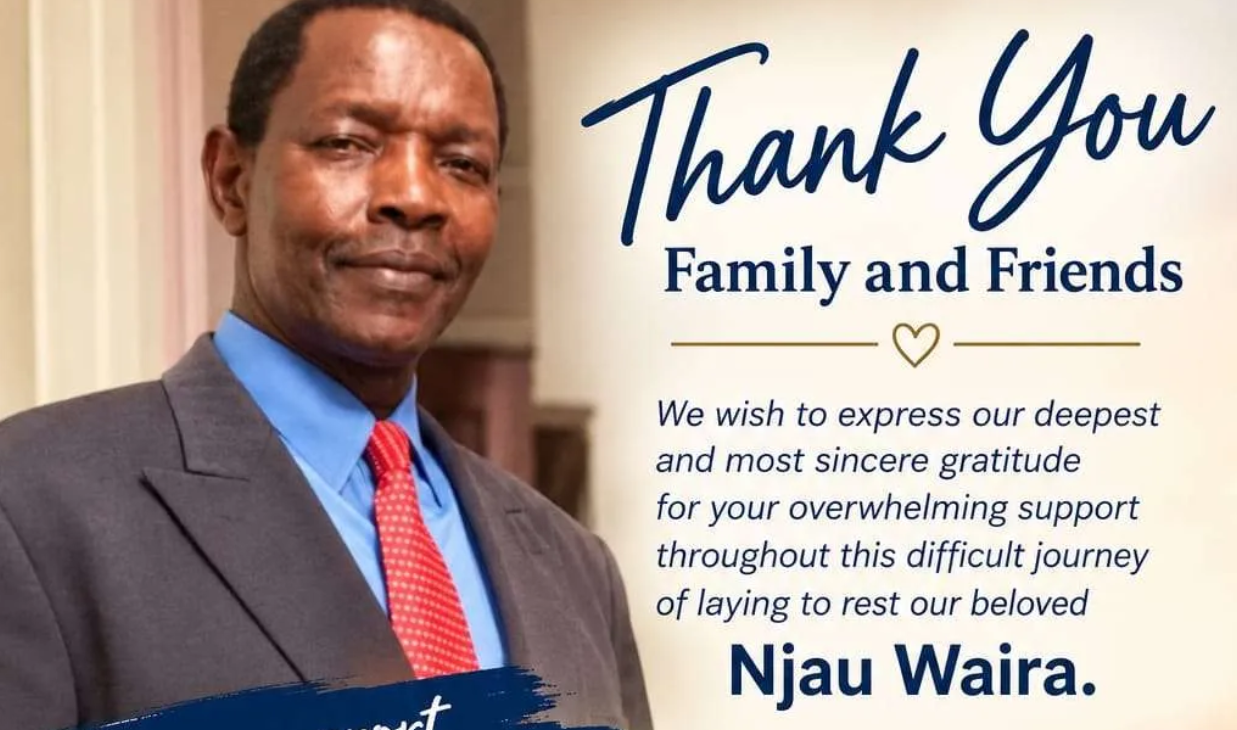
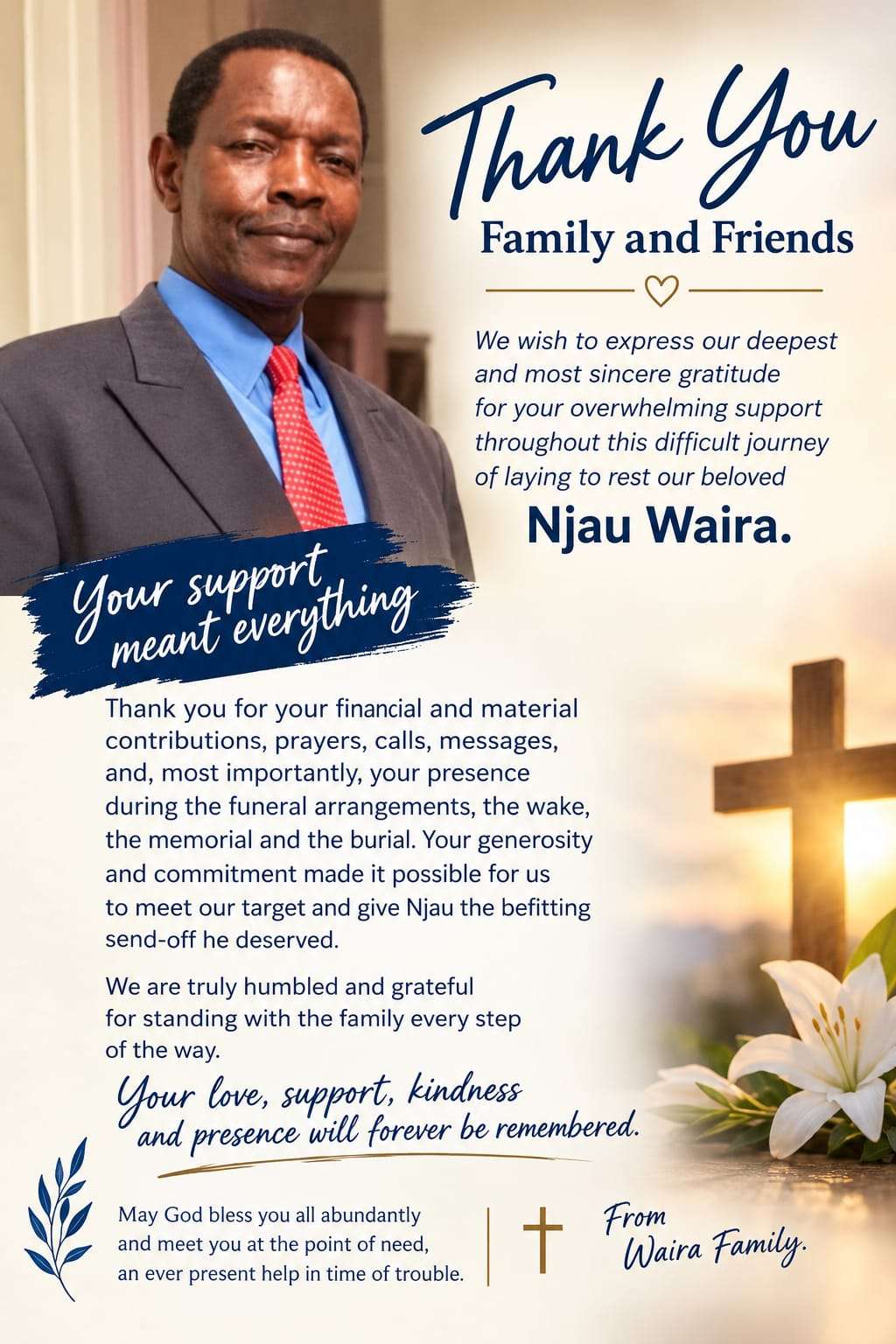
Dear Family and Friends,
We wish to express our deepest and most sincere gratitude for your overwhelming support throughout this difficult journey of laying to rest our beloved Njau Waira.
Thank you for your financial and material contributions, prayers, calls, messages, and, most importantly, your presence during the funeral arrangements, the wake, the memorial and the finally the burial. Your generosity and commitment made it possible for us to meet our target and give Njau the befitting send-off he deserved.
We are truly humbled and grateful for standing with the family every step of the way.
Your love,❤️ support, kindness and presence will forever be remembered.
May God bless you all abundantly and meet you at the point of need, an ever present help in time of trouble. 🙏🏼🙏🏼🙏🏼🙏🏼🙏🏼
From Waira Family.

Kenya Airways Gets Sh45.4 Billion Government Financing Boost as Turnaround Plan Advances

Kenyan Engineer Studying in the USA: Dan Iro’s Remarkable Dream Come True

Kenyan woman Stella Wamaitha Njoroge says one act of kindness in Dubai changed her life

VIDEO: iPhone 17 Air Leak Reveals Ultra-Thin Design: A Bold Leap Beyond the iPhone 16 Pro

How U.S. Remittance 5% Tax Bill Could Impact Kenyan Diaspora: What You Need to Know

Motorola Launches $1,300 Razr Ultra Foldable Smartphone with AI Features, Swarovski-Enhanced Earbuds

 Tech1 year ago
VIDEO: iPhone 17 Air Leak Reveals Ultra-Thin Design: A Bold Leap Beyond the iPhone 16 Pro
- News1 year ago
How U.S. Remittance 5% Tax Bill Could Impact Kenyan Diaspora: What You Need to Know
- Tech1 year ago
Motorola Launches $1,300 Razr Ultra Foldable Smartphone with AI Features, Swarovski-Enhanced Earbuds
- Insurance Basics1 year ago
Popular Apps May Be Secretly Tracking Your Driving – And Raising Your Insurance Rates
- Tech1 year ago
Motorola Razr Ultra (2025) Launches With Free 1TB Storage Upgrade
- News1 year ago
What would you do if your Gold Digger girlfriend behaved like this?
- News1 year ago
Box Office: ‘Sinners’ Holds No. 1 Spot With $13M Friday; ‘The Accountant 2’ Debuts With $9.4M
- Insurance Basics1 year ago
Florida House Passes ‘Pam Rock Act’ Requiring Dog Registry and $100K Liability Insurance