News
U.S. Immigration Social Media Screening Expands to Target “Anti-American” Activity

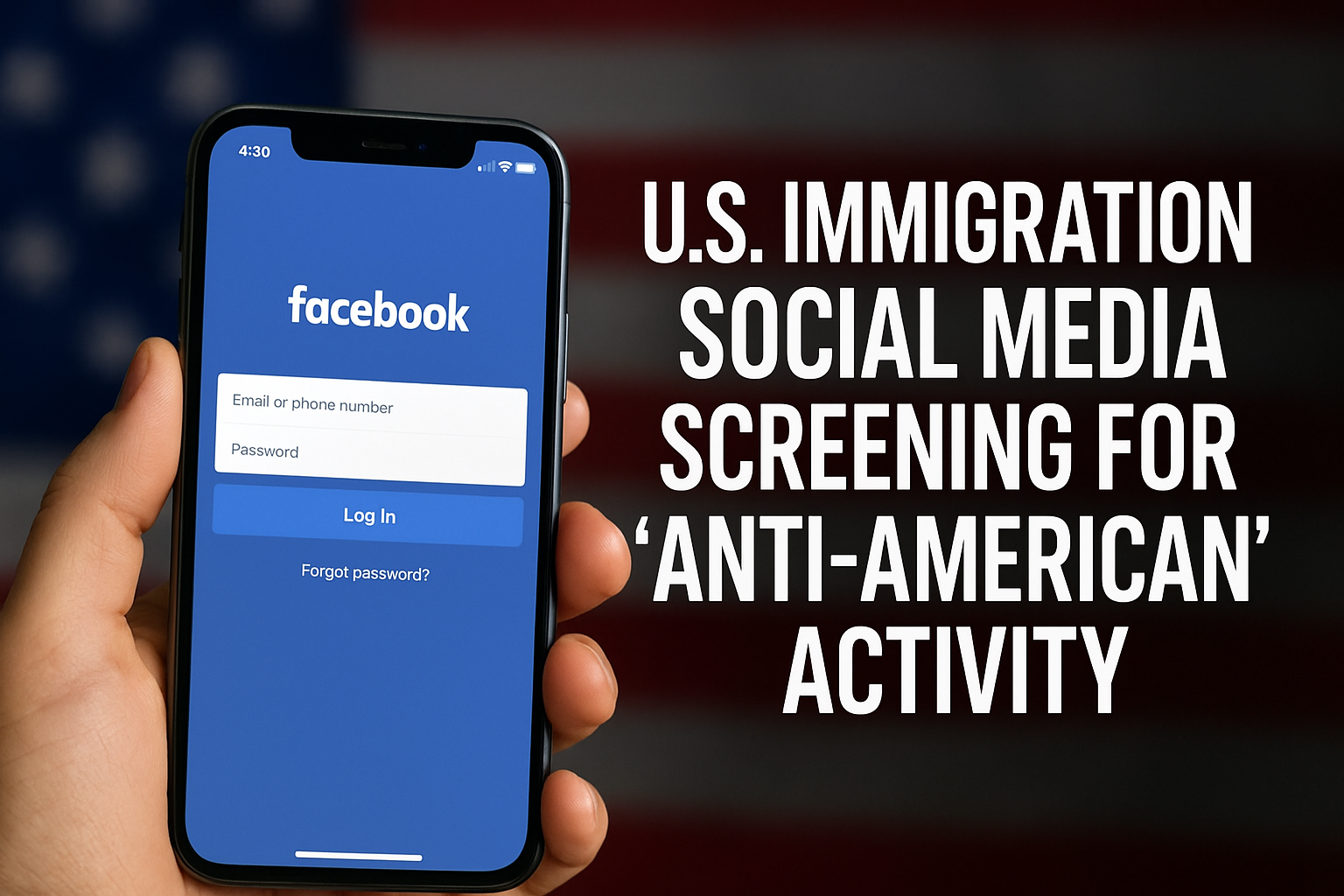
The U.S. government has intensified scrutiny of immigration applicants’ social media activity as part of a broader effort to identify “anti-American” views and actions, according to top officials at U.S. Citizenship and Immigration Services (USCIS). The initiative, rooted in directives from the Trump administration, aims to flag behavior considered “beyond the pale” without infringing on constitutionally protected speech.
Joseph Edlow, USCIS Director, told CBS News that the agency’s vetting effort relies heavily on a process he described as “social media screening,” examining public postings and activity of applicants seeking green cards or other immigration benefits. The directive, issued in August, designates identification of anti-American sentiment as an “overwhelmingly negative factor” that could justify the denial of immigration applications.
Defining “Anti-American” Activity
Edlow cited recent trends on U.S. college campuses as indicative of the types of behavior under scrutiny. “There has been such a large-scale espousing of foreign terrorist ideology, whether it’s Hamas or other organizations, paired with a desire to trample on the rights of others,” Edlow explained. He emphasized that the agency is not targeting political opinions or lawful speech, stating, “People are free to make whatever statements they want on social media. Anyone who doesn’t support a particular candidate is not what we are talking about.”
Instead, the focus is on individuals actively supporting the violent overthrow of the U.S. government or providing material support to terrorist organizations abroad. Edlow clarified that social media screening is one factor among many in the decision-making process and is not the sole criterion for approving or denying applications.
Controversy and Legal Challenges
Critics argue that the initiative risks infringing on First Amendment rights and weaponizes immigration law against lawful political expression. Federal courts have already questioned the legality of deporting legal residents, such as Mahmoud Khalil, an activist involved in protests at Columbia University concerning the Gaza conflict. The administration contends that such actions undermine U.S. foreign policy and could foster antisemitism, but opponents assert that targeting individuals for lawful protest constitutes political persecution.
This year, the State Department revoked visas of several foreign nationals accused of celebrating the death of conservative activist Charlie Kirk, further igniting debate over the limits of government authority in policing speech online.
USCIS Shifts Focus Under the Trump Administration
Traditionally, USCIS has focused on processing immigration benefits, in contrast to its sister agencies, Immigration and Customs Enforcement (ICE) and Customs and Border Protection (CBP). However, under the Trump administration, USCIS has increased its emphasis on preventing immigration fraud, intensifying vetting procedures, and collaborating with ICE on enforcement actions.
Recent policy changes include the recruitment and training of armed special agents—though they are not yet operational—more extensive civics testing for naturalization applicants, and the reintroduction of “neighborhood checks,” which involve interviews with neighbors and colleagues to verify applicants’ backgrounds. While these checks will not be universally applied due to limited resources, the measures have drawn criticism from immigrant advocates who argue that they create an atmosphere of fear among lawful immigrants.
Edlow defended the changes as a return to the agency’s intended role, stating that USCIS had become “a rubber-stamping agency” in recent years. “We are not here as a police force,” he said. “We aim to investigate large-scale fraud patterns that currently create confusion in the immigration system.” The goal, according to Edlow, is to streamline legal immigration processes while ensuring integrity.
DACA Remains in Limbo
The Deferred Action for Childhood Arrivals (DACA) program, which protects approximately half a million so-called “Dreamers” from deportation, remains uncertain under current policy. While the first Trump administration attempted to end DACA, the Supreme Court blocked that effort. Edlow acknowledged that no final decision has been made regarding DACA under the current administration, noting ongoing litigation and internal discussions.
Federal courts in Texas and Louisiana have ruled against DACA and related efforts to codify the policy, though current recipients may continue renewing their work permits. Republican-led states have sought to terminate DACA gradually, but the timeline and outcome remain unclear. Edlow reiterated his prior view that the program effectively serves as “de facto amnesty,” a position he maintains today.
Looking Ahead
USCIS officials emphasize that social media screening is intended to enhance national security while maintaining a fair and legal immigration system. Advocates for immigrants, civil liberties groups, and legal scholars will continue to monitor these policies closely, especially as they intersect with free speech rights and constitutional protections.
For further updates on U.S. immigration policy and related legal challenges, visit USCIS.gov.










When Stella Wamaitha Njoroge arrived in Dubai in February 2020, she was 23 years old and hopeful about what lay ahead.
The Kenyan woman had travelled to the United Arab Emirates expecting to find work within weeks and begin building a new life in a city known for attracting people from around the world.
Instead, the biggest global disruption in generations arrived almost immediately after she did.
The COVID-19 pandemic brought businesses, travel and everyday life to a standstill. For Njoroge, who was still trying to establish herself in a new country, the consequences were especially difficult.
Her savings began disappearing.
Then she reached a point where she could no longer afford her rent.
What happened next, according to Njoroge, would become one of the most important experiences of her life in Dubai.
She arrived in Dubai just before the pandemic
Njoroge’s timing could hardly have been more challenging.
The UAE began introducing extensive measures to contain COVID-19 in March 2020. According to the UAE government’s official account of its pandemic response, schools and higher education institutions were closed, distance learning was introduced, shopping centres and entertainment destinations were temporarily closed, new visas were suspended and restrictions were placed on air travel.
The government also introduced measures affecting foreign residents whose visas or work permits were expiring during the disruption. Some residents and visitors received extensions as authorities attempted to deal with the consequences of suspended air traffic and the wider pandemic emergency. (UAE government)
For someone who had arrived only weeks earlier, finding employment in that environment was far more difficult than she had anticipated.
Njoroge later told Emirates 24|7 that she struggled to find work during the lockdown and eventually ran out of money.
Her immediate problem was no longer simply finding a job.
It was keeping a roof over her head.
The conversation she was afraid to have
Njoroge said she became increasingly anxious as her savings disappeared.
Eventually, she had to confront a situation many expatriates fear when living away from home: she could no longer afford her accommodation.
She said she finally gathered the courage to tell her Lebanese landlord that she would not be able to pay the rent and would have to leave.
She had nowhere else to go.
But according to Njoroge, the landlord did not ask her to leave.
Instead, he allowed her to remain in the apartment without paying rent.
For three months, she said, she was able to stay there without paying a dirham.
The decision gave her something she desperately needed at the time: stability.
More importantly, Njoroge says it changed the way she felt about being alone in a foreign country.
In her account to Emirates 24|7, she said that at 23, living abroad during an unprecedented crisis, she felt “seen, supported, and protected.” (Emirates 24|7)
The landlord’s identity was not disclosed in that published account, and the details of the arrangement have not been independently documented in public records. The three-month rent-free period therefore remains Njoroge’s account of what happened.
But for her, the meaning of the experience has never depended simply on the amount of money involved.
She tried to repay him
As her circumstances eventually improved, Njoroge said she tried to repay the landlord.
He refused.
Instead, she said, he told her to pass the kindness on to somebody else who needed help.
That advice stayed with her.
The experience gave Njoroge a different perspective on what it meant to build a life in a country far from home.
She had arrived expecting to find employment and establish herself independently.
The pandemic instead showed her how vulnerable a person could become when circumstances suddenly changed.
It also showed her how much difference one person’s decision could make.
Njoroge later described the experience as something that changed her completely.
Rather than treating the landlord’s generosity as a debt that could only be settled financially, she began thinking about kindness as something that could be transferred from one person to another.
From a young newcomer to a business adviser
Njoroge eventually managed to build a career in Dubai.
Today, her professional profile describes her as a business setup consultant and UAE visa specialist with more than five years of experience. Her work involves helping people establish businesses and navigate aspects of the UAE’s immigration and business environment. (Stella Wamaitha’s professional profile)
The work has particular relevance for Africans looking to establish themselves in the UAE.
People arriving in the country to work, invest or start businesses may have to navigate licensing, immigration, residency and other administrative requirements.
The UAE has developed numerous routes for foreign entrepreneurs and investors.
The government’s official business guidance explains the steps involved in establishing a mainland company, including choosing a business activity, determining the appropriate legal form, selecting a trade name and obtaining the required approvals and licence. (UAE government business setup guide)
The country also offers residence options for eligible investors and entrepreneurs, including the Green residence system for certain categories of investors, business partners, freelancers and self-employed people. (UAE government residence information)
For Njoroge, learning how to navigate that environment eventually became part of her profession.
The woman who once arrived in Dubai struggling to find her first job now helps other people understand how to establish themselves in the country.
Her own experience became part of her expertise
Njoroge has said that her professional journey was shaped partly by her own experience trying to understand the UAE’s business and visa environment.
In a professional reflection published on LinkedIn, she described learning the system herself after encountering uncertainty and conflicting information.
Over time, that knowledge became something she could offer to others.
Her current professional profile identifies her work with Easy Business SetUp Dubai and describes her experience in business setup consulting and UAE visa services. (Stella Wamaitha on LinkedIn)
That evolution gives her story an unusual arc.
She did not arrive in Dubai as an established consultant.
She arrived as a 23-year-old newcomer trying to find work.
The pandemic interrupted those plans.
A landlord gave her time when she could no longer pay rent.
She eventually recovered, built professional experience and developed a career helping other people navigate the same country in which she had once been a newcomer.
Dubai became more than a place to work
The experience with her landlord also appears to have influenced how Njoroge understands community.
Dubai is home to a highly international population, and Njoroge says some of her most meaningful relationships have been with people from backgrounds completely different from her own.
In her interview with Emirates 24|7, she described herself as intentional about meeting people from different cultures and building relationships.
Those connections have extended beyond the UAE.
She recalled travelling to Egypt for her birthday and reconnecting with an Egyptian friend she had met while he was living and working in Dubai. The friend collected her from the airport, showed her around Cairo and eventually welcomed her into his family home.
For Njoroge, the experience demonstrated how friendships built in Dubai could continue long after people left the city.
She described those relationships as creating a kind of international family.
That idea is central to the way she now talks about her life in the UAE.
For people who move abroad without relatives nearby, friendships can become an important source of practical and emotional support.
Njoroge’s own experience gave her a particularly personal understanding of that reality.
Paying the kindness forward
The lesson she says she learned from her landlord eventually developed into something bigger than helping individuals informally.
Njoroge began looking at how she could create opportunities for other African women in business.
She told Emirates 24|7 that she had previously attended a high-end networking event where she was the only African woman in the room.
The experience was intimidating, she said, but she decided to introduce herself and speak to people.
That decision eventually led her to a mentor who invested in her business and opened professional doors for her.
The experience made her think about what might happen if other African women had greater access to similar networks.
She Means Business Network
In 2025, Njoroge and her friend Joan Mwende co-founded the She Means Business Network in Dubai, according to Njoroge’s account published by Emirates 24|7.
The network focuses on African women and women of colour who are professionals, entrepreneurs or transitioning into business.
According to Njoroge, the group organizes events, panels and networking sessions designed to improve visibility and access to opportunities.
When Emirates 24|7 profiled Njoroge in May 2026, she said the network had about 100 registered members. (Emirates 24|7 profile of Njoroge and the network)
The network represents a significant shift from where Njoroge was during the early months of the pandemic.
In 2020, she was worried about whether she could afford her next month’s accommodation.
Several years later, she was helping create professional connections for other women seeking to build careers and businesses.
Why networks matter for people living abroad
Moving to another country can involve much more than securing a job.
Newcomers often have to learn unfamiliar administrative systems, develop professional contacts and build personal relationships from scratch.
For entrepreneurs, the challenge can be even greater.
The UAE has deliberately positioned itself as a destination for international investment and entrepreneurship, with government initiatives designed to simplify business formation and support small and medium-sized enterprises.
In June 2026, Dubai’s Department of Economy and Tourism launched “SME in a Box,” a platform intended to bring services such as licensing support, banking, payments, logistics and telecommunications into a more integrated onboarding process for entrepreneurs. (Dubai Department of Economy and Tourism)
That official push illustrates the broader environment in which Njoroge now works.
The country continues to attract people who want to establish companies, relocate, invest or build careers.
But official systems are only one part of successfully settling into a new country.
People also need information, contacts and trusted guidance.
That is where Njoroge has built her professional niche.
A different kind of repayment
The landlord who helped Njoroge during the pandemic may never have expected his decision to have consequences years later.
According to her account, he simply gave a young woman some time when she was struggling financially.
He did not ask her to repay the money when she later offered to do so.
Instead, he told her to help somebody else.
That instruction appears to have become one of the guiding ideas of her life in Dubai.
Njoroge’s response has not been limited to one individual.
Her career helps people navigate business setup and visa-related matters.
Her professional network connects her with entrepreneurs and newcomers.
And the She Means Business Network is intended to give African women access to professional relationships and opportunities.
In that sense, the kindness she received has been passed forward in several different forms.
Her story reflects the uncertainty of starting over abroad
Njoroge’s story is ultimately about more than a landlord waiving rent.
It is about what can happen when someone’s carefully constructed plans collide with circumstances beyond their control.
She arrived in Dubai in February 2020 expecting to find a job.
A few weeks later, a global pandemic had disrupted the economic environment around her.
The UAE government introduced restrictions that affected travel, businesses, education and immigration. For new arrivals without established support networks, the uncertainty could be particularly difficult. (UAE government COVID-19 measures)
Njoroge’s own savings eventually ran out.
She was faced with the prospect of leaving her home.
Then, according to her account, her landlord gave her three months.
Those three months did not solve every problem she faced.
But they bought her time.
And sometimes time is exactly what a person needs to change the direction of a difficult situation.
From vulnerability to helping others
There is a striking contrast between Njoroge’s life in the first months after arriving in Dubai and the work she does today.
At 23, she was trying to find a job while watching her savings disappear.
Today, she works in business setup and UAE visa consulting.
She has built an international professional network.
She has helped establish a community for African women in business.
And she speaks openly about the importance of building relationships with people from different backgrounds.
Her professional profile now describes a career that would have been difficult to imagine during those early months of 2020. (Stella Wamaitha’s professional profile)
Her experience also illustrates how careers can emerge from unexpected circumstances.
The pandemic disrupted the plan she originally had.
But the life she eventually built in Dubai grew in a different direction.
The meaning of one small act
Stories about migration often focus on jobs, salaries, visas, businesses and the practical reasons people leave one country for another.
Njoroge’s story highlights something less tangible.
Sometimes the difference between feeling completely alone and feeling capable of carrying on can be one person’s decision to help.
For her, that decision came from a landlord at a moment when she was unable to pay rent.
The help lasted three months.
The memory has lasted years.
And the lesson she says she took from it has become part of how she approaches other people.
When she later tried to repay her landlord, he reportedly told her to pass the kindness to somebody else.
She appears to have taken those words seriously.
Today, she helps people navigate the UAE’s business environment and works to connect African women with professional opportunities.
The connection between those things is not simply financial.
It is the idea that support creates a chain.
One person helps another person stay afloat.
That person eventually becomes strong enough to help someone else.
A young woman who found a different future
Njoroge arrived in Dubai with a simple ambition: find work and build a future.
The pandemic temporarily took that opportunity away.
Her savings disappeared, her employment plans were disrupted and she reached a point where she feared she would have to leave her home.
But according to her account, someone chose to give her an alternative.
Three months of rent-free accommodation gave her enough space to get through one of the most uncertain periods of her life.
Years later, she is no longer the young woman wondering whether she can afford her next month’s rent.
She is a business setup adviser, a member of Dubai’s international professional community and a co-founder of a network seeking to help African women access opportunities.
Her story is therefore not simply about surviving the pandemic.
It is about what happened afterward.
A difficult experience became a lesson.
A lesson became a philosophy.
And that philosophy became part of the way she works with other people.
For Njoroge, the kindness of one landlord during the darkest period of her early life in Dubai appears to have changed the way she thinks about success.
Success is not only about getting ahead.
It can also mean remembering who helped you when you were struggling — and finding a way to help somebody else when your circumstances eventually allow it.
That is the legacy Njoroge says she chose to carry forward.
A young Kenyan woman arrived in Dubai hoping to build a new life.
The city gave her unexpected challenges.
One person gave her a place to stay when she had nowhere else to go.
And years later, she is trying to create opportunities for others.
Sometimes, a life-changing act of kindness does not end with the person who receives it.
Sometimes, it keeps moving.
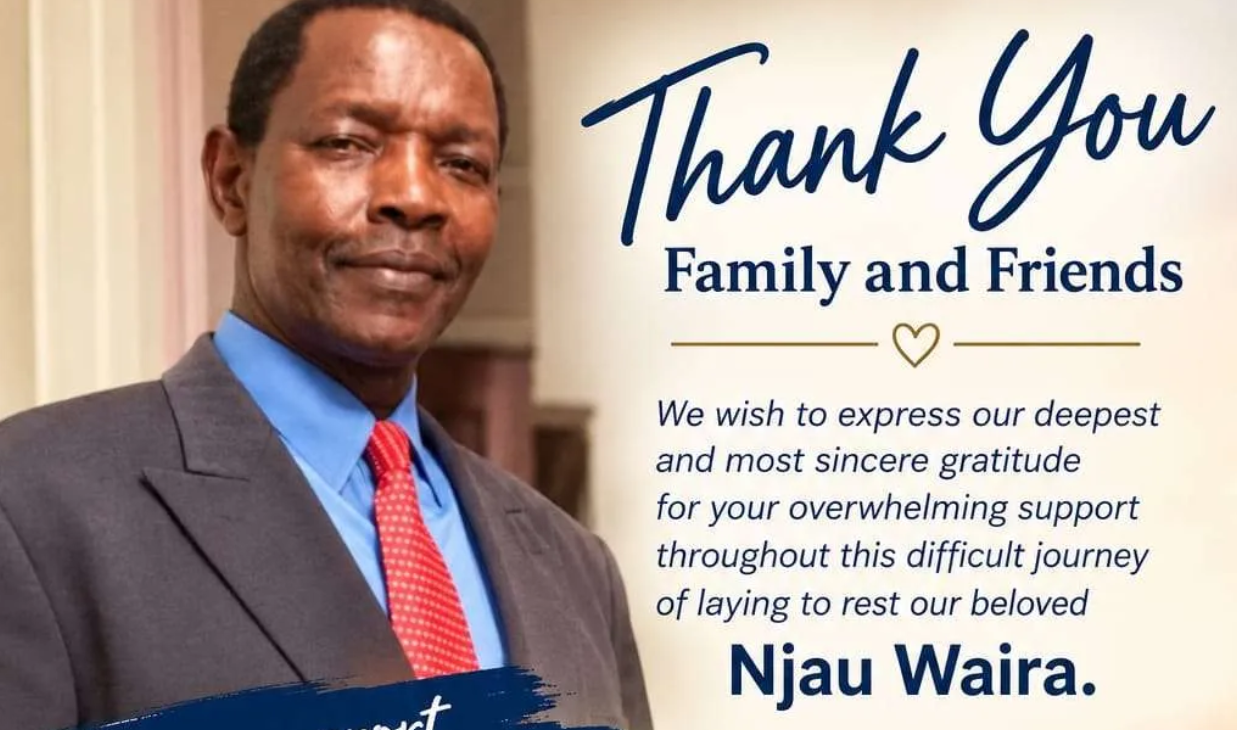
Dear Family and Friends,
We wish to express our deepest and most sincere gratitude for your overwhelming support throughout this difficult journey of laying to rest our beloved Njau Waira.
Thank you for your financial and material contributions, prayers, calls, messages, and, most importantly, your presence during the funeral arrangements, the wake, the memorial and the finally the burial. Your generosity and commitment made it possible for us to meet our target and give Njau the befitting send-off he deserved.
We are truly humbled and grateful for standing with the family every step of the way.
Your love,❤️ support, kindness and presence will forever be remembered.
May God bless you all abundantly and meet you at the point of need, an ever present help in time of trouble. 🙏🏼🙏🏼🙏🏼🙏🏼🙏🏼
From Waira Family.
Diaspora
U.S. Delays 2027 Green Card Lottery Registration as New Rules Add Costs and Passport Requirement
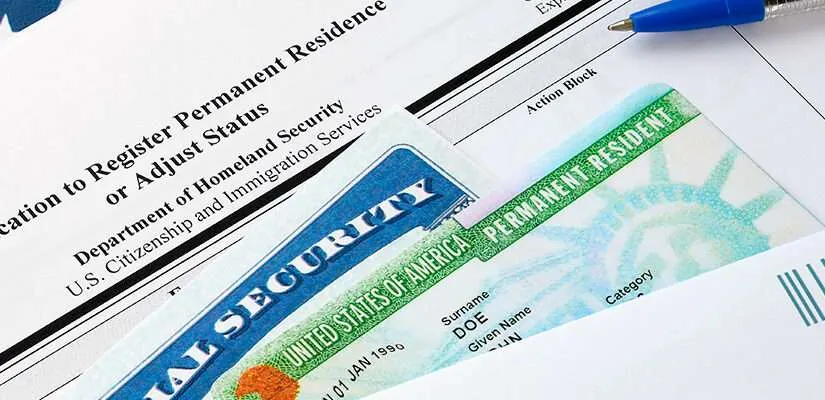
U.S. Delays 2027 Green Card Lottery Registration as New Rules Add Costs and Passport Requirement
WASHINGTON D.C. — Prospective immigrants from Kenya and other eligible African countries are facing an uncertain wait for the next U.S. Diversity Visa lottery after the Department of State delayed the opening of the 2027 registration period and introduced new requirements for applicants.
The State Department has not yet announced the opening or closing dates for DV-2027 registration. It said in November 2025 that it was making changes to the entry process and would announce the registration date “as soon as practicable.” The department also said the delay would not change the visa application period for people selected in the program, which is scheduled to run from October 1, 2026, through September 30, 2027.
State Department: Changes to the DV-2027 Entry Period
That means reports that the DV-2027 registration window has already been shortened should be treated with caution. No official registration duration has been published by the State Department as of September 29, 2026.
The delay comes as the department implements two significant changes: a $1 registration fee and a new requirement that most applicants provide information from a valid, unexpired passport and upload a scan of the passport’s biographical and signature page.
New $1 fee for lottery registration
A State Department final rule published in September 2025 established a $1 fee for registering for the Diversity Visa lottery. The department said the charge is intended to shift some of the costs of operating the lottery—including maintaining the electronic entry system, storing data, conducting the randomized selection process and performing security reviews—to people entering the lottery.
Federal Register: Diversity Visa Program Fee
The fee is separate from the visa application fee paid later by people who are selected and proceed with the immigration process.
The department’s subsequent Diversity Visa rule makes clear that the $1 fee will be collected when an entrant submits the lottery registration. No waiver is provided for the registration fee.
Federal Register: DV-2027 Passport Requirement and Entry Changes
Applicants should therefore be cautious about websites or agents claiming to offer an official DV-2027 registration before the State Department announces the registration period. The department’s official Diversity Visa entry instructions state that entries must be submitted electronically during the designated period and that there is only one permitted entry per person.
Passport requirement creates a new hurdle
The more consequential change for many prospective applicants is the passport requirement.
Under a final rule implementing changes for DV-2027, applicants generally must provide information from a valid, unexpired passport and upload a scan of its biographical and signature page when registering. The State Department said the requirement is intended to combat fraudulent and duplicate entries and allow earlier identity verification.
Federal Register: DV-2027 Passport Requirement and Entry Changes
The department acknowledged that obtaining a passport can present financial and logistical difficulties, particularly in countries where passport processing is slow or services are difficult to access.
Its regulatory analysis estimated that obtaining and supplying the passport information would add time and costs for applicants. The department estimated the average passport cost across eligible countries at $74.43, while also noting that actual costs and additional expenses vary by country.
The rule contains limited exemptions, including certain stateless applicants, some nationals of Communist-controlled countries who cannot obtain passports from their governments, and people covered by specified government-approved waivers. Applicants seeking an exemption must provide supporting evidence.
The State Department has said the passport rule will apply globally rather than specifically targeting African applicants. It nevertheless acknowledged that people without passports could be deterred from entering the program.
Kenya remains an eligible country
Kenyan-born applicants have been among the beneficiaries of the Diversity Visa program in recent years.
Kenya was listed among the African countries eligible for DV-2026, while Nigeria was among the countries excluded from that year’s program because of the statutory high-admission formula.
State Department: DV-2026 Instructions
The State Department selected 3,949 Kenyan entrants for DV-2026. The figure includes selected entrants and their eligible derivatives and does not mean that all of those people ultimately received visas.
State Department: DV-2026 Selected Entrants
Other African countries also recorded substantial numbers of DV-2026 selectees, including Ethiopia, Egypt, Cameroon, Morocco, Sudan, the Democratic Republic of Congo and Ghana.
Eligibility for DV-2027, however, must be confirmed against the official instructions when they are issued. A country’s eligibility can change from one program year to another under the statutory formula.
What applicants should expect
For now, the most important fact for prospective DV-2027 applicants is that there is no confirmed registration deadline to work toward.
The State Department has said it will publish the registration dates and the date on which DV-2027 selection results will become available through the Electronic Diversity Visa system.
State Department: Changes to the DV-2027 Entry Period
Once registration opens, applicants will have to comply with the new requirements, including the $1 payment and, in most cases, submission of valid passport information and a passport scan.
The official State Department DV entry guidance remains the appropriate source for registration instructions. The department says the registration system does not become active until the officially specified date and warns applicants to retain their confirmation number after submitting an entry.
The Federal Register rule on passport requirements provides the legal details of the new DV-2027 entry requirements, while the State Department’s DV-2027 announcement is the authoritative source for the delayed registration schedule.
A separate issue for current DV applicants
The DV-2027 delay is occurring alongside continuing uncertainty for people selected in the previous lottery.
In August 2026, the State Department announced that it was again pausing issuance of Diversity Visas while reviewing screening and vetting procedures. The department said applicants could continue submitting applications and attending interviews, but that no Diversity Visas would be issued while the pause was in effect.
State Department: Diversity Visa Issuance Guidance
That development concerns DV-2026 selectees, rather than people waiting to register for DV-2027, and should not be conflated with the delayed registration schedule.
For prospective applicants in Kenya and elsewhere in Africa, the immediate task is therefore preparation rather than rushing to meet an unannounced deadline. The registration dates, eligible-country list and complete DV-2027 instructions must come from the State Department before applicants can know the precise requirements and timeframe.

Kenyan woman Stella Wamaitha Njoroge says one act of kindness in Dubai changed her life

DHS proposes $70,000 fee for international students seeking U.S. work experience

Undergraduate Scholarships for Kenyan Students: Bob Mwiti’s Powerful Guide to a Brighter Future

VIDEO: iPhone 17 Air Leak Reveals Ultra-Thin Design: A Bold Leap Beyond the iPhone 16 Pro

How U.S. Remittance 5% Tax Bill Could Impact Kenyan Diaspora: What You Need to Know

Motorola Launches $1,300 Razr Ultra Foldable Smartphone with AI Features, Swarovski-Enhanced Earbuds

 Tech1 year ago
VIDEO: iPhone 17 Air Leak Reveals Ultra-Thin Design: A Bold Leap Beyond the iPhone 16 Pro
- News1 year ago
How U.S. Remittance 5% Tax Bill Could Impact Kenyan Diaspora: What You Need to Know
- Tech1 year ago
Motorola Launches $1,300 Razr Ultra Foldable Smartphone with AI Features, Swarovski-Enhanced Earbuds
- Insurance Basics1 year ago
Popular Apps May Be Secretly Tracking Your Driving – And Raising Your Insurance Rates
- Tech1 year ago
Motorola Razr Ultra (2025) Launches With Free 1TB Storage Upgrade
- News1 year ago
What would you do if your Gold Digger girlfriend behaved like this?
- News1 year ago
Box Office: ‘Sinners’ Holds No. 1 Spot With $13M Friday; ‘The Accountant 2’ Debuts With $9.4M
- Insurance Basics1 year ago
Florida House Passes ‘Pam Rock Act’ Requiring Dog Registry and $100K Liability Insurance