Business
Kenya Telecom Market Enters Maturity Phase as Data and Mobile Money Drive Grows

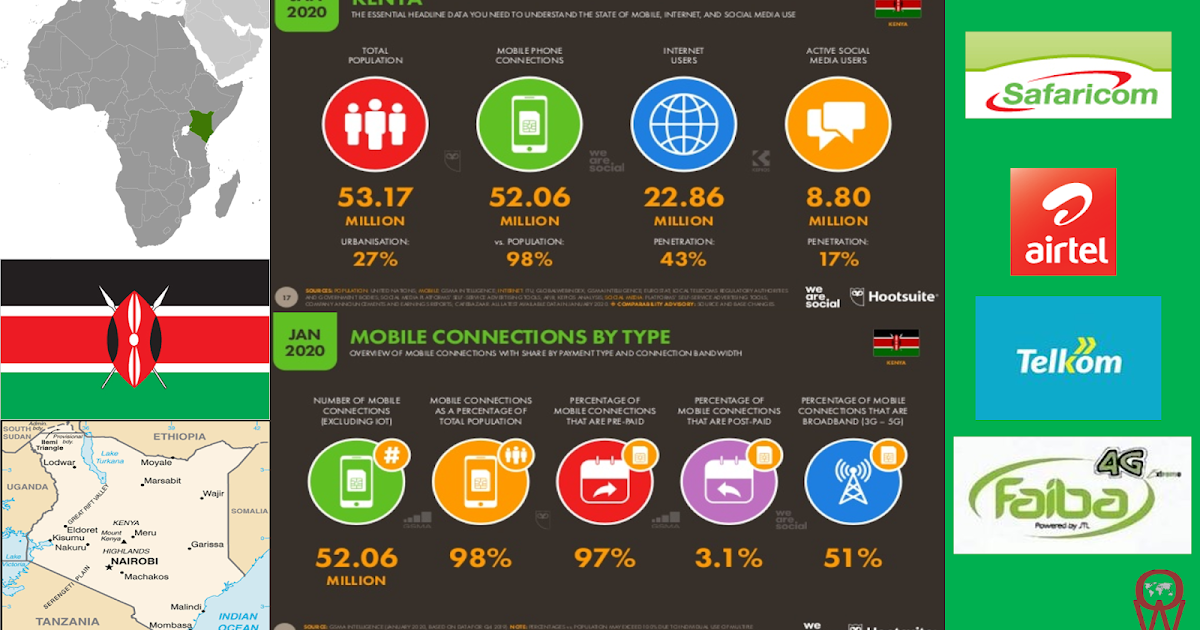
Kenya telecommunications sector is showing clear signs of maturity, with subscriber growth slowing even as usage of digital services particularly mobile money and data continues to accelerate.
According to the latest report from the Communications Authority of Kenya, total mobile subscriptions reached 78.4 million in Q2 2025/26, representing a marginal 0.1% increase from the previous quarter.
While subscriber numbers have plateaued, industry activity remains strong, signaling a shift from expansion to deeper engagement.
Mobile Money Growth Signals Expanding Digital Economy
Mobile money continues to be one of the strongest drivers of growth in Kenya telecom ecosystem.
Subscriptions rose 5.6% to 51.36 million, reinforcing the central role of digital financial services in everyday life.
Safaricom maintains a dominant position with approximately 89% market share, largely driven by the success of its M-PESA platform. However, competitors are gradually gaining ground.
Airtel Kenya increased its mobile money share from 10.3% to 11.0%, suggesting early signs of competition in a historically concentrated market.
Industry observers, including insights from the World Bank, note that Kenya remains one of the global leaders in mobile money adoption, with digital payments deeply integrated into commerce and daily transactions.
Data Usage Surges as Smartphone Adoption Rises
The shift toward a data-driven ecosystem is becoming more pronounced.
- Mobile data subscriptions grew 2.9%
- Broadband connections increased 9.3%
- Overall data consumption jumped 12%
This growth is closely tied to rising smartphone penetration, which expanded by over 9% during the quarter, while feature phone usage continued to decline.
The trend reflects a broader digital transformation, with more users engaging in streaming, social media, e-commerce, and online work.
According to analysis frequently cited by Reuters, such rapid data growth is typical of maturing telecom markets, where value shifts from connectivity to digital services.
Voice Services Remain Resilient
Despite the rise of internet-based communication, traditional voice calls remain relevant.
Airtel Kenya reported 11.83 billion minutes of voice traffic, up from 11.55 billion in the previous quarter a 2.4% increase.
Notably, off-net traffic grew by 8.4%, indicating increased cross-network communication and stronger interoperability across providers.
Pricing continues to influence usage patterns. Airtel users averaged longer call durations around 2.7 minutes per call mpared to approximately 1.6 minutes on Safaricom, suggesting affordability plays a key role in user behavior.
SMS Decline Reflects Structural Shift
SMS usage continues its steady decline across the sector, mirroring global trends.
Airtel Kenya recorded a 7.1% drop in SMS volumes, while the broader market saw a 2.6% decline.
This is largely attributed to the widespread adoption of internet-based messaging platforms, which offer richer features at lower cost.
Competitive Landscape Begins to Shift
While Safaricom remains the dominant player across subscriptions, voice, and mobile money, its growth is slowing in certain segments.
Airtel Kenya, now holding slightly above 30% market share, is strengthening its position through competitive pricing and targeted offerings.
Meanwhile, smaller operators such as Telkom Kenya and Jamii Telecommunications continue to operate in niche segments.
New entrants like Starlink are also beginning to influence the market, particularly by expanding connectivity in underserved and rural areas.
From Subscriber Growth to Service Depth
The latest data underscores a fundamental shift in Kenya telecom industry.
Growth is no longer defined by how many new users operators can acquire, but by:
- How effectively they engage existing users
- How well they monetize data and digital services
- How seamlessly they integrate into daily life
Experts say this transition marks the evolution of Kenya telecom sector into a more mature, service-driven ecosystem.
Outlook: A More Competitive, Value-Driven Market
As the market continues to evolve, competition is expected to intensify around pricing, service quality, and innovation.
Operators that can deliver affordable data, reliable connectivity, and integrated financial services will likely gain a competitive edge.
For consumers, this could translate into better services and more choices. For operators, it signals a new phase where success depends less on scale alone and more on delivering meaningful value in an increasingly digital economy.








NAIROBI, October 9, 2026 — Kenya Airways is set to receive US$350 million (approximately Sh45.4 billion) in government shareholder financing after Cabinet approved the funding to address urgent operational costs and support the national carrier’s recovery.
The funding, announced following a Cabinet meeting at State House in Nairobi, is intended to help the airline meet pressing financial obligations, including aircraft maintenance and efforts to return grounded planes to service.
The approval marks a fresh intervention by the government, Kenya Airways’ largest shareholder, as the airline works to restore fleet capacity, strengthen its finances and pursue potential investment partnerships.

According to Reuters’ report on the Cabinet decision, the financing will be released in instalments under National Treasury oversight, with a repayment period of up to 10 years. The arrangement also allows for possible conversion into equity, subject to the required approvals.
Government targets aircraft availability and financial stability
A key priority for the new funding is to address aircraft maintenance requirements that have constrained the airline’s operational capacity.
Returning grounded aircraft to service could enable Kenya Airways to increase available capacity and improve operational flexibility. However, the Cabinet approval does not establish when individual aircraft will return to service or how quickly the funding will translate into additional flights.
The airline has previously identified global supply-chain disruptions and shortages of critical spare parts as factors affecting aircraft availability and operational reliability.
In its August 2026 financial results announcement, Kenya Airways reported that revenue increased by 9 per cent to Sh81 billion in the six months ended June 30, 2026, despite operating with 9 per cent less capacity.
The airline attributed the operating environment’s challenges partly to higher fuel costs and supply-chain constraints. It reported a loss after tax of Sh16.1 billion for the half-year, compared with Sh12.2 billion in the corresponding period a year earlier.
The latest financing is therefore intended to address immediate cash requirements while supporting the broader effort to improve fleet availability and financial resilience.
Sh122 billion in government loans targeted for restructuring
Beyond the fresh financing, Cabinet endorsed a proposal to convert approximately Sh122 billion in existing government loans, together with accrued interest, into an equity-qualifying tradable instrument.
The proposed restructuring is designed to strengthen Kenya Airways’ balance sheet and potentially improve its ability to attract new capital.
The measure is significant because the airline has been seeking strategic investors while considering options to restructure its debt and support its longer-term recovery.
However, the proposed conversion has not been completed. It remains subject to the necessary corporate, shareholder and regulatory approvals.
The government has not, through the reported decision, established that the new financing will automatically become equity or that prospective investors have committed funds under the arrangement.
A carrier under pressure to restore capacity
Kenya Airways remains an important link between Kenya and regional and international markets, supporting passenger travel, cargo transport, tourism and trade.
Its financial performance has nevertheless been affected by operating costs, aircraft availability challenges and the need to maintain its fleet.
The airline reported a net loss of Sh17.2 billion for the year ended December 2025, according to its 2025 annual report.
The government has framed the new funding and proposed debt restructuring as components of the carrier’s longer-term turnaround plan. The stated objective is to address immediate obligations while creating room for future capital raising.
The extent to which the intervention improves the airline’s financial position will depend on how the funds are deployed, the pace of aircraft restoration, operating-cost pressures and progress on the proposed balance-sheet restructuring.
Implementation remains subject to approvals
The Cabinet decision authorises a financing arrangement, but it does not by itself complete every step required to implement the measures.
The National Treasury is expected to oversee the release of the funds in tranches, while the proposed conversion of existing loans must proceed through the required approval processes.
Further details on the disbursement schedule, aircraft maintenance timelines and implementation of the debt restructuring will be important in assessing the impact of the intervention.
For now, the Sh45.4 billion financing provides Kenya Airways with an approved source of additional shareholder funding as it seeks to restore aircraft capacity, meet urgent obligations and advance its turnaround strategy.

Zimbabwean lawyer Advocate Dr Lewis Uriri has rejected a multimillion-shilling gift package from businessman Wicknell Chivayo, saying accepting the offer could compromise—or create the appearance of compromising—the independence expected of a legal practitioner.
Chivayo had announced plans to give Uriri a new 2026 Range Rover Sport Autobiography valued at about US$250,000, together with US$50,000 for fuel and another US$50,000 for Uriri’s wife.
Uriri declined the entire package.
Who Is Lewis Uriri?
Uriri is a Senior Counsel practising at Zimbabwe’s independent referral Bar and heads chambers at The Temple Bar in Harare.
According to Uriri’s professional profile, his practice covers commercial and corporate law, investment disputes, constitutional litigation, civil liberties and international arbitration.
He is also the founding president of the Zimbabwe Inns of Court and has been involved in legal education and professional training.
His international arbitration credentials include designation to the panels maintained by the International Centre for Settlement of Investment Disputes (ICSID).
Uriri began his legal career at Honey & Blanckenberg before becoming a partner at the firm. He later left private practice and joined Zimbabwe’s independent Bar.
He has also taught law at the University of Zimbabwe and has been involved in advocacy training and professional legal education.
Uriri’s Work in Politically Sensitive Cases
Uriri has represented clients in several high-profile Zimbabwean legal disputes.
View this post on Instagram
In 2018, he was part of President Emmerson Mnangagwa’s legal team when opposition leader Nelson Chamisa challenged the presidential election result. Contemporary reporting identified Uriri among Mnangagwa’s lawyers in the case, which was ultimately dismissed by Zimbabwe’s Constitutional Court.
Uriri has also represented Sengezo Tshabangu in litigation connected to the recall of opposition legislators and councillors affiliated with the Citizens Coalition for Change.
In one of the cases, Zimbabwe’s High Court barred recalled CCC candidates from contesting subsequent by-elections under the party’s name, according to reporting by CITE.
Despite his involvement in politically significant cases, Uriri’s professional profile describes a practice extending well beyond politics, including commercial transactions, constitutional law, investment disputes and international arbitration.

Why Uriri Rejected the Gift
The proposed gift came as a surprise to Uriri.
In his response to Chivayo, the lawyer said the two men had last spoken in June 2024 and that he had performed no professional work for Chivayo since then.
Uriri said any previous legal services had been performed in his professional capacity and paid for in full.
His concern was therefore not an outstanding legal bill but the professional implications of accepting a substantial personal gift after the professional relationship had ended.
Uriri referred to Zimbabwe’s legal-professional rules and international standards governing lawyers’ independence.
He said accepting such a large benefit could create the appearance of an ongoing obligation and potentially affect public confidence in his independence.
He therefore declined both the vehicle and the cash offered to him and his wife.
Zimbabwean publication ZimEye also reported on the rejection and quoted Uriri’s explanation of his decision.
The Earlier Vehicle
The latest controversy has also revived attention around an earlier vehicle reportedly connected to Chivayo and Uriri.
According to ZimLive’s report on the earlier episode, older videos appeared to show Uriri receiving a Land Rover Discovery purchased by Chivayo in 2024.
The report said the vehicle was valued at approximately US$110,000.
That earlier episode is separate from the September 2026 offer, and the circumstances surrounding the previous vehicle should not automatically be treated as evidence of wrongdoing.
Why Chivayo Is Known in Kenya
Chivayo has attracted considerable attention in Kenya because of his publicly documented interactions with President William Ruto.
In September 2026, Chivayo met Ruto at State House in Nairobi. According to Capital FM’s report, the businessman said their discussions included investment, infrastructure and economic development.
Chivayo has also announced plans to invest US$200 million in Kenya, describing the proposed investment as part of a broader infrastructure programme.
The reported investment pledge, however, is a claim by Chivayo; the reporting does not establish that the entire US$200 million programme has already been implemented.
His public association with Ruto has also attracted political attention in Kenya. Kenyan media have reported on Chivayo’s meetings with the president and his public statements about supporting Ruto.
That documented access does not, by itself, establish that Chivayo holds an official government position or has formal authority within Kenya’s political system.
A Question of Professional Independence
The dispute over the proposed Range Rover ultimately concerns more than the value of the vehicle or cash.
Chivayo presented the offer as recognition for legal work Uriri had performed in the past. Uriri viewed the same gesture through the lens of professional independence and public confidence in the legal profession.
His decision was therefore straightforward: he thanked Chivayo but declined the vehicle and both cash gifts.
The episode has nevertheless brought renewed attention to Uriri’s legal career, his involvement in politically significant Zimbabwean cases and Chivayo’s increasingly public business and political connections in the region.

Is Kenya introducing a new 5 per cent tax on YouTube creators?
Not exactly.
The 5 per cent rate itself is not necessarily new. Kenya’s tax framework has for some time provided for withholding tax on income earned through digital content monetisation.
What has changed — and what is now causing anxiety among Kenyan YouTubers — is that Google is moving to collect the tax directly from their YouTube earnings.
Google has notified creators with AdSense for YouTube accounts based in Kenya that it will begin withholding 5 per cent Kenyan tax from their finalized YouTube earnings, starting with income earned in September 2026 and paid out in October.
The company has also told creators to provide and verify their Kenya Revenue Authority (KRA) Personal Identification Numbers (PINs) through AdSense by October 1, 2026.
For creators who have grown accustomed to seeing their full YouTube payout arrive in their accounts, the change could be noticeable from the next payment cycle.
And it has already triggered a broader debate about whether Kenya is taxing an industry that many young people built largely on their own.
So, what exactly is changing?
The simplest way to understand the announcement is this: the tax is moving closer to the point where the money is paid.
Previously, a Kenyan creator could receive their YouTube earnings through Google’s AdSense system and deal with their tax obligations separately.
Under the new arrangement, Google will deduct the applicable Kenyan withholding tax before the money reaches the creator.
Google says it is required to do so under Kenya’s Income Tax Act.
“Under the Kenya Income Tax Act, Google is required to withhold taxes on YouTube earnings paid to AdSense for YouTube accounts based in Kenya,” the company says in its tax guidance.
Google says the deduction will be made monthly from finalized YouTube earnings.
That means a creator with Ksh100,000 in finalized earnings would have Ksh5,000 withheld, leaving Ksh95,000 before any other applicable deductions.
For someone earning Ksh500,000, the Kenyan withholding would amount to Ksh25,000.
At Ksh1 million, it would be Ksh50,000.
The figures are simple, but for full-time creators who depend on YouTube for their livelihood, the impact could be significant.
Why Google is asking for KRA PINs
The KRA PIN requirement is central to the new arrangement.
Google has instructed affected creators to enter their Kenyan tax identification information into AdSense for YouTube.
This allows the platform to identify the taxpayer associated with the account and apply the required Kenyan withholding.
Creators who do not provide the requested information could face payment problems.
Google’s notification gives October 1, 2026, as the deadline for providing the Kenyan PIN.
The first affected income will be September earnings, which are generally paid in the following month.
In practical terms, that means October could be the first month when many creators notice that their YouTube payout is lower than expected.
But is every YouTuber losing 5 per cent?
Not necessarily in the way some social media discussions have suggested.
The 5 per cent Kenyan withholding is separate from possible U.S. tax withholding.
YouTube already requires creators outside the United States to submit U.S. tax information, and depending on the creator’s circumstances, U.S. taxes can apply to revenue generated from viewers in the United States.
Google makes clear that the Kenyan withholding will be applied alongside any applicable U.S. taxes.
That distinction is important.
It does not mean every Kenyan creator will automatically lose a fixed percentage to both countries.
The U.S. withholding depends on factors including the creator’s tax status and the portion of their earnings attributable to U.S. viewers.
Nevertheless, creators who already see U.S. tax withheld from their payments are understandably watching the new Kenyan deduction closely.
For them, another deduction from the same YouTube payout means less money available at the end of the month.
Why creators are pushing back
The strongest reaction has not necessarily been against taxation itself.
It is about what creators believe they are getting in return.
Kenya’s creator economy has expanded rapidly over the past decade.
YouTube channels now cover almost everything — news, comedy, music, politics, travel, education, religion, technology, food, sports and personal stories.
Some creators have turned their channels into small businesses, employing cameramen, editors, writers, researchers, social-media managers and other workers.
For many young Kenyans, digital content has also provided an alternative to an increasingly difficult formal job market.
That is why some creators believe the government should be doing more to support the sector before increasing the mechanisms used to collect revenue from it.
One creator quoted in reaction to the announcement argued that the government had offered little support to digital creators while they faced expensive equipment, data and production costs.
The argument is straightforward: if content creation is now recognised as a taxable industry, should it also be treated as an industry worthy of structured support?
That question is likely to become more prominent as the new withholding system takes effect.
Why KRA wants the money collected at source
From the government’s perspective, the move makes sense.
Digital income can be difficult for tax authorities to monitor when payments move between creators and international technology companies.
A Kenyan creator may have no physical office, no employees and no conventional payroll system.
Their business could consist of a YouTube channel, a smartphone, a camera, an internet connection and an AdSense account.
But the income can still be substantial.
By having Google withhold the tax, KRA does not have to rely entirely on individual creators to declare their YouTube income after receiving it.
The platform effectively becomes part of the collection system.
That also creates a clearer link between the money being paid, the person receiving it and the taxpayer’s KRA PIN.
For the government, that means greater visibility into a sector that was once relatively difficult to track.
A growing digital media market
The timing is significant because Kenya’s digital audience has expanded dramatically.
The Reuters Institute’s Digital News Report 2026 highlights the growing importance of social platforms in the country’s media environment, with YouTube increasingly becoming an important source of news and information.
That growth has created an ecosystem in which individual creators can sometimes reach audiences larger than those of traditional media outlets.
A successful YouTuber can attract millions of views without owning a television station, printing a newspaper or operating a radio frequency.
That is precisely what makes the sector attractive — and increasingly important to tax authorities.
What creators should do
For creators who have received Google’s notification, the immediate issue is compliance.
They should log into their AdSense for YouTube account and check their tax information.
The KRA PIN submitted should be accurate and correspond with the taxpayer details associated with the account.
Creators should also understand that the revenue displayed in YouTube Analytics is not necessarily the final amount on which the deduction will be calculated.
Google says the withholding applies to finalized YouTube earnings.
Creators who operate businesses around their channels may also want to review their tax position with a qualified professional, particularly if they have employees, business expenses, foreign income or U.S. tax withholding.
The bigger issue goes beyond YouTube
The most important part of Google’s announcement may ultimately have little to do with YouTube itself.
It signals how Kenya is adapting its tax system to an economy in which people increasingly earn money through global digital platforms.
YouTube is only one part of that economy.
Kenyan creators also make money through TikTok, Facebook, Instagram, podcasts, newsletters, sponsorships, affiliate marketing and other online businesses.
As these income streams become more valuable, governments around the world are looking for ways to bring them into the tax system.
For creators, that creates an uncomfortable reality.
The same internet that allowed them to build businesses without waiting for traditional institutions to give them a job is now making their income easier for governments and platforms to identify.
The debate, therefore, is unlikely to end with the first Ksh5,000 deduction.
It is likely to become a much larger conversation about taxation, regulation and government support for Kenya’s creator economy.
For now, however, the immediate deadline is clear.
Google wants Kenyan creators using AdSense for YouTube to provide their KRA PINs by October 1, 2026, while the first 5 per cent Kenyan withholding is expected to apply to September earnings paid out in October.
For a creator earning Ksh100,000, that means Ksh5,000.
For someone earning Ksh1 million, it means Ksh50,000.
And for an industry that has spent years building itself largely outside the traditional media establishment, that first deduction could mark the beginning of a very different relationship between Kenya’s creators, Google and the taxman.

Veteran Kenyan Diplomat and Politician Burudi Nabwera Dies at 99

Molo Student’s Murder: Grieving Mother Seeks Justice as Questions Over Warning Signs Emerge

Kenya Airways Gets Sh45.4 Billion Government Financing Boost as Turnaround Plan Advances

VIDEO: iPhone 17 Air Leak Reveals Ultra-Thin Design: A Bold Leap Beyond the iPhone 16 Pro

How U.S. Remittance 5% Tax Bill Could Impact Kenyan Diaspora: What You Need to Know

Motorola Launches $1,300 Razr Ultra Foldable Smartphone with AI Features, Swarovski-Enhanced Earbuds

 Tech1 year ago
VIDEO: iPhone 17 Air Leak Reveals Ultra-Thin Design: A Bold Leap Beyond the iPhone 16 Pro
- News1 year ago
How U.S. Remittance 5% Tax Bill Could Impact Kenyan Diaspora: What You Need to Know
- Tech1 year ago
Motorola Launches $1,300 Razr Ultra Foldable Smartphone with AI Features, Swarovski-Enhanced Earbuds
- Insurance Basics1 year ago
Popular Apps May Be Secretly Tracking Your Driving – And Raising Your Insurance Rates
- Tech1 year ago
Motorola Razr Ultra (2025) Launches With Free 1TB Storage Upgrade
- News1 year ago
What would you do if your Gold Digger girlfriend behaved like this?
- News1 year ago
Box Office: ‘Sinners’ Holds No. 1 Spot With $13M Friday; ‘The Accountant 2’ Debuts With $9.4M
- Insurance Basics1 year ago
Florida House Passes ‘Pam Rock Act’ Requiring Dog Registry and $100K Liability Insurance