Education
How One Kenyan Scholar Turned a Study Abroad Dream Into Reality


For thousands of young Kenyans dreaming of studying abroad, the journey from application to visa approval can feel like an uphill climb filled with uncertainty. But for Linet Mucheru, a determined graduate from Thika, patience, faith, and the right guidance transformed a years-long dream into a life-changing reality. Her story offers valuable lessons for anyone in the Kenyan diaspora community or those hoping to join it through graduate study in the United States.
A Dream Rooted in Thika, Kenya
Linet’s story begins in Kiganjo, Thika, where she grew up in a family that placed high value on education. She attended Cornerstone Junior Academy for her primary schooling before proceeding to Ndumberi Girls in Kiambu for her secondary education. It was during Form 2 that the idea of studying abroad first took shape, sparked by conversations with a close friend about pursuing opportunities beyond Kenya.
Like many science-oriented students, Linet initially set her sights on medicine, selecting biology as a key subject to support a future in healthcare. That early interest in the sciences would later shape her entire academic and career trajectory.
Choosing Biochemistry and the First Steps Abroad
In 2019, Linet enrolled at Egerton University to pursue a Bachelor of Science in Biochemistry and Molecular Biology. University life broadened her perspective, and by her second year, watching a friend relocate abroad reignited her determination to pursue international education. She obtained her passport in 2020 and began applying to universities and scholarship programs, a process that, despite many attempts, did not yield immediate results.
Discovering the International Scholars Program
After graduating from Egerton University in 2023 and completing an internship at a diagnostic lab in Nairobi, Linet’s path changed when her mother learned about the International Scholars Program (ISP) through a family friend whose relative had successfully studied in the U.S. through the same program.
Encouraged by this connection, Linet joined ISP in early 2024. Given her background in biochemistry, she focused her search on research-based graduate programs in biology and bioinformatics, fields that aligned closely with her academic strengths and long-term career goals.
Navigating School Applications and Funding
Working with ISP’s career advisory team, Linet applied to several U.S. universities, including Grand Valley State University, Quinnipiac University, and the University of Delaware, before ultimately settling on the Master’s in Biology program at Indiana University of Pennsylvania (IUP). Founded in 1875, IUP is known for its academic affordability, high acceptance rate, and strong support systems for international graduate students, qualities that made it an ideal fit.
Through ISP, Linet benefited from waived application and transcript evaluation fees, priority admissions processing, and guidance in securing funding for both tuition and living expenses, a critical hurdle for many Kenyan students pursuing studies in the U.S.
Preparing for the U.S. Visa Interview
For many Kenyan applicants, the visa interview is the most nerve-wracking stage of the study abroad journey. Linet prepared extensively, reviewing dozens of training videos and past interview transcripts provided by ISP. Her preparation paid off: during her interview, she confidently explained her academic plans and funding arrangements, and was issued her visa without complications.
Arriving in the United States
Linet’s journey took her from Jomo Kenyatta International Airport through Doha, onward to Philadelphia, and finally to Pittsburgh, the gateway to her new academic home. Upon arrival, she was welcomed by a supportive community of fellow ISP students who assisted with airport pickup, campus orientation, and settling into student life.
A Story of Faith, Patience, and Persistence
Looking back, Linet describes her journey as one defined by patience and unwavering faith. Her experience is a powerful reminder to other aspiring Kenyan students: persistence, the right support system, and preparation can turn even long-held dreams into achievable milestones.
For members of the Kenyan diaspora and those preparing to join it, Linet’s journey underscores an important truth. Studying abroad is not just about crossing borders, but about building a global future rooted in determination and community support.
Interested in following a similar path to graduate study in the United States? Explore our related resources on visa preparation, scholarship opportunities, and choosing the right university for your field of study.
About the International Scholars Program (ISP)
This inspiring story is brought to you by the International Scholars Program (ISP), a global mobility platform helping talented students access education, career, and migration opportunities worldwide.
Through its Academic Study Pathway, ISP supports students throughout the entire journey, including:
- University admissions
- Scholarship and funding guidance
- F-1 student visa preparation
- Mock interviews
- Travel arrangements
- Pre-departure support
- Career-focused STEM master’s programs
Whether your goal is academic advancement, cultural exchange, vocational training, or international career development, ISP provides structured guidance designed to help students achieve global success.
Apply today: www.internationalscholarsprogram.com
United States Office
Wells Fargo Center
100 S. Ashley Drive, Suite 600
Tampa, FL 33602
Tel: +1 (813) 333-10860
Nairobi Office
The Mirage, Tower 1, 8th Floor
Off Waiyaki Way, next to Nairobi GTC
Westlands, Nairobi
Tel: +254 742 849 555
Meru Office
Royal Business Park, 7th Floor
Njuri Ncheke Street
Meru, Kenya
Tel: +254 796 756 726
How One Kenyan Scholar Turned a Study Abroad Dream Into Reality









The Trump administration is proposing a dramatic new fee on the Optional Practical Training program used by international students to gain work experience in the United States, with the Department of Homeland Security seeking to charge schools $70,000 for a student’s initial participation and $30,000 for subsequent participation.
The proposal, released by U.S. Immigration and Customs Enforcement on Wednesday and scheduled for publication in the Federal Register on Oct. 8, would apply the charges to schools certified to enroll F-1 international students. The fee would have to be paid before a school’s designated official could recommend a student for OPT. (Federal Register Public Inspection)
The proposal is not a $70,000 bill that the government would directly send to each student. The regulatory text places the payment obligation on the educational institution. DHS says, however, that schools could potentially seek outside funding, including contributions from employers or other organizations. (Federal Register Public Inspection)
What the proposed fee would cover
OPT allows F-1 students to undertake employment related to their field of study during or after their academic program. Under current rules, students can generally receive up to 12 months of OPT at each educational level. Eligible STEM graduates can receive an additional 24-month extension, for as much as three years of post-completion practical training.
Under the proposed rule, the first OPT recommendation for an F-1 student would trigger the $70,000 payment, regardless of whether the student uses pre-completion or post-completion OPT. A later OPT recommendation would trigger the $30,000 charge. DHS specifically says the subsequent fee would also apply to STEM OPT. (Federal Register Public Inspection)
The proposal therefore could result in $100,000 in fees for a student who receives an initial OPT authorization and later uses a STEM OPT extension.
DHS estimates that between 88,374 and 194,554 students could participate annually in OPT under different scenarios, while STEM OPT participation could range from 74,088 to 95,384 students. Based on those assumptions, the department estimates annual fee collections of between $8.4 billion and $16.5 billion, with a primary estimate of $12.4 billion. (Federal Register Public Inspection)
Those figures are estimates, not expected collections under a finalized policy. DHS acknowledges that the size of the proposed fees could substantially reduce participation and says it cannot confidently predict how many schools would continue recommending students for OPT. (Federal Register Public Inspection)
DHS says the proposal targets fraud and program abuse
DHS says the fees are intended to combat fraud, strengthen the immigration system and protect U.S. workers. The proposal points to previous investigations involving fraudulent OPT employment arrangements, including cases involving purported employers and worksites that did not actually provide the jobs represented to immigration authorities. (Federal Register Public Inspection)
The department cites an ICE investigation in Northern Virginia in which officials said they found evidence of nonfunctional or staged worksites and supervisors who were unfamiliar with requirements for employing foreign students. DHS also refers to a 2026 investigation involving more than 10,000 F-1 students associated with employers it characterized as highly suspect. (Federal Register Public Inspection)
DHS also argues that the expansion of STEM OPT has created a substantial employment pathway outside the congressionally capped H-1B system. The proposed rule notes that 165,524 F-1 students participated in STEM OPT in 2024, compared with the annual statutory H-1B cap. (Federal Register Public Inspection)
The administration’s rationale is therefore broader than simply raising revenue: the rule describes the fees as a mechanism intended to discourage fraudulent or inappropriate use of OPT and to reduce what DHS considers an avenue for bypassing other employment-based immigration restrictions. (Federal Register Public Inspection)
Colleges could face substantial costs
The financial responsibility would fall initially on institutions rather than directly on students. DHS identified 2,478 schools that enrolled F-1 students who participated in OPT during the 2022-24 period and treated them as the population potentially affected by the proposal. (Federal Register Public Inspection)
The department’s own analysis illustrates how large the financial exposure could become. It estimates that 1,389 small institutions could be affected and that, after the transition period, 98 of them could face maximum annual fee impacts exceeding 20% of their estimated annual revenue if historical OPT participation continued. (Federal Register Public Inspection)
That analysis assumes historical participation patterns continue even after the fees are imposed. DHS separately acknowledges that the proposed charges could cause institutions to reduce the number of students they recommend for OPT. (Federal Register Public Inspection)
The broader higher-education consequences could extend beyond OPT revenue itself. NAFSA, an association representing international educators, estimates that international students contributed $42.9 billion to the U.S. economy and supported more than 355,000 jobs during the 2024-25 academic year. Its latest projections, which do not include students on OPT, estimate that a potential decline of up to 111,000 international students could reduce economic contributions by as much as $3.4 billion. Those are NAFSA’s estimates, rather than government forecasts.
The proposal comes with a relatively short public-comment window
One detail in the initial account of the proposal requires correction.
The public-comment period is 30 days, according to the proposed rule. A separate 60-day period applies to comments concerning the information-collection requirements under the Paperwork Reduction Act. (Federal Register Public Inspection)
The proposal is not yet a final rule. DHS says it will consider public comments and may change the rule before issuing a final version. Under the proposed text, the fees would apply prospectively to OPT recommendations dated on or after the rule’s effective date. The proposed transition language specifies an effective period beginning 60 days after publication of a final rule. (Federal Register Public Inspection)
For readers who want to examine the underlying material, the most important documents are the DHS/ICE proposed rule in the Federal Register record, ICE’s official explanation of OPT and STEM OPT requirements, and USCIS’s current fee schedule for employment authorization applications.
What happens next
The proposal will now enter the federal rulemaking process. Universities, students, employers and other interested parties can submit comments addressing the fee levels, DHS’s legal authority, the economic assumptions and the practical consequences of requiring institutions to make payments of tens of thousands of dollars before recommending students for employment authorization.
The proposal itself acknowledges that its effects are difficult to predict. DHS expects some institutions and students to change their behavior in response to the cost, but the department says it cannot reliably quantify the resulting reduction in OPT participation. (Federal Register Public Inspection)
That uncertainty is likely to be central to the debate over the proposal: the administration says the fees are necessary to address fraud, immigration-system integrity and protection of U.S. workers, while the practical effect will depend heavily on whether universities continue to absorb the cost, shift some or all of it elsewhere, or stop recommending some students for OPT.
Education
Undergraduate Scholarships for Kenyan Students: Bob Mwiti’s Powerful Guide to a Brighter Future

Undergraduate scholarships for Kenyan students can make the difference between seeing an American university education as an impossible dream and viewing it as an opportunity worth preparing for. Speaking to students at Nkuene Girls, Bob Mwiti addressed one of the biggest concerns young people and their families face when considering education in the United States: cost.
Using his own experience studying in America, Bob explained the financial realities students may encounter, the importance of scholarships and education financing, and why academic preparation should begin long before a student boards a flight.
His central message to the students was simple. Studying in the United States can be expensive, but talented Kenyan students should not automatically rule out the possibility simply because their families do not have millions of shillings available for university fees.
Understanding the Cost of Studying in America
Bob began by giving the students a practical example from his own graduate education in the United States.
He explained that a master’s program at a relatively modest American university could cost around $50,000, which he estimated at roughly KES 6 million.
For many Kenyan families, finding that amount of money for education would be extremely difficult.
That reality led Bob to ask an important question: how many talented Kenyan students could realistically afford such costs without access to scholarships, financing or other forms of support?
Not many.
It was this challenge, he told the students, that contributed to the creation of the International Scholars Program.
Rather than allowing the cost of international education to automatically exclude academically capable students, the idea was to create pathways that could connect them with universities, scholarships and education financing.
Why the International Scholars Program Was Created
Bob explained that the International Scholars Program was established to support bright students seeking opportunities to study in the United States.
The program initially focused on graduate students before later expanding to include undergraduate applicants.
That expansion was particularly relevant to the students at Nkuene Girls, who were approaching the end of secondary school and beginning to think seriously about what would come next.
For some of them, university education in Kenya may be the next step.
For others, Bob wanted them to understand that opportunities outside the country could also be explored.
The objective, according to his address, is to connect qualified students with universities while helping them navigate scholarships and other funding options that can make international education more accessible.
Undergraduate Scholarships for Kenyan Students Require Preparation
Bob was also careful to make one thing clear: scholarships are competitive.
Being interested in studying abroad is not enough.
Students who want access to strong universities and substantial financial support need to position themselves academically.
One of the areas he highlighted was SAT preparation.
Within the International Scholars Program pathway he described to the students, applicants seeking the most competitive scholarship opportunities are expected to perform strongly on the SAT.
Bob explained that the SAT is scored out of 1600 and that ISP looks for a score of at least 1300 for students targeting its top scholarship pathway.
The program also provides SAT preparation to help students work toward that target.
For the Nkuene Girls students, this meant that preparation for studying abroad could begin while they were still in secondary school.
Why Strong SAT Performance Can Matter
According to Bob, a strong SAT score can help position a student more competitively when seeking admission and scholarships at American universities.
He used some of the world’s most selective institutions as an example of just how intense competition for university places can become.
Top universities receive applications from highly accomplished students from around the world, meaning excellent grades alone may not automatically guarantee admission.
His message was not that every student must attend an institution such as Harvard or Stanford.
Rather, it was to demonstrate that international university admission can be highly competitive and students must take their preparation seriously.
For Kenyan students hoping to secure significant scholarship support, strong academic performance can therefore become an important part of building a competitive application.
Academic Performance Still Matters
Beyond the SAT, Bob explained the academic expectations associated with different undergraduate pathways within ISP.
For the top tier scholarship cohort he described, students are expected to have strong KCSE results, including at least an A minus, alongside the required SAT performance.
This pathway is intended for students pursuing substantial scholarship opportunities that may help with both tuition and living expenses.
Bob then addressed students who may not achieve an A minus.
Their international study ambitions, he explained, do not necessarily have to end.
The program also has another pathway for students who meet different academic requirements and may be able to pursue options involving education financing, family-supported funding or other arrangements.
That distinction was important.
Not every student will follow exactly the same route to an American university.
Some may compete for scholarships.
Others may combine partial scholarships with financing.
Some families may have access to their own funding.
What matters is understanding which pathway fits the student’s academic results and financial circumstances.
Scholarships Are Not Simply Free Money
One of the important lessons from Bob’s address was that students need to understand how scholarship opportunities actually work.
Universities determine the scholarships they offer, and students compete for those opportunities.
This means a student needs to build a strong profile rather than assuming that joining a study abroad program automatically guarantees a scholarship.
Academic results matter.
Standardized testing may matter depending on the pathway and institution.
Preparation matters.
And students need to begin thinking about these requirements early enough to give themselves a realistic chance of competing.
For Nkuene Girls students preparing to complete secondary school, Bob’s message was therefore as much about preparation as it was about opportunity.
Planning Early for Undergraduate Study in the USA
Bob also spoke about timelines.
Students do not simply complete high school one month and depart for America the next.
University selection, applications, testing, scholarship consideration, funding arrangements and immigration processes all take time.
He explained that students within the program commonly begin university in the United States around major academic intakes such as August or January.
For students approaching graduation, planning ahead becomes essential.
If America is part of the goal, the preparation needs to begin early.
That can mean researching universities, preparing for required tests, understanding funding options and ensuring academic documents are ready.
Support That Extends Beyond University Admission
Bob also emphasized that the International Scholars Program’s role does not necessarily end when a student secures admission and travels to America.
Moving abroad introduces new challenges.
International students have to adjust to another country, succeed academically and eventually begin thinking about their professional lives after graduation.
According to Bob, the community built through the program is intended to provide support beyond simply helping students reach the United States.
He told the students that hundreds of learners had already gone through the program and referred to the substantial education financing that had been facilitated for that community.
For prospective students, this means the study abroad journey should be viewed as more than securing an admission letter.
It is a longer process involving education, adjustment, career development and informed decisions about what comes after graduation.
Turning Academic Excellence Into Global Opportunity
Bob Mwiti’s address at Nkuene Girls ultimately challenged students to see academic performance as something that can create opportunities far beyond the classroom.
The cost of studying abroad is real.
Competition for scholarships is real.
And gaining admission to strong universities requires preparation.
But those realities do not mean talented Kenyan students should immediately conclude that international education is beyond their reach.
For students interested in undergraduate scholarships for Kenyan students, the journey begins with understanding what universities are looking for and preparing accordingly.
Strong KCSE results can matter.
SAT preparation can matter.
Researching universities can matter.
And understanding the different ways an international education can be financed can prevent students from dismissing opportunities too early.
Bob’s message to the Nkuene Girls students was therefore not simply, “Go and study in America.”
It was a call to prepare.
Work hard academically.
Understand the competition.
Explore scholarship and funding pathways.
And recognize that a student’s financial background does not necessarily have to define the limits of her ambition.
For a young person preparing to leave high school, university may feel like the beginning of an entirely new world.
With the right preparation, Bob’s message was that the world they are preparing to enter could be much bigger than they imagined.
This inspiring story is brought to you by The International Scholars Program (ISP), a one-stop global mobility platform empowering bright talent to study, live, and work abroad. Through diverse pathways including academic study, cultural exchange, permanent residency, and vocational training, ISP unlocks global opportunities without limits.
Through our Academic Study Pathway, we have built strong global partnerships to ensure a seamless master’s journey; from school admissions and funding to visa applications, travel arrangements, and studying abroad. Regardless of your undergraduate background, ambitious students can pursue STEM-designated master’s programs with the structure, guidance, and global network needed to turn aspirations into achievements.
Don’t miss out on this fantastic opportunity! Apply today at www.internationalscholarsprogram.com
US Office:
Wells Fargo Center.
100 S. Ashley Drive, Suite 600,
Tampa, FL, 33602.
Tel: +1 (813) 333 10860
Nairobi, Kenya Office:
The Mirage, Tower 1, 8th Floor,
Off Waiyaki Way next to Nairobi GTC,
Westlands, Nairobi.
Tel: +(254) 742 849 555
Meru, Kenya Office:
Royal Business Park, 7th Floor, Njuri Ncheke St,
Meru, Kenya.
Tel: +(254) 796 756 726
Education
Study Abroad Success Story from Kenya: Donald’s Inspiring Journey from Struggle to a Powerful New Beginning
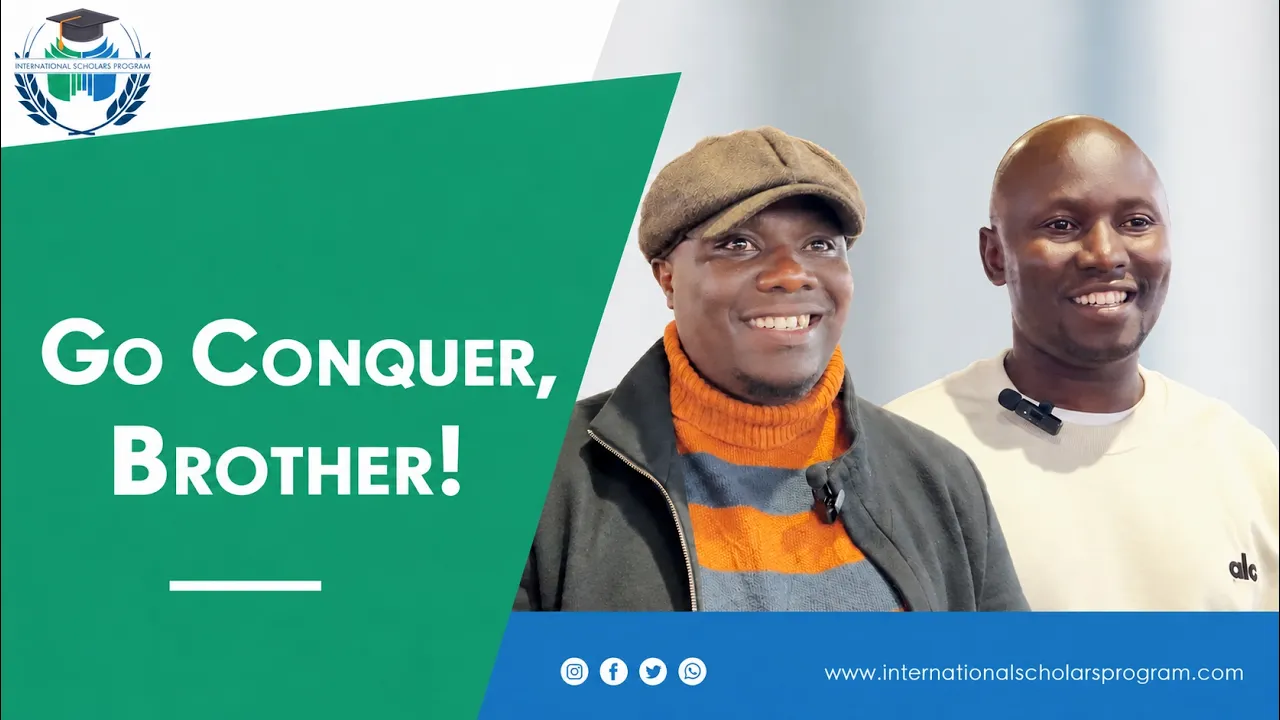
This study abroad success story from Kenya is not only about one student preparing for a new chapter abroad. It is also about friendship, shared hardship, patience, and the joy of watching someone you have struggled alongside finally receive the opportunity they have been hoping for.
For Teddy Emanuel, seeing his close friend Donald move forward with his study abroad journey feels almost unbelievable.
The two come from the same region and share an engineering background. More importantly, they have walked through some of the same difficult seasons together.
There was a time when both had completed their engineering studies but were unemployed. They were graduates with qualifications, ambitions, and hopes for the future, yet the opportunities they expected did not come immediately.
That shared experience strengthened their friendship.
They understood each other’s frustrations, encouraged one another, and kept believing that eventually things would change.
Today, Teddy looks at Donald’s progress and describes it as something that once seemed almost impossible.
A Friendship Built During Difficult Times
Teddy describes Donald as much more than an ordinary friend.
Their relationship was shaped during a period when both were trying to find their place after university.
They had studied engineering, completed their education, and expected to begin building their careers.
Instead, they found themselves facing unemployment.
For many young graduates in Kenya, this transition can be challenging. Completing university does not always lead immediately to employment, and the period between graduation and securing a meaningful opportunity can test confidence and patience.
Teddy and Donald experienced that reality together.
They supported one another through uncertainty while continuing to hope that something better would eventually come.
That shared struggle became one of the strongest foundations of their friendship.
They had seen each other at a point when the future was unclear.
Now, seeing Donald step into a new opportunity makes the achievement even more meaningful.
When the Future Looked Completely Different
Teddy reflects on how dramatically life can change in just a few years.
Looking back at 2024, he says neither of them would have believed that Donald’s life could look so different by 2026.
At the time, they were still navigating uncertainty.
The idea that Donald would eventually be preparing to pursue a new chapter abroad may have seemed too distant to take seriously.
Yet circumstances changed.
The opportunity came.
And what once felt unrealistic became real.
That transformation is part of what makes Donald’s study abroad success story from Kenya so meaningful to Teddy.
It is not simply about travelling to another country.
It is about seeing how quickly a difficult season can change when preparation, persistence, support, and opportunity come together.
Why Donald’s Success Feels Personal
Teddy’s happiness for Donald comes from more than friendship.
He remembers that Donald was also present during important moments in his own life.
When Teddy experienced wins, Donald celebrated with him.
That support stayed with him.
So when Donald’s own breakthrough finally came, Teddy says he felt deeply happy to see his friend receiving the kind of opportunity he had long hoped for.
There is something significant about friendships where success is not treated as competition.
Instead of comparing their journeys, Teddy describes a relationship where each person wants to see the other progress.
That mindset makes Donald’s achievement feel shared.
Teddy had seen the struggle.
He had seen the waiting.
He had seen the uncertainty.
Now he gets to witness the breakthrough.
The Power of Having Someone Believe With You
Long journeys often become easier when someone else understands what you are going through.
For Teddy and Donald, their similar professional backgrounds and shared experience of unemployment meant they could relate to each other in a way that others perhaps could not.
They were both hoping for better opportunities.
They were both trying to build their futures.
And they both understood the emotional weight of waiting for something to change.
That kind of support can matter enormously.
Sometimes encouragement does not solve the immediate problem.
It does not automatically create a job or produce an international opportunity.
But it can help someone remain hopeful while continuing to work toward something better.
For Donald, that period of uncertainty eventually gave way to a completely different chapter.
From Engineering Graduate to a Global Opportunity
Donald’s journey also reflects the broader ambitions of many young Kenyan professionals.
After earning a degree, graduates often begin thinking beyond the first job.
They consider how they can grow professionally, develop new skills, gain international exposure, and build careers that create greater opportunities for themselves and their families.
Study abroad can become one pathway toward that growth.
For Donald, the opportunity represents a chance to move beyond the difficult stage he and Teddy once shared and step into a new environment filled with possibilities.
Teddy sees this moment as a victory.
Not because every challenge has suddenly disappeared, but because Donald now has the chance to take another major step forward.
“Go and Conquer the World”
Perhaps the most memorable part of Teddy’s message is the encouragement he gives Donald as he prepares for what comes next.
He tells his friend to go out and win.
To conquer the world.
To chase his American dream.
Those words capture the emotional weight of the moment.
They come from someone who understands where Donald started.
They come from someone who witnessed the difficult period before the opportunity.
And they come from someone who genuinely wants to see his friend succeed.
For students and young professionals reading Donald’s story, that message can carry a broader meaning.
Your current circumstances may not always reflect where you are headed.
A difficult season after graduation does not automatically define the rest of your career.
A delayed opportunity is not always a denied future.
Sometimes the chapter that feels stagnant is simply part of the journey toward something bigger.
A Study Abroad Success Story Rooted in Persistence
Donald’s study abroad success story from Kenya reminds us that success often looks very different when viewed from the beginning.
At one stage, he and Teddy were simply two engineering graduates trying to figure out what came next.
They did not know exactly how their lives would unfold.
They did not know which opportunities would eventually appear.
What they did have was friendship, hope, and a willingness to keep moving forward.
Today, Teddy can look at Donald’s journey and see how much has changed.
The friend who once shared the uncertainty of unemployment is now preparing to pursue a new chapter abroad.
For Teddy, that transition feels almost miraculous.
It is proof of how much life can change when people remain open to opportunity and continue believing that difficult circumstances do not have to be permanent.
Donald’s next chapter is only beginning.
But for the friend who walked through some of the hardest moments beside him, seeing him reach this point is already a victory worth celebrating.
This inspiring story is brought to you by The International Scholars Program (ISP), a one-stop global mobility platform empowering bright talent to study, live, and work abroad. Through diverse pathways including academic study, cultural exchange, permanent residency, and vocational training, ISP unlocks global opportunities without limits.
Through our Academic Study Pathway, we have built strong global partnerships to ensure a seamless master’s journey; from school admissions and funding to visa applications, travel arrangements, and studying abroad. Regardless of your undergraduate background, ambitious students can pursue STEM-designated master’s programs with the structure, guidance, and global network needed to turn aspirations into achievements.
Don’t miss out on this fantastic opportunity! Apply today at www.internationalscholarsprogram.com
US Office:
Wells Fargo Center.
100 S. Ashley Drive, Suite 600,
Tampa, FL, 33602.
Tel: +1 (813) 333 10860
Nairobi, Kenya Office:
The Mirage, Tower 1, 8th Floor,
Off Waiyaki Way next to Nairobi GTC,
Westlands, Nairobi.
Tel: +(254) 742 849 555
Meru, Kenya Office:
Royal Business Park, 7th Floor, Njuri Ncheke St,
Meru, Kenya.
Tel: +(254) 796 756 726

Kenyan woman Stella Wamaitha Njoroge says one act of kindness in Dubai changed her life

DHS proposes $70,000 fee for international students seeking U.S. work experience

Undergraduate Scholarships for Kenyan Students: Bob Mwiti’s Powerful Guide to a Brighter Future

VIDEO: iPhone 17 Air Leak Reveals Ultra-Thin Design: A Bold Leap Beyond the iPhone 16 Pro

How U.S. Remittance 5% Tax Bill Could Impact Kenyan Diaspora: What You Need to Know

Motorola Launches $1,300 Razr Ultra Foldable Smartphone with AI Features, Swarovski-Enhanced Earbuds

 Tech1 year ago
VIDEO: iPhone 17 Air Leak Reveals Ultra-Thin Design: A Bold Leap Beyond the iPhone 16 Pro
- News1 year ago
How U.S. Remittance 5% Tax Bill Could Impact Kenyan Diaspora: What You Need to Know
- Tech1 year ago
Motorola Launches $1,300 Razr Ultra Foldable Smartphone with AI Features, Swarovski-Enhanced Earbuds
- Insurance Basics1 year ago
Popular Apps May Be Secretly Tracking Your Driving – And Raising Your Insurance Rates
- Tech1 year ago
Motorola Razr Ultra (2025) Launches With Free 1TB Storage Upgrade
- News1 year ago
What would you do if your Gold Digger girlfriend behaved like this?
- News1 year ago
Box Office: ‘Sinners’ Holds No. 1 Spot With $13M Friday; ‘The Accountant 2’ Debuts With $9.4M
- Insurance Basics1 year ago
Florida House Passes ‘Pam Rock Act’ Requiring Dog Registry and $100K Liability Insurance