Diaspora Nexus
Why Kenyans Abroad Struggle to Invest Back Home


For many Kenyans living abroad, leaving Kenya does not mean leaving their responsibilities behind. Family is still here. Investment opportunities are still here. Property, business interests and long-term plans may still be here too. But managing all of that from another country can become complicated very quickly.
That is the reality behind My Diaspora Nexus. The platform was created to help professional Kenyans living abroad navigate some of the challenges that come with staying connected to home — from investing and buying property to family protection, wealth creation, trusted connections and everyday services in Kenya.
And the idea did not begin with theory. It grew from experience.
Understanding the Diaspora Challenge Firsthand
My Diaspora Nexus Founder and CEO Bob Mwiti has lived in the United States for close to 17 years.
During that time, he experienced many of the same questions that other Kenyans in the diaspora face when trying to build a future back home. When he began investing in Kenya, buying land and exploring opportunities, there was a lot he did not know about navigating the process from abroad.
Like many diaspora Kenyans, he often relied on family members to help him follow up on things on the ground. That dependence highlighted one of the biggest problems of living abroad: distance can easily become a trust problem.
You may want to invest in Kenya, but you cannot always visit the site. You may want to buy property, but you cannot personally verify every detail. You may need a service provider, but you do not know who is reliable. And sometimes you are forced to make important financial decisions based largely on information provided by someone else.
The Problem Was Bigger Than One Person
Over time, Bob began seeing the same challenges across a much wider diaspora community. Through years of working with Kenyans who had relocated abroad, he saw that the journey did not end once someone successfully moved overseas.
A different set of problems often followed. People wanted to invest back home. Others wanted to buy property. Families faced bereavement and emergencies. Some people needed professional connections and support. Others simply needed a trustworthy person or business to help them get something done in Kenya.
The problem was no longer simply about being abroad. It was about how to manage the connection between life abroad and responsibilities back home. That realization became one of the foundations of My Diaspora Nexus.
My Diaspora Nexus: Building a Trusted Bridge Back Home
MDN was created as a membership platform for professional Kenyans living abroad. Its purpose is to bring together solutions that address different parts of the diaspora experience under one ecosystem. Instead of a member having to find a different solution every time a challenge arises, MDN is building a network around five key areas.
Protecting Families Through My Diaspora Care
One recurring challenge Bob observed within the diaspora community was bereavement. When someone’s parent or close family member passed away, the community would often come together to raise money and provide support.
As the community grew, these situations became more frequent. That raised an important question:
Could there be a more structured way for diaspora families to prepare for difficult moments? That thinking contributed to My Diaspora Care, which combines Last Expense Insurance Protection with access to Community Benevolence Support for eligible members facing compelling emergencies.
Making Diaspora Real Estate Investment More Transparent
Real estate presented another major challenge. For Kenyans investing in property from abroad, the concern is not always whether opportunities exist. The bigger question is often whether those opportunities can be trusted.
Bob had personally invested in Kenya and seen the risks associated with property developments, including project delays and uncertainty around whether developers have the capacity to deliver. That experience influenced My Diaspora Real Estate, which focuses on due diligence, vetted partners, project verification, member feedback and ongoing accountability. The goal is to give diaspora investors more information before they commit their money.
Moving From Contributions to Wealth Creation
Many Kenyans abroad work hard and consistently support people back home. But supporting others and deliberately building personal wealth are not always the same thing. My Diaspora Investment Club was created around the idea of helping members develop disciplined investing habits and work towards long-term wealth creation.
Rather than focusing only on money being contributed and spent, the aim is to create a culture where members can consistently invest, track their progress and build value over time.
Building Stronger Connections Abroad
The diaspora journey can also be isolating. Professional success does not automatically create strong networks, trusted friendships or meaningful personal relationships. My Diaspora Connect was created to help members build professional and personal connections within a trusted community. That can include networking, mentorship, collaborations, referrals, friendships and other meaningful relationships.
Making Everyday Needs in Kenya Easier
Not every diaspora problem involves a major investment. Sometimes you simply need something done. You may need a contractor, a vehicle, a professional service or help managing a matter in Kenya. My Diaspora Essentials is designed to connect members with vetted businesses, professionals and service providers, making everyday needs easier to manage from abroad.
MDN brings these needs together within one platform designed around people who understand what it means to live abroad while remaining connected to Kenya.
Why Kenyans Abroad Struggle to Invest Back Home

When Stella Wamaitha Njoroge arrived in Dubai in February 2020, she was 23 years old and hopeful about what lay ahead.
The Kenyan woman had travelled to the United Arab Emirates expecting to find work within weeks and begin building a new life in a city known for attracting people from around the world.
Instead, the biggest global disruption in generations arrived almost immediately after she did.
The COVID-19 pandemic brought businesses, travel and everyday life to a standstill. For Njoroge, who was still trying to establish herself in a new country, the consequences were especially difficult.
Her savings began disappearing.
Then she reached a point where she could no longer afford her rent.
What happened next, according to Njoroge, would become one of the most important experiences of her life in Dubai.
She arrived in Dubai just before the pandemic
Njoroge’s timing could hardly have been more challenging.
The UAE began introducing extensive measures to contain COVID-19 in March 2020. According to the UAE government’s official account of its pandemic response, schools and higher education institutions were closed, distance learning was introduced, shopping centres and entertainment destinations were temporarily closed, new visas were suspended and restrictions were placed on air travel.
The government also introduced measures affecting foreign residents whose visas or work permits were expiring during the disruption. Some residents and visitors received extensions as authorities attempted to deal with the consequences of suspended air traffic and the wider pandemic emergency. (UAE government)
For someone who had arrived only weeks earlier, finding employment in that environment was far more difficult than she had anticipated.
Njoroge later told Emirates 24|7 that she struggled to find work during the lockdown and eventually ran out of money.
Her immediate problem was no longer simply finding a job.
It was keeping a roof over her head.
The conversation she was afraid to have
Njoroge said she became increasingly anxious as her savings disappeared.
Eventually, she had to confront a situation many expatriates fear when living away from home: she could no longer afford her accommodation.
She said she finally gathered the courage to tell her Lebanese landlord that she would not be able to pay the rent and would have to leave.
She had nowhere else to go.
But according to Njoroge, the landlord did not ask her to leave.
Instead, he allowed her to remain in the apartment without paying rent.
For three months, she said, she was able to stay there without paying a dirham.
The decision gave her something she desperately needed at the time: stability.
More importantly, Njoroge says it changed the way she felt about being alone in a foreign country.
In her account to Emirates 24|7, she said that at 23, living abroad during an unprecedented crisis, she felt “seen, supported, and protected.” (Emirates 24|7)
The landlord’s identity was not disclosed in that published account, and the details of the arrangement have not been independently documented in public records. The three-month rent-free period therefore remains Njoroge’s account of what happened.
But for her, the meaning of the experience has never depended simply on the amount of money involved.
She tried to repay him
As her circumstances eventually improved, Njoroge said she tried to repay the landlord.
He refused.
Instead, she said, he told her to pass the kindness on to somebody else who needed help.
That advice stayed with her.
The experience gave Njoroge a different perspective on what it meant to build a life in a country far from home.
She had arrived expecting to find employment and establish herself independently.
The pandemic instead showed her how vulnerable a person could become when circumstances suddenly changed.
It also showed her how much difference one person’s decision could make.
Njoroge later described the experience as something that changed her completely.
Rather than treating the landlord’s generosity as a debt that could only be settled financially, she began thinking about kindness as something that could be transferred from one person to another.
From a young newcomer to a business adviser
Njoroge eventually managed to build a career in Dubai.
Today, her professional profile describes her as a business setup consultant and UAE visa specialist with more than five years of experience. Her work involves helping people establish businesses and navigate aspects of the UAE’s immigration and business environment. (Stella Wamaitha’s professional profile)
The work has particular relevance for Africans looking to establish themselves in the UAE.
People arriving in the country to work, invest or start businesses may have to navigate licensing, immigration, residency and other administrative requirements.
The UAE has developed numerous routes for foreign entrepreneurs and investors.
The government’s official business guidance explains the steps involved in establishing a mainland company, including choosing a business activity, determining the appropriate legal form, selecting a trade name and obtaining the required approvals and licence. (UAE government business setup guide)
The country also offers residence options for eligible investors and entrepreneurs, including the Green residence system for certain categories of investors, business partners, freelancers and self-employed people. (UAE government residence information)
For Njoroge, learning how to navigate that environment eventually became part of her profession.
The woman who once arrived in Dubai struggling to find her first job now helps other people understand how to establish themselves in the country.
Her own experience became part of her expertise
Njoroge has said that her professional journey was shaped partly by her own experience trying to understand the UAE’s business and visa environment.
In a professional reflection published on LinkedIn, she described learning the system herself after encountering uncertainty and conflicting information.
Over time, that knowledge became something she could offer to others.
Her current professional profile identifies her work with Easy Business SetUp Dubai and describes her experience in business setup consulting and UAE visa services. (Stella Wamaitha on LinkedIn)
That evolution gives her story an unusual arc.
She did not arrive in Dubai as an established consultant.
She arrived as a 23-year-old newcomer trying to find work.
The pandemic interrupted those plans.
A landlord gave her time when she could no longer pay rent.
She eventually recovered, built professional experience and developed a career helping other people navigate the same country in which she had once been a newcomer.
Dubai became more than a place to work
The experience with her landlord also appears to have influenced how Njoroge understands community.
Dubai is home to a highly international population, and Njoroge says some of her most meaningful relationships have been with people from backgrounds completely different from her own.
In her interview with Emirates 24|7, she described herself as intentional about meeting people from different cultures and building relationships.
Those connections have extended beyond the UAE.
She recalled travelling to Egypt for her birthday and reconnecting with an Egyptian friend she had met while he was living and working in Dubai. The friend collected her from the airport, showed her around Cairo and eventually welcomed her into his family home.
For Njoroge, the experience demonstrated how friendships built in Dubai could continue long after people left the city.
She described those relationships as creating a kind of international family.
That idea is central to the way she now talks about her life in the UAE.
For people who move abroad without relatives nearby, friendships can become an important source of practical and emotional support.
Njoroge’s own experience gave her a particularly personal understanding of that reality.
Paying the kindness forward
The lesson she says she learned from her landlord eventually developed into something bigger than helping individuals informally.
Njoroge began looking at how she could create opportunities for other African women in business.
She told Emirates 24|7 that she had previously attended a high-end networking event where she was the only African woman in the room.
The experience was intimidating, she said, but she decided to introduce herself and speak to people.
That decision eventually led her to a mentor who invested in her business and opened professional doors for her.
The experience made her think about what might happen if other African women had greater access to similar networks.
She Means Business Network
In 2025, Njoroge and her friend Joan Mwende co-founded the She Means Business Network in Dubai, according to Njoroge’s account published by Emirates 24|7.
The network focuses on African women and women of colour who are professionals, entrepreneurs or transitioning into business.
According to Njoroge, the group organizes events, panels and networking sessions designed to improve visibility and access to opportunities.
When Emirates 24|7 profiled Njoroge in May 2026, she said the network had about 100 registered members. (Emirates 24|7 profile of Njoroge and the network)
The network represents a significant shift from where Njoroge was during the early months of the pandemic.
In 2020, she was worried about whether she could afford her next month’s accommodation.
Several years later, she was helping create professional connections for other women seeking to build careers and businesses.
Why networks matter for people living abroad
Moving to another country can involve much more than securing a job.
Newcomers often have to learn unfamiliar administrative systems, develop professional contacts and build personal relationships from scratch.
For entrepreneurs, the challenge can be even greater.
The UAE has deliberately positioned itself as a destination for international investment and entrepreneurship, with government initiatives designed to simplify business formation and support small and medium-sized enterprises.
In June 2026, Dubai’s Department of Economy and Tourism launched “SME in a Box,” a platform intended to bring services such as licensing support, banking, payments, logistics and telecommunications into a more integrated onboarding process for entrepreneurs. (Dubai Department of Economy and Tourism)
That official push illustrates the broader environment in which Njoroge now works.
The country continues to attract people who want to establish companies, relocate, invest or build careers.
But official systems are only one part of successfully settling into a new country.
People also need information, contacts and trusted guidance.
That is where Njoroge has built her professional niche.
A different kind of repayment
The landlord who helped Njoroge during the pandemic may never have expected his decision to have consequences years later.
According to her account, he simply gave a young woman some time when she was struggling financially.
He did not ask her to repay the money when she later offered to do so.
Instead, he told her to help somebody else.
That instruction appears to have become one of the guiding ideas of her life in Dubai.
Njoroge’s response has not been limited to one individual.
Her career helps people navigate business setup and visa-related matters.
Her professional network connects her with entrepreneurs and newcomers.
And the She Means Business Network is intended to give African women access to professional relationships and opportunities.
In that sense, the kindness she received has been passed forward in several different forms.
Her story reflects the uncertainty of starting over abroad
Njoroge’s story is ultimately about more than a landlord waiving rent.
It is about what can happen when someone’s carefully constructed plans collide with circumstances beyond their control.
She arrived in Dubai in February 2020 expecting to find a job.
A few weeks later, a global pandemic had disrupted the economic environment around her.
The UAE government introduced restrictions that affected travel, businesses, education and immigration. For new arrivals without established support networks, the uncertainty could be particularly difficult. (UAE government COVID-19 measures)
Njoroge’s own savings eventually ran out.
She was faced with the prospect of leaving her home.
Then, according to her account, her landlord gave her three months.
Those three months did not solve every problem she faced.
But they bought her time.
And sometimes time is exactly what a person needs to change the direction of a difficult situation.
From vulnerability to helping others
There is a striking contrast between Njoroge’s life in the first months after arriving in Dubai and the work she does today.
At 23, she was trying to find a job while watching her savings disappear.
Today, she works in business setup and UAE visa consulting.
She has built an international professional network.
She has helped establish a community for African women in business.
And she speaks openly about the importance of building relationships with people from different backgrounds.
Her professional profile now describes a career that would have been difficult to imagine during those early months of 2020. (Stella Wamaitha’s professional profile)
Her experience also illustrates how careers can emerge from unexpected circumstances.
The pandemic disrupted the plan she originally had.
But the life she eventually built in Dubai grew in a different direction.
The meaning of one small act
Stories about migration often focus on jobs, salaries, visas, businesses and the practical reasons people leave one country for another.
Njoroge’s story highlights something less tangible.
Sometimes the difference between feeling completely alone and feeling capable of carrying on can be one person’s decision to help.
For her, that decision came from a landlord at a moment when she was unable to pay rent.
The help lasted three months.
The memory has lasted years.
And the lesson she says she took from it has become part of how she approaches other people.
When she later tried to repay her landlord, he reportedly told her to pass the kindness to somebody else.
She appears to have taken those words seriously.
Today, she helps people navigate the UAE’s business environment and works to connect African women with professional opportunities.
The connection between those things is not simply financial.
It is the idea that support creates a chain.
One person helps another person stay afloat.
That person eventually becomes strong enough to help someone else.
A young woman who found a different future
Njoroge arrived in Dubai with a simple ambition: find work and build a future.
The pandemic temporarily took that opportunity away.
Her savings disappeared, her employment plans were disrupted and she reached a point where she feared she would have to leave her home.
But according to her account, someone chose to give her an alternative.
Three months of rent-free accommodation gave her enough space to get through one of the most uncertain periods of her life.
Years later, she is no longer the young woman wondering whether she can afford her next month’s rent.
She is a business setup adviser, a member of Dubai’s international professional community and a co-founder of a network seeking to help African women access opportunities.
Her story is therefore not simply about surviving the pandemic.
It is about what happened afterward.
A difficult experience became a lesson.
A lesson became a philosophy.
And that philosophy became part of the way she works with other people.
For Njoroge, the kindness of one landlord during the darkest period of her early life in Dubai appears to have changed the way she thinks about success.
Success is not only about getting ahead.
It can also mean remembering who helped you when you were struggling — and finding a way to help somebody else when your circumstances eventually allow it.
That is the legacy Njoroge says she chose to carry forward.
A young Kenyan woman arrived in Dubai hoping to build a new life.
The city gave her unexpected challenges.
One person gave her a place to stay when she had nowhere else to go.
And years later, she is trying to create opportunities for others.
Sometimes, a life-changing act of kindness does not end with the person who receives it.
Sometimes, it keeps moving.

The Trump administration is proposing a dramatic new fee on the Optional Practical Training program used by international students to gain work experience in the United States, with the Department of Homeland Security seeking to charge schools $70,000 for a student’s initial participation and $30,000 for subsequent participation.
The proposal, released by U.S. Immigration and Customs Enforcement on Wednesday and scheduled for publication in the Federal Register on Oct. 8, would apply the charges to schools certified to enroll F-1 international students. The fee would have to be paid before a school’s designated official could recommend a student for OPT. (Federal Register Public Inspection)
The proposal is not a $70,000 bill that the government would directly send to each student. The regulatory text places the payment obligation on the educational institution. DHS says, however, that schools could potentially seek outside funding, including contributions from employers or other organizations. (Federal Register Public Inspection)
What the proposed fee would cover
OPT allows F-1 students to undertake employment related to their field of study during or after their academic program. Under current rules, students can generally receive up to 12 months of OPT at each educational level. Eligible STEM graduates can receive an additional 24-month extension, for as much as three years of post-completion practical training.
Under the proposed rule, the first OPT recommendation for an F-1 student would trigger the $70,000 payment, regardless of whether the student uses pre-completion or post-completion OPT. A later OPT recommendation would trigger the $30,000 charge. DHS specifically says the subsequent fee would also apply to STEM OPT. (Federal Register Public Inspection)
The proposal therefore could result in $100,000 in fees for a student who receives an initial OPT authorization and later uses a STEM OPT extension.
DHS estimates that between 88,374 and 194,554 students could participate annually in OPT under different scenarios, while STEM OPT participation could range from 74,088 to 95,384 students. Based on those assumptions, the department estimates annual fee collections of between $8.4 billion and $16.5 billion, with a primary estimate of $12.4 billion. (Federal Register Public Inspection)
Those figures are estimates, not expected collections under a finalized policy. DHS acknowledges that the size of the proposed fees could substantially reduce participation and says it cannot confidently predict how many schools would continue recommending students for OPT. (Federal Register Public Inspection)
DHS says the proposal targets fraud and program abuse
DHS says the fees are intended to combat fraud, strengthen the immigration system and protect U.S. workers. The proposal points to previous investigations involving fraudulent OPT employment arrangements, including cases involving purported employers and worksites that did not actually provide the jobs represented to immigration authorities. (Federal Register Public Inspection)
The department cites an ICE investigation in Northern Virginia in which officials said they found evidence of nonfunctional or staged worksites and supervisors who were unfamiliar with requirements for employing foreign students. DHS also refers to a 2026 investigation involving more than 10,000 F-1 students associated with employers it characterized as highly suspect. (Federal Register Public Inspection)
DHS also argues that the expansion of STEM OPT has created a substantial employment pathway outside the congressionally capped H-1B system. The proposed rule notes that 165,524 F-1 students participated in STEM OPT in 2024, compared with the annual statutory H-1B cap. (Federal Register Public Inspection)
The administration’s rationale is therefore broader than simply raising revenue: the rule describes the fees as a mechanism intended to discourage fraudulent or inappropriate use of OPT and to reduce what DHS considers an avenue for bypassing other employment-based immigration restrictions. (Federal Register Public Inspection)
Colleges could face substantial costs
The financial responsibility would fall initially on institutions rather than directly on students. DHS identified 2,478 schools that enrolled F-1 students who participated in OPT during the 2022-24 period and treated them as the population potentially affected by the proposal. (Federal Register Public Inspection)
The department’s own analysis illustrates how large the financial exposure could become. It estimates that 1,389 small institutions could be affected and that, after the transition period, 98 of them could face maximum annual fee impacts exceeding 20% of their estimated annual revenue if historical OPT participation continued. (Federal Register Public Inspection)
That analysis assumes historical participation patterns continue even after the fees are imposed. DHS separately acknowledges that the proposed charges could cause institutions to reduce the number of students they recommend for OPT. (Federal Register Public Inspection)
The broader higher-education consequences could extend beyond OPT revenue itself. NAFSA, an association representing international educators, estimates that international students contributed $42.9 billion to the U.S. economy and supported more than 355,000 jobs during the 2024-25 academic year. Its latest projections, which do not include students on OPT, estimate that a potential decline of up to 111,000 international students could reduce economic contributions by as much as $3.4 billion. Those are NAFSA’s estimates, rather than government forecasts.
The proposal comes with a relatively short public-comment window
One detail in the initial account of the proposal requires correction.
The public-comment period is 30 days, according to the proposed rule. A separate 60-day period applies to comments concerning the information-collection requirements under the Paperwork Reduction Act. (Federal Register Public Inspection)
The proposal is not yet a final rule. DHS says it will consider public comments and may change the rule before issuing a final version. Under the proposed text, the fees would apply prospectively to OPT recommendations dated on or after the rule’s effective date. The proposed transition language specifies an effective period beginning 60 days after publication of a final rule. (Federal Register Public Inspection)
For readers who want to examine the underlying material, the most important documents are the DHS/ICE proposed rule in the Federal Register record, ICE’s official explanation of OPT and STEM OPT requirements, and USCIS’s current fee schedule for employment authorization applications.
What happens next
The proposal will now enter the federal rulemaking process. Universities, students, employers and other interested parties can submit comments addressing the fee levels, DHS’s legal authority, the economic assumptions and the practical consequences of requiring institutions to make payments of tens of thousands of dollars before recommending students for employment authorization.
The proposal itself acknowledges that its effects are difficult to predict. DHS expects some institutions and students to change their behavior in response to the cost, but the department says it cannot reliably quantify the resulting reduction in OPT participation. (Federal Register Public Inspection)
That uncertainty is likely to be central to the debate over the proposal: the administration says the fees are necessary to address fraud, immigration-system integrity and protection of U.S. workers, while the practical effect will depend heavily on whether universities continue to absorb the cost, shift some or all of it elsewhere, or stop recommending some students for OPT.
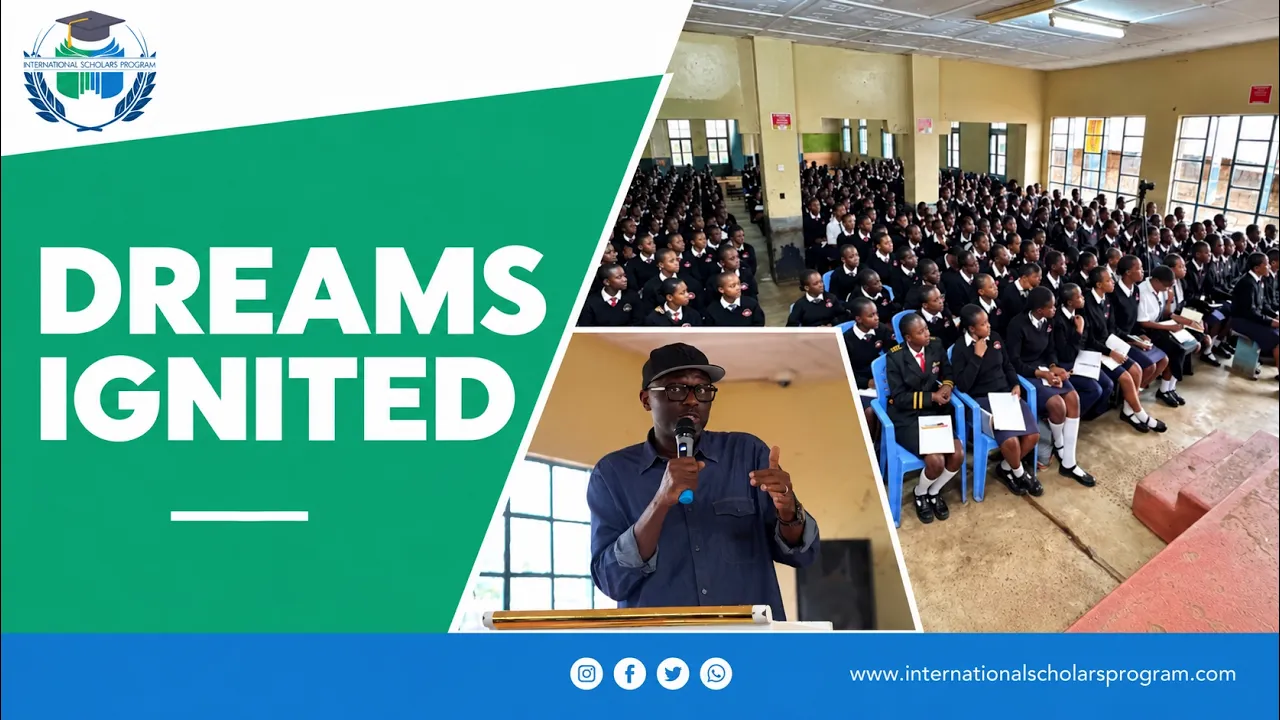
Study abroad opportunities for Kenyan students can sometimes feel distant, especially for young people whose immediate circumstances make international education seem almost impossible. But while speaking to high school students at St. Mary’s Igoji in Meru County, Bob Mwiti used his own journey to challenge that perception and encourage students to think far beyond what they can currently see.
Long before he built a life in the United States, Bob was a young boy growing up in a humble family in Meru. At the time, travelling overseas was not even part of his imagination.
His dream was much smaller. He simply wanted to see Nairobi.
Years later, that same student would leave Kenya to pursue graduate education in the United States, build professional experience in corporate America and discover opportunities he had never imagined while growing up.
By sharing that journey with high school students, Bob’s message was clear: your current circumstances do not have to determine the limits of your ambition.
Growing Up With a Dream That Stopped at Nairobi
Bob grew up with his grandparents in Meru County.
His was a humble upbringing. His grandparents did not have significant financial resources, and he grew up alongside other members of his extended family.
As a child, his world was largely defined by what surrounded him.
He had never travelled outside Meru, and the idea of one day living overseas seemed far removed from his reality.
At that stage, one of his biggest dreams was simply to go to Nairobi.
When the time came to select a secondary school, Bob chose Nairobi School partly because its name assured him of one important thing: it had to be in Nairobi.
To his younger self, reaching Kenya’s capital already represented something significant.
It is a small detail from his story, but one that carries an important lesson for young students.
Ambition often begins with what you know. Exposure can then expand it.
The destinations, careers and opportunities that seem impossible today may become realistic once students discover what exists beyond their immediate environment.
Academic Potential Meets Financial Reality
Bob performed exceptionally in primary school and earned admission to Nairobi School.
But academic ability was not enough to overcome the financial realities his family faced.
Because of limited funds, he was unable to take up the opportunity and instead attended another Nkubu High school.
High school brought even greater financial challenges.
School fees became difficult to manage, and by Form Four, the outstanding balance had grown to the point where even registering for his national examinations became a concern.
Yet Bob continued performing well academically despite repeatedly facing disruptions because of school fees.
For the students listening to him, this part of his story carried an important message.
Challenges may affect the path you take, but they do not automatically have to determine where the journey ends.
How Exposure Changed Bob Mwiti’s Ambition
A major turning point came when Bob connected with his father, who was living in the United Kingdom.
Until then, travelling abroad had never formed part of Bob’s plans.
His father introduced a different possibility.
What if Bob could eventually join him abroad?
Suddenly, a young man whose dream had once been to reach Nairobi was beginning to imagine himself outside Kenya.
That shift illustrates why exposure matters when nurturing ambition among high school students.
Young people cannot always aspire to opportunities they have never encountered.
Sometimes all it takes is meeting someone, hearing another person’s story, discovering a university or learning that students with similar backgrounds have successfully studied abroad.
That knowledge can completely change how a young person imagines the future.
For Bob, conversations about travelling overseas transformed what he believed was possible.
When the Study Abroad Dream Met Rejection
Once Bob began considering international education seriously, he assumed the journey would be relatively straightforward.
He got a passport while still young and began imagining himself leaving Kenya.
But the process did not unfold the way he expected.
His visa applications to the United Kingdom were unsuccessful several times.
Bob had already spoken about travelling abroad, and people around him expected him to leave. Having to remain in Kenya after those plans failed was difficult.
Still, he did not abandon his education.
Instead, he continued with opportunities available to him at home.
He enrolled at the University of Nairobi before later moving to Strathmore University, where he pursued accounting and finance.
By 2008, he had completed his undergraduate studies.
The dream of studying abroad, however, was still alive.
Why Rejection Did Not Become the End of the Story
This part of Bob’s message is particularly relevant to students considering study abroad opportunities for Kenyan students.
A setback is not always a signal to stop dreaming.
Sometimes it requires changing the plan.
After several unsuccessful attempts involving the United Kingdom, Bob and his family began exploring another destination: the United States.
He researched universities and eventually secured admission to Indiana University of Pennsylvania.
Then came another visa application.
This time, the result was different.
His visa was approved.
For Bob, receiving that approval became one of the most memorable moments of his life.
After years of trying to leave Kenya for international education, the opportunity had finally become real.
He called members of his family to share the news.
In August 2009, Bob left Kenya for the United States.
The young boy whose biggest ambition had once been reaching Nairobi was now crossing continents as a young man to pursue graduate school in America.
From Meru to Graduate School in America
At Indiana University of Pennsylvania, Bob pursued a Master of Business Administration in Professional Accountancy.
Studying in the United States introduced him to a new academic environment and a much wider range of possibilities.
He completed his MBA in 2011 with strong academic performance.
But perhaps one of the biggest lessons came from what he discovered outside the classroom.
The world was much larger than he had imagined while growing up.
There were different industries, technologies, career paths and professional opportunities that he had never previously considered.
This is one of the ideas Bob wanted the high school students listening to him to understand.
Education can give young people more than qualifications.
It can expose them to possibilities.
And exposure can transform ambition.
Education Can Open Doors, but Skills Matter Too
Bob initially expected to build his career around accounting.
His academic background supported that direction. He had studied accounting and finance and later completed an MBA in Professional Accountancy.
But as he began exploring professional opportunities in America, he realised he needed to keep developing himself.
Rather than remaining confined to the career path he had initially imagined, he learned new skills and eventually moved into technology.
He trained on Oracle systems and developed skills that allowed him to work in systems analysis, connecting business processes with enterprise technology.
That transition added another lesson to his message for young students.
Choosing a career does not mean your professional future is permanently fixed.
The global workforce continues to evolve, and young people need to remain willing to learn, acquire practical skills and explore emerging opportunities.
Academic education can provide the foundation, but adaptability can determine how far that education takes you.
Encouraging High School Students to Dream Globally
When Bob shared his story with the students, he was not speaking as someone whose journey had always been easy.
He knew what it meant to struggle with school fees.
He knew what it felt like to see an opportunity disappear because his family could not afford it.
He knew the disappointment of visa rejection.
And he knew what it meant to change academic and professional direction when circumstances demanded it.
That history gave weight to his message.
Students do not need to have every detail of their future figured out while they are still in high school.
What they do need is ambition.
They need to take their education seriously, remain curious and expose themselves to opportunities beyond what they already know.
For a high school student in Kenya today, studying in another country may appear distant.
Bob’s story demonstrates how dramatically a person’s possibilities can expand over time.
Why Kenyan Students Should Think Beyond Their Immediate Environment
One of the greatest barriers young people can face is not always a lack of ability.
Sometimes it is a lack of awareness.
A student may perform exceptionally well academically but still have limited knowledge about international universities, scholarships, career opportunities or pathways into global industries.
That is why conversations around study abroad opportunities for Kenyan students matter.
Students need exposure while they are still young.
They need to know that universities exist beyond Kenya.
They need to understand that there are different pathways to international education.
They also need realistic information about the preparation required, including academic performance, finances, university applications and immigration requirements.
The objective is not simply to convince every student to leave Kenya.
It is to ensure that young people understand the full range of opportunities available to them so they can make informed decisions about their futures.
A Message to Kenyan Students: Do Not Limit the Dream Too Early
Bob’s childhood dream was Nairobi because Nairobi represented the edge of the world he knew.
Then his world expanded, the United Kingdom entered the picture, then came university education in Nairobi and later, the United States became possible.
And once he arrived there, his understanding of education, careers and professional opportunities expanded again.
That progression offers a valuable lesson to high school students.
Do not build your ambitions only around what you can see today.
Your background matters, but it does not have to define your destination.
Your first plan may fail, career directions change, you may even discover an industry you have never heard of today.
The important thing is to keep learning, preparing and remaining open to possibilities.
Nurturing the Next Generation of Global Kenyan Talent
For Kenyan families at home and in the diaspora, nurturing ambition among young people begins with exposure.
Students need people who can show them what is possible.
They need mentors, parents, educators and professionals who encourage them to think beyond examination results and begin considering the kind of life and career they want to build.
Bob’s decision to share his personal story with high school students is part of that process.
His journey gives them something tangible to consider.
He did not grow up expecting to study in America nor did he have unlimited financial resources.
His first attempts to move abroad did not succeed and his first career direction was not his last.
Yet education continued creating new possibilities.
From a Village Dream to Global Possibilities
Bob Mwiti’s journey demonstrates how far ambition can grow when it is combined with education, persistence, exposure and a willingness to adapt.
He went from a young student in Meru whose dream was simply to reach Nairobi to pursuing graduate education in America and building a professional career abroad.
That transformation did not happen in one step. The trials and tribulations in between fuelled his ambition to keep learning and growing anchored on the future he envisioned.
That is the message Bob is passing on to the next generation.
For high school students exploring study abroad opportunities for Kenyan students, the most important starting point may not be choosing a foreign university today.
It is believing that their future can extend beyond the boundaries of what they currently know.
Education can take them to places they have never visited.
New skills can lead them into careers they have never considered.
And exposure can transform a dream that once seemed impossible into a goal they can begin preparing for.
Bob’s own story started with a young boy dreaming about Nairobi.
It eventually crossed an ocean.
For the students listening to him today, their own journeys are still being written.
This inspiring story is brought to you by The International Scholars Program (ISP), a one-stop global mobility platform empowering bright talent to study, live, and work abroad. Through diverse pathways including academic study, cultural exchange, permanent residency, and vocational training, ISP unlocks global opportunities without limits.
Through our Academic Study Pathway, we have built strong global partnerships to ensure a seamless master’s journey; from school admissions and funding to visa applications, travel arrangements, and studying abroad. Regardless of your undergraduate background, ambitious students can pursue STEM-designated master’s programs with the structure, guidance, and global network needed to turn aspirations into achievements.
Don’t miss out on this fantastic opportunity! Apply today at www.internationalscholarsprogram.com
US Office:
Wells Fargo Center.
100 S. Ashley Drive, Suite 600,
Tampa, FL, 33602.
Tel: +1 (813) 333 10860
Nairobi, Kenya Office:
The Mirage, Tower 1, 8th Floor,
Off Waiyaki Way next to Nairobi GTC,
Westlands, Nairobi.
Tel: +(254) 742 849 555
Meru, Kenya Office:
Royal Business Park, 7th Floor, Njuri Ncheke St,
Meru, Kenya.
Tel: +(254) 796 756 726

Kenyan woman Stella Wamaitha Njoroge says one act of kindness in Dubai changed her life

DHS proposes $70,000 fee for international students seeking U.S. work experience

Undergraduate Scholarships for Kenyan Students: Bob Mwiti’s Powerful Guide to a Brighter Future

VIDEO: iPhone 17 Air Leak Reveals Ultra-Thin Design: A Bold Leap Beyond the iPhone 16 Pro

How U.S. Remittance 5% Tax Bill Could Impact Kenyan Diaspora: What You Need to Know

Motorola Launches $1,300 Razr Ultra Foldable Smartphone with AI Features, Swarovski-Enhanced Earbuds

 Tech1 year ago
VIDEO: iPhone 17 Air Leak Reveals Ultra-Thin Design: A Bold Leap Beyond the iPhone 16 Pro
- News1 year ago
How U.S. Remittance 5% Tax Bill Could Impact Kenyan Diaspora: What You Need to Know
- Tech1 year ago
Motorola Launches $1,300 Razr Ultra Foldable Smartphone with AI Features, Swarovski-Enhanced Earbuds
- Insurance Basics1 year ago
Popular Apps May Be Secretly Tracking Your Driving – And Raising Your Insurance Rates
- Tech1 year ago
Motorola Razr Ultra (2025) Launches With Free 1TB Storage Upgrade
- News1 year ago
What would you do if your Gold Digger girlfriend behaved like this?
- News1 year ago
Box Office: ‘Sinners’ Holds No. 1 Spot With $13M Friday; ‘The Accountant 2’ Debuts With $9.4M
- Insurance Basics1 year ago
Florida House Passes ‘Pam Rock Act’ Requiring Dog Registry and $100K Liability Insurance