Tech
VIDEO: iPhone 17 Air Leak Reveals Ultra-Thin Design: A Bold Leap Beyond the iPhone 16 Pro

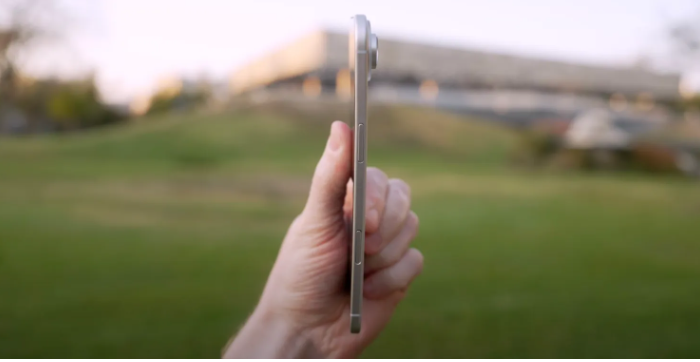
With the official launch of the iPhone 17 still months away, tech enthusiasts are already buzzing over what could be Apple’s most significant design evolution in years. The latest leaks and mock-up comparisons suggest that the iPhone 17 Air will be dramatically thinner than the iPhone 16 Pro, potentially setting a new benchmark for smartphone design in 2025.
Thinner, Sleeker, and More Futuristic?
According to newly surfaced leaks, the iPhone 17 Air is shaping up to be the most visually striking model in Apple’s upcoming lineup. A series of realistic dummy units, showcased by Sam Kohl on the AppleTrack YouTube channel, gives us a detailed look at the rumored designs for the entire iPhone 17 series — including the base iPhone 17, iPhone 17 Pro, iPhone 17 Pro Max, and the much-discussed iPhone 17 Air.
These physical mock-ups closely mirror recent schematics and renders, offering a near-complete picture of what to expect. What’s truly grabbing attention is the ultra-slim profile of the iPhone 17 Air — a stark contrast to the already refined iPhone 16 Pro. If these leaks are accurate, the iPhone 17 Air could be Apple’s most lightweight and streamlined device to date.
Read more news on our website. KSN Media Hub
A Preview That Feels Like a Real Launch
The level of detail seen in these dummy units makes them eerily close to actual production models. From the camera module to the button placement and curved edges, these models seem ready for a hands-on demo, months before the official unveiling. Some observers even noted subtle imperfections, like a slight bend in the dummy unit, possibly hinting at early concerns about durability in ultra-thin devices.
While these models don’t power on or feature functioning iOS, they are convincing enough that many fans feel like the iPhone 17 has already arrived. It’s an impressive preview that builds even more excitement for Apple’s fall event.

What to Expect from the iPhone 17 Lineup
Based on industry leaks and insider reports, the iPhone 17 lineup is expected to maintain Apple’s tiered model approach:
iPhone 17: Likely to resemble the current iPhone 16 with incremental upgrades
iPhone 17 Air: The standout model, showcasing a radically thin design and likely targeting users who prioritize portability and aesthetics
iPhone 17 Pro and Pro Max: These are expected to feature larger camera systems, possibly with a prominent new camera bar design, boosting both functionality and visual impact
The rumored specs and hardware upgrades also suggest we’ll see performance improvements across the board, alongside the debut of iOS 19 — although the software remains under wraps for now.
A New Design Era for Apple?
Apple has always led the industry when it comes to premium build quality and industrial design. With the iPhone 17 Air, the company may be signaling a new design direction focused on minimalism and portability. If these leaks hold true, it will be a clear departure from the chunkier, feature-packed models of previous years — a move that could reshape how we think about smartphone design in 2025 and beyond.
As with any pre-release leak, it’s important to take these dummy unit previews with a grain of salt. However, given the credibility of past leaks from sources like AppleTrack, it’s highly likely that these designs are close to what Apple will unveil later this year.
For more information, follow us on our Facebook page!

Is Kenya introducing a new 5 per cent tax on YouTube creators?
Not exactly.
The 5 per cent rate itself is not necessarily new. Kenya’s tax framework has for some time provided for withholding tax on income earned through digital content monetisation.
What has changed — and what is now causing anxiety among Kenyan YouTubers — is that Google is moving to collect the tax directly from their YouTube earnings.
Google has notified creators with AdSense for YouTube accounts based in Kenya that it will begin withholding 5 per cent Kenyan tax from their finalized YouTube earnings, starting with income earned in September 2026 and paid out in October.
The company has also told creators to provide and verify their Kenya Revenue Authority (KRA) Personal Identification Numbers (PINs) through AdSense by October 1, 2026.
For creators who have grown accustomed to seeing their full YouTube payout arrive in their accounts, the change could be noticeable from the next payment cycle.
And it has already triggered a broader debate about whether Kenya is taxing an industry that many young people built largely on their own.
So, what exactly is changing?
The simplest way to understand the announcement is this: the tax is moving closer to the point where the money is paid.
Previously, a Kenyan creator could receive their YouTube earnings through Google’s AdSense system and deal with their tax obligations separately.
Under the new arrangement, Google will deduct the applicable Kenyan withholding tax before the money reaches the creator.
Google says it is required to do so under Kenya’s Income Tax Act.
“Under the Kenya Income Tax Act, Google is required to withhold taxes on YouTube earnings paid to AdSense for YouTube accounts based in Kenya,” the company says in its tax guidance.
Google says the deduction will be made monthly from finalized YouTube earnings.
That means a creator with Ksh100,000 in finalized earnings would have Ksh5,000 withheld, leaving Ksh95,000 before any other applicable deductions.
For someone earning Ksh500,000, the Kenyan withholding would amount to Ksh25,000.
At Ksh1 million, it would be Ksh50,000.
The figures are simple, but for full-time creators who depend on YouTube for their livelihood, the impact could be significant.
Why Google is asking for KRA PINs
The KRA PIN requirement is central to the new arrangement.
Google has instructed affected creators to enter their Kenyan tax identification information into AdSense for YouTube.
This allows the platform to identify the taxpayer associated with the account and apply the required Kenyan withholding.
Creators who do not provide the requested information could face payment problems.
Google’s notification gives October 1, 2026, as the deadline for providing the Kenyan PIN.
The first affected income will be September earnings, which are generally paid in the following month.
In practical terms, that means October could be the first month when many creators notice that their YouTube payout is lower than expected.
But is every YouTuber losing 5 per cent?
Not necessarily in the way some social media discussions have suggested.
The 5 per cent Kenyan withholding is separate from possible U.S. tax withholding.
YouTube already requires creators outside the United States to submit U.S. tax information, and depending on the creator’s circumstances, U.S. taxes can apply to revenue generated from viewers in the United States.
Google makes clear that the Kenyan withholding will be applied alongside any applicable U.S. taxes.
That distinction is important.
It does not mean every Kenyan creator will automatically lose a fixed percentage to both countries.
The U.S. withholding depends on factors including the creator’s tax status and the portion of their earnings attributable to U.S. viewers.
Nevertheless, creators who already see U.S. tax withheld from their payments are understandably watching the new Kenyan deduction closely.
For them, another deduction from the same YouTube payout means less money available at the end of the month.
Why creators are pushing back
The strongest reaction has not necessarily been against taxation itself.
It is about what creators believe they are getting in return.
Kenya’s creator economy has expanded rapidly over the past decade.
YouTube channels now cover almost everything — news, comedy, music, politics, travel, education, religion, technology, food, sports and personal stories.
Some creators have turned their channels into small businesses, employing cameramen, editors, writers, researchers, social-media managers and other workers.
For many young Kenyans, digital content has also provided an alternative to an increasingly difficult formal job market.
That is why some creators believe the government should be doing more to support the sector before increasing the mechanisms used to collect revenue from it.
One creator quoted in reaction to the announcement argued that the government had offered little support to digital creators while they faced expensive equipment, data and production costs.
The argument is straightforward: if content creation is now recognised as a taxable industry, should it also be treated as an industry worthy of structured support?
That question is likely to become more prominent as the new withholding system takes effect.
Why KRA wants the money collected at source
From the government’s perspective, the move makes sense.
Digital income can be difficult for tax authorities to monitor when payments move between creators and international technology companies.
A Kenyan creator may have no physical office, no employees and no conventional payroll system.
Their business could consist of a YouTube channel, a smartphone, a camera, an internet connection and an AdSense account.
But the income can still be substantial.
By having Google withhold the tax, KRA does not have to rely entirely on individual creators to declare their YouTube income after receiving it.
The platform effectively becomes part of the collection system.
That also creates a clearer link between the money being paid, the person receiving it and the taxpayer’s KRA PIN.
For the government, that means greater visibility into a sector that was once relatively difficult to track.
A growing digital media market
The timing is significant because Kenya’s digital audience has expanded dramatically.
The Reuters Institute’s Digital News Report 2026 highlights the growing importance of social platforms in the country’s media environment, with YouTube increasingly becoming an important source of news and information.
That growth has created an ecosystem in which individual creators can sometimes reach audiences larger than those of traditional media outlets.
A successful YouTuber can attract millions of views without owning a television station, printing a newspaper or operating a radio frequency.
That is precisely what makes the sector attractive — and increasingly important to tax authorities.
What creators should do
For creators who have received Google’s notification, the immediate issue is compliance.
They should log into their AdSense for YouTube account and check their tax information.
The KRA PIN submitted should be accurate and correspond with the taxpayer details associated with the account.
Creators should also understand that the revenue displayed in YouTube Analytics is not necessarily the final amount on which the deduction will be calculated.
Google says the withholding applies to finalized YouTube earnings.
Creators who operate businesses around their channels may also want to review their tax position with a qualified professional, particularly if they have employees, business expenses, foreign income or U.S. tax withholding.
The bigger issue goes beyond YouTube
The most important part of Google’s announcement may ultimately have little to do with YouTube itself.
It signals how Kenya is adapting its tax system to an economy in which people increasingly earn money through global digital platforms.
YouTube is only one part of that economy.
Kenyan creators also make money through TikTok, Facebook, Instagram, podcasts, newsletters, sponsorships, affiliate marketing and other online businesses.
As these income streams become more valuable, governments around the world are looking for ways to bring them into the tax system.
For creators, that creates an uncomfortable reality.
The same internet that allowed them to build businesses without waiting for traditional institutions to give them a job is now making their income easier for governments and platforms to identify.
The debate, therefore, is unlikely to end with the first Ksh5,000 deduction.
It is likely to become a much larger conversation about taxation, regulation and government support for Kenya’s creator economy.
For now, however, the immediate deadline is clear.
Google wants Kenyan creators using AdSense for YouTube to provide their KRA PINs by October 1, 2026, while the first 5 per cent Kenyan withholding is expected to apply to September earnings paid out in October.
For a creator earning Ksh100,000, that means Ksh5,000.
For someone earning Ksh1 million, it means Ksh50,000.
And for an industry that has spent years building itself largely outside the traditional media establishment, that first deduction could mark the beginning of a very different relationship between Kenya’s creators, Google and the taxman.
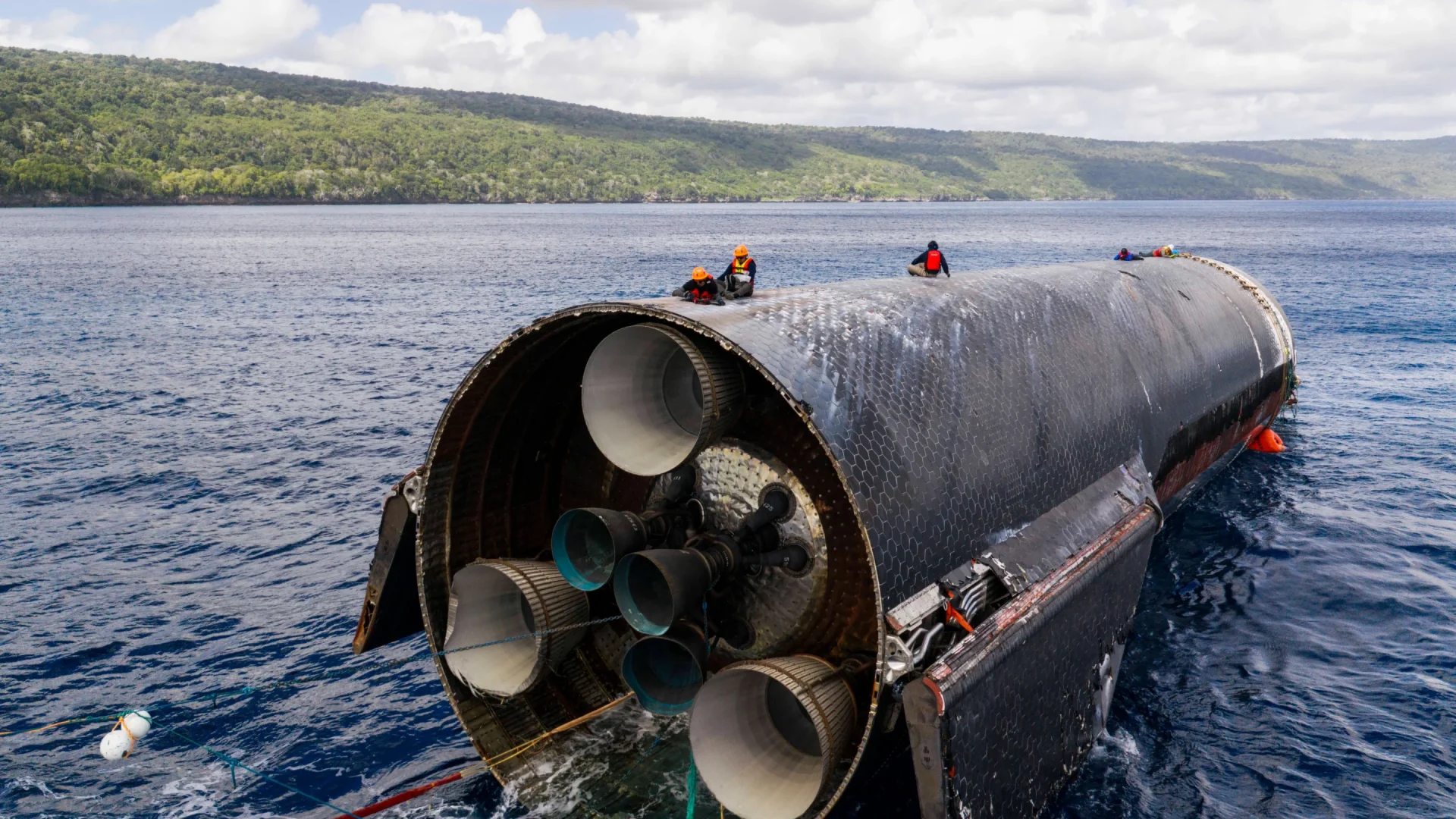
SpaceX has recovered a Starship spacecraft from the Indian Ocean nearly a month after its latest test flight, completing an unusual and potentially valuable salvage operation for Elon Musk’s rocket company.
The spacecraft was retrieved from waters near Christmas Island after spending weeks at sea following its July 24 launch from Starbase, Texas. SpaceX is now preparing to transport the vehicle back to Texas, a journey that could take several months.
The recovery is significant because this was not simply another failed Starship test.
For the first time in the program’s history, a full-size Starship completed an approximately hourlong flight and survived its return to Earth largely intact, eventually coming to rest in the ocean.
SpaceX released photographs of the recovery operation late this week, showing teams working around the enormous spacecraft in challenging ocean conditions.
The company described the operation as its largest Starship recovery effort so far.
“Congratulations to the entire SpaceX Recovery team for battling through challenging conditions to give our engineers access to a wealth of data to continue rapidly developing Starship,” SpaceX said in a post on X.
Why recovering the spacecraft matters
SpaceX has deliberately treated Starship’s early flights as tests, accepting failures as part of the process of developing a reusable rocket capable of carrying people and large amounts of cargo into deep space.
But recovering an actual flight vehicle gives engineers something they cannot get from telemetry alone.
The Starship that survived the July flight can potentially provide engineers with information about how the vehicle performed during launch, its time in space and its return through the atmosphere.
That makes the battered spacecraft an important source of engineering data.
Instead of simply leaving it at sea, SpaceX has chosen to bring it back to its Texas facilities, where engineers can examine the vehicle in much greater detail.
The process also demonstrates another challenge facing the Starship program: building a system that can eventually be recovered, inspected, refurbished and flown again.
That is central to Musk’s vision for Starship.
Starship’s biggest test yet
Starship is the largest and most powerful rocket ever developed, consisting of a Super Heavy booster and the Starship spacecraft mounted above it.
The system is designed to be fully reusable.
SpaceX launched the 13th full-scale Starship test flight on July 24 from Starbase in South Texas. Unlike several earlier missions that ended with explosions or major failures, the spacecraft survived the flight and remained intact after reaching the Indian Ocean.
The achievement does not mean Starship is finished.
SpaceX still has to demonstrate reliable recovery of both the spacecraft and its Super Heavy booster, while proving that the system can repeatedly launch, return and fly again.
Those are among the biggest hurdles standing between today’s experimental flights and the operational Starship envisioned by Musk.
The bigger goal: the Moon and Mars
Starship is at the center of Musk’s long-term plans for human spaceflight.
The ultimate ambition is Mars.
Musk has repeatedly described Starship as the vehicle that could eventually transport people, equipment and supplies to Mars and help establish a permanent human settlement there.
But Mars is not the immediate destination.
The Moon comes first.
NASA is relying on a version of Starship to serve as a lunar lander for its Artemis program. The agency has selected SpaceX to develop a human landing system based on Starship for future Artemis missions.
Blue Origin, founded by Amazon founder Jeff Bezos, is also developing a lunar lander known as Blue Moon.
NASA’s goal is to return astronauts to the lunar surface later this decade, although the exact timing of future Artemis missions remains subject to testing, development and schedule changes.
The Moon is therefore an important proving ground for Starship’s technology.
A vehicle capable of carrying astronauts between Earth orbit and the lunar surface would represent a major step toward the much more ambitious missions required for Mars.
A spacecraft coming home
For SpaceX, the recovery from the Indian Ocean is valuable for another reason.
The Starship program has been built around rapid testing. Rather than spending years attempting to design a perfect spacecraft before flying it, SpaceX has repeatedly launched experimental vehicles, studied what happened and used the results to modify subsequent versions.
That approach has produced spectacular failures, but it has also allowed the company to move quickly.
The latest recovery adds another piece to that process.
The Starship that spent weeks floating in the Indian Ocean will now make a much slower journey back to Texas.
The trip is expected to take months because moving a spacecraft of Starship’s size from a remote ocean location to the United States is itself a major logistical operation.
Once it reaches SpaceX’s Texas facilities, engineers will have the opportunity to examine the vehicle up close and determine what the flight and its return can teach them.
For a rocket program ultimately designed to make spaceflight routine, that information could prove more valuable than simply having another successful launch.
The July flight showed that Starship could survive a complete test mission and reach the ocean intact.
The next challenge is much harder: turning that success into a repeatable system in which enormous spacecraft can be launched, recovered, inspected and flown again.
That is the technology SpaceX will need if Starship is ever to carry humans to the Moon — and eventually, as Musk hopes, to Mars.

Uber is facing one of the largest data-protection penalties ever imposed in Europe after the Dutch Data Protection Authority fined the ride-hailing company €824.99 million, or roughly $966 million, over the way it used automated systems to suspend and deactivate drivers.
The decision is significant not only because of the size of the fine, but because it addresses a growing issue across the technology industry: how much power should companies give algorithms to make decisions that can directly affect a person’s livelihood?
The Dutch regulator, known as the Autoriteit Persoonsgegevens (AP), said Uber committed serious violations by using automated systems to deactivate drivers without adequately informing them and, in some cases, without meaningful human involvement. The investigation covered incidents involving European drivers between 2018 and 2022 and originated with a complaint from France.
Uber strongly disagrees with the decision and says it will appeal.
The company also disputes some of the regulator’s findings, including the suggestion that permanent driver deactivations were carried out without human review.
The case could nevertheless have consequences far beyond the Netherlands. Although the Dutch penalty does not automatically apply to Uber’s operations in countries such as the United States, Kenya or South Africa, the ruling could influence how the company manages automated driver decisions across its global platform.
Key takeaways
- The Dutch Data Protection Authority fined Uber €824.99 million.
- The case concerns automated decisions affecting Uber drivers, including account suspensions and deactivations.
- The investigation involved conduct dating from 2018 to 2022.
- The complaint originated with French Uber drivers and was handled by Dutch authorities because Uber’s European headquarters are in the Netherlands.
- Uber says the fine is disproportionate and plans to appeal.
- Uber disputes the claim that permanent deactivations were made entirely by computers.
- The penalty is the second-largest GDPR fine to date, behind Meta’s €1.2 billion penalty in 2023.
- The case could encourage Uber and other technology companies to strengthen human oversight of automated decisions.
Why did the Netherlands fine Uber?
At the center of the case is Uber’s use of automated systems to identify drivers whose behaviour the company believed could violate its rules.
According to Reuters’ review of the Dutch decision, Uber’s systems temporarily suspended some drivers suspected of fraudulent activity.
The systems could flag behaviour such as allegedly taking unnecessary detours that increased fares or accepting trips that drivers did not intend to complete.
Automated fraud detection is not unusual for a technology company operating at Uber’s scale. With millions of trips taking place, relying entirely on human employees to examine every potentially suspicious transaction would be extremely difficult.
The problem identified by Dutch regulators was what happened after the computer system made its assessment.
European data-protection rules restrict certain decisions made solely through automated processing when they have significant consequences for an individual. Such decisions require appropriate safeguards, including meaningful human involvement and an opportunity for the affected person to challenge the outcome.
For an Uber driver, losing access to the platform can be much more than an inconvenience.
It can mean losing access to a source of income.
That distinction appears to have been central to the regulator’s reasoning.
What Uber says about the driver suspensions
Uber disputes the Dutch authority’s interpretation of its systems.
The company says most of the suspensions involved in the case were temporary and that it did not permanently deactivate drivers without human review.
Uber also says drivers have opportunities to challenge platform suspensions.
In a statement reported by Reuters, the company said it strongly disagrees with the decision and considers the fine disproportionate. Uber said it takes drivers’ rights seriously and plans to appeal.
Uber also disputed the regulator’s conclusion regarding permanent deactivations based on customer ratings.
The company said only 126 drivers in Europe were deactivated because of low customer ratings in 2021, which it cited as one reason it believes the penalty is excessive.
That disagreement is important.
The case is not simply about whether Uber uses computers to monitor drivers. It is about how much authority those systems had and whether drivers received the protections required by European law.
Why the case began with French drivers
The investigation has an unusual history.
It did not begin as a broad regulatory examination of Uber’s global technology platform.
Instead, it grew out of complaints from Uber drivers in France.
More than 170 French drivers became involved in complaints concerning Uber’s handling of driver information and automated decisions. The complaints eventually reached Dutch authorities because Uber’s European headquarters are located in the Netherlands.
Digital-rights organisation PersonalData.io helped drivers obtain information about how Uber’s systems were processing their data and making decisions affecting their work.
The organisation’s founder, Paul-Olivier Dehaye, has said it is preparing a class-action case seeking compensation for drivers affected by the practices.
That potential litigation could create another legal challenge for Uber separate from the regulatory fine.
This is not Uber’s first major Dutch privacy penalty
The €825 million decision is part of a longer history of regulatory scrutiny of Uber in the Netherlands.
In January 2024, the Dutch Data Protection Authority fined Uber €10 million over transparency and privacy-rights problems involving European drivers.
The regulator said Uber had not been sufficiently clear about how long it retained drivers’ personal data, where the information was sent and how drivers could exercise their privacy rights.
The case also followed complaints involving more than 170 French drivers.
Later in 2024, Uber faced an even larger Dutch penalty.
The European Data Protection Board reported that the Dutch supervisory authority imposed a €290 million fine after finding that Uber had transferred European drivers’ personal information to the United States without adequate safeguards.
The information involved included account details, taxi licences, location data, photographs, payment information and identity documents. In some cases, the data also included criminal and medical information.
That earlier case concerned international data transfers, not the automated driver-deactivation issue behind the new €825 million fine.
The distinction is important because the three cases involve different alleged privacy violations.
Uber has appealed the earlier penalties as well. The company’s 2026 governance report says the €10 million and €290 million Dutch penalties remain subject to appeals.
Why the latest fine is so large
The size of the latest penalty immediately attracted attention.
At approximately €825 million, it is the second-largest fine issued under the GDPR, according to Reuters.
Only Meta’s €1.2 billion penalty imposed by Ireland in 2023 was larger. That case involved the transfer of European Facebook users’ data to the United States.
The Dutch authority said the Uber fine was calculated in part with reference to the company’s global turnover.
That matters because GDPR penalties can be substantial for very large technology companies.
For businesses, the lesson is that privacy violations involving millions of users or workers can become financially significant even when the underlying conduct occurred several years earlier.
What does this mean for Uber drivers?
The case could have its greatest practical significance for drivers.
An Uber driver depends on access to the company’s platform to receive trips and earn money.
If an account is suspended, the driver’s income can immediately be affected.
A computer system may identify a suspicious pattern in seconds. But the driver may have a completely different explanation.
A GPS system could show an unusual route, for example, while the driver may have been avoiding road construction or responding to a passenger’s request.
A customer complaint may also provide incomplete information about what happened during a trip.
That does not mean Uber should ignore fraud or misconduct.
A platform has legitimate reasons to protect passengers and prevent fraud.
The question is whether a serious decision should be made automatically or whether a human should examine the circumstances before the driver loses access to the platform.
That is the broader issue raised by the Dutch decision.
Could the ruling affect Uber in other countries?
Potentially—but not automatically.
The Dutch regulator’s €825 million penalty is based on European data-protection law. It does not mean Uber has suddenly been ordered to pay €825 million in every country where it operates.
The GDPR is a European legal framework.
Uber’s operations in the United States, Kenya, South Africa and other countries are subject to the laws and regulations applicable in those jurisdictions.
However, the case could still have international consequences.
Large technology companies frequently operate global platforms built around common technology and policies. If Uber decides that stronger human-review procedures are necessary to satisfy European regulators, it may be easier and safer for the company to apply some of those safeguards more broadly rather than maintain completely different systems in every market.
That could indirectly benefit drivers outside Europe.
What could happen in Kenya?
The Dutch ruling does not automatically change the rights of Uber drivers in Kenya.
Kenyan drivers would still be governed primarily by Kenyan law and the terms and policies applicable to Uber’s Kenyan operations.
However, the case could become relevant to discussions about how digital platforms use personal data and automated systems in Kenya.
Kenya has its own data-protection framework, overseen by the Office of the Data Protection Commissioner.
As digital platforms become more important to the Kenyan economy, questions about how companies collect driver information, assess driver performance and restrict platform access are likely to attract greater attention.
The Dutch case provides an example of what can happen when regulators conclude that automated decision-making has gone too far.
What about South Africa?
A similar principle applies in South Africa.
The Dutch ruling does not impose European penalties on Uber’s South African operation.
South Africa has its own privacy legislation, including the Protection of Personal Information Act, commonly known as POPIA.
If South African regulators or lawmakers examine automated decision-making by ride-hailing companies, they would have to apply South African law rather than simply adopt the Dutch ruling.
Nevertheless, the Uber case could provide an international reference point.
The broader question—whether companies should provide meaningful explanations and human intervention when automated systems make decisions with serious consequences—is relevant to digital platforms everywhere.
And what about the United States?
The situation is also different in the United States.
The U.S. does not have one comprehensive federal privacy law equivalent to the GDPR covering all personal data.
Instead, privacy protections are spread across federal laws, state laws and sector-specific rules.
That means the Dutch ruling does not automatically establish new rights for Uber drivers in America.
Nevertheless, the case could still influence corporate practices.
Uber is a global company, and changes made to its technology and compliance systems in Europe can potentially affect its wider operations.
The company may also prefer to establish a consistent global standard rather than maintain entirely different systems for different regions.
The bigger issue: who is responsible when an algorithm is wrong?
The Uber case raises a question that extends far beyond ride-hailing.
Companies increasingly use algorithms to identify fraud, evaluate risk, recommend content, screen applicants and monitor workers.
The technology can process enormous amounts of information much faster than humans.
But algorithms can also make mistakes.
If a human employee makes a decision that wrongly costs someone their income, there is usually a person who can be identified as responsible.
With automated systems, responsibility can become less obvious.
Was the mistake caused by the data?
The algorithm?
The company’s rules?
The engineers who designed the system?
The managers who approved the system?
Or the company itself?
The Dutch Uber case reinforces the argument that automation does not eliminate corporate responsibility.
Why this matters as AI becomes more common
The timing of the case is particularly interesting because businesses are rapidly adopting artificial intelligence.
Companies are using AI and machine-learning systems to analyse transactions, detect suspicious behaviour and make operational decisions.
The technology will likely become even more sophisticated.
That makes the principles behind the Uber case increasingly relevant.
If a company uses AI to flag a worker for possible misconduct, there may be little controversy if a human then reviews the evidence.
The situation becomes much more complicated if the AI system effectively becomes judge and jury.
That is why the debate around Uber is not simply a debate about privacy.
It is also about algorithmic accountability.
What happens next?
Uber has said it will appeal the Dutch regulator’s decision.
That means the €824.99 million penalty is not necessarily the final word on the matter.
European regulatory cases can take considerable time to move through appeals and judicial proceedings. Reuters also noted that large technology-company fines can be reduced or overturned after lengthy legal challenges.
Meanwhile, PersonalData.io says it is preparing potential litigation seeking compensation for drivers.
The outcome of those proceedings could further clarify what rights platform workers have when automated systems make decisions affecting their income.
The bottom line for Uber
The Dutch fine is much more than a large number attached to a privacy violation.
It represents a growing regulatory concern about the use of automated systems to manage people.
Uber needs to protect passengers, detect fraud and maintain the integrity of its platform. Automated technology can help it do that at enormous scale.
But the Dutch decision shows the limits regulators may place on that automation when a computer-generated decision can effectively determine whether someone is allowed to continue earning a living.
For Uber, the immediate battle will be over the €825 million fine and the company’s appeal.
For drivers, the bigger question is whether they can trust the systems making decisions about their accounts.
And for regulators around the world, the case provides another test of an increasingly important principle:
Technology can make a decision faster, but that does not necessarily mean it should be allowed to make the decision alone.
The Dutch ruling does not automatically change Uber’s operations in Kenya, South Africa, the United States or other countries. But it could encourage the company to review its global systems and could give regulators elsewhere a useful example as they consider how digital platforms should use automated decision-making.
As the gig economy and artificial intelligence continue to grow, the Uber case may ultimately be remembered not simply as one of Europe’s biggest privacy fines, but as an important moment in the debate over who should be held accountable when an algorithm controls access to a person’s livelihood.

Kenyan woman Stella Wamaitha Njoroge says one act of kindness in Dubai changed her life

DHS proposes $70,000 fee for international students seeking U.S. work experience

Undergraduate Scholarships for Kenyan Students: Bob Mwiti’s Powerful Guide to a Brighter Future

VIDEO: iPhone 17 Air Leak Reveals Ultra-Thin Design: A Bold Leap Beyond the iPhone 16 Pro

How U.S. Remittance 5% Tax Bill Could Impact Kenyan Diaspora: What You Need to Know

Motorola Launches $1,300 Razr Ultra Foldable Smartphone with AI Features, Swarovski-Enhanced Earbuds

 News1 year ago
How U.S. Remittance 5% Tax Bill Could Impact Kenyan Diaspora: What You Need to Know
- Tech1 year ago
Motorola Launches $1,300 Razr Ultra Foldable Smartphone with AI Features, Swarovski-Enhanced Earbuds
- Insurance Basics1 year ago
Popular Apps May Be Secretly Tracking Your Driving – And Raising Your Insurance Rates
- Tech1 year ago
Motorola Razr Ultra (2025) Launches With Free 1TB Storage Upgrade
- News1 year ago
What would you do if your Gold Digger girlfriend behaved like this?
- News1 year ago
Box Office: ‘Sinners’ Holds No. 1 Spot With $13M Friday; ‘The Accountant 2’ Debuts With $9.4M
- Insurance Basics1 year ago
Florida House Passes ‘Pam Rock Act’ Requiring Dog Registry and $100K Liability Insurance
- News1 year ago
LIVE VIDEO: Kenya shuts down live broadcasts as Heightened Tension Marks First Anniversary of 2024 Maandamano Protests