Insurance Basics
Understanding Insurance: Types of Policies You Should Know


Insurance Types
Insurance is a critical part of life, offering security, peace of mind, and financial protection when the unexpected happens. At its core, insurance is a contract between an individual and an insurance provider, where the insurer agrees to cover specific losses or damages in exchange for regular payments, known as premiums. This concept allows individuals and businesses to protect themselves from financial uncertainties, whether they are health-related expenses, accidents, or property damages. But with so many types of insurance available, navigating this world can be overwhelming. To help you make sense of it all, this guide will walk you through the various types of insurance you need to know about and why they matter.
Life Insurance
Life insurance is a policy designed to provide financial support to your loved ones in the event of your passing. It ensures that your family or dependents have a safety net to cover expenses such as mortgage payments, education, or general living costs. There are two main types of life insurance to consider—term life Insurance Types and whole life insurance. Term life insurance provides coverage for a set period, offering affordable premiums ideal for temporary needs.
On the other hand, whole life insurance offers lifetime coverage and includes a savings component that can grow over time. Choosing the right life insurance policy means considering your financial obligations, family needs, and long-term goals. It’s more than just a financial agreement; it’s a gesture of care and foresight.
Health Insurance
Health insurance has become a non-negotiable necessity in today’s world. With healthcare costs spiraling upward, having health insurance ensures that you can access quality medical care without draining your savings. These insurance Types typically cover doctor visits, hospital stays, medications, and preventive care. Beyond the basics, many policies also offer add-ons for critical illnesses, dental care, or maternity benefits. Employers often provide group health insurance, but individual health insurance plans are also widely available for those not covered through work. Investing in a comprehensive health insurance policy isn’t just about protecting your health—it’s about eliminating the financial stress that often comes with medical emergencies.
Auto Insurance
Owning a vehicle comes with its fair share of risks, from fender-benders to significant accidents. Auto insurance is designed to protect you, your vehicle, and third parties from the financial damages that can result from these events. Most states mandate basic auto Insurance Types, which typically includes liability coverage to pay for damages to others if you’re at fault in an accident. However, there are comprehensive and collision policies available that cover your own vehicle in case of theft, vandalism, or non-collision incidents.
Choosing the right auto insurance policy involves assessing your driving habits, the value of your vehicle, and your potential risk exposures. A good auto insurance policy won’t just protect your car—it will also safeguard your peace of mind.

Home Insurance
Whether you own or rent your home, protecting it should be a top priority. Home insurance policies cover against damages caused by events like fires, storms, or theft. For homeowners, these policies also include liability coverage in case someone gets injured on their property. For renters, there is renter’s insurance—a more affordable alternative covering personal belongings without insuring the building structure. Many plans go above and beyond by offering coverage for natural disasters like floods or earthquakes, although some require separate add-ons for such risks. By investing in home insurance, you’re not just protecting bricks and mortar—you’re safeguarding memories, personal belongings, and your largest financial investment.
Understanding the Importance of Each Policy
Each Insurance Types serves a distinct purpose, but together, they create a net of financial security. Life insurance ensures your family’s future stability, health insurance shields you from medical debt, auto insurance protects you from unexpected road disasters, and home insurance safeguards your sacred space. Ignoring insurance needs is tempting when premiums seem like an extra expense, but the cost of being uninsured during a crisis far outweighs the upfront payments. Every policy provides not just financial aid but also mental comfort, knowing that you’re prepared to face life’s uncertainties.
Read more articles on insurance, please visit https://ksnmediahub.com/category/insurance-basics/
Factors to Consider When Choosing Insurance
Selecting the right Insurance Types isn’t a one-size-fits-all process—it should align with your unique needs and circumstances. Start by evaluating your financial goals, assets, and risks. For example, a young professional might prioritize health and auto insurance, while a family with dependents could focus on comprehensive life coverage. Budget is also a crucial factor; only purchase policies with manageable premiums. Don’t forget to read the fine print—it’s essential to understand exclusions, deductibles, and claim processes to avoid surprises down the line. Finally, explore providers’ reputations; choose an insurer known for reliability, transparency, and excellent customer service. The right insurance will feel like a personal partnership, supporting you whenever life throws challenges your way.
Secure Your Future, One Policy at a Time
Insurance Types may not be the most exciting topic, but it’s undeniably crucial for protecting yourself and your loved ones from life’s uncertainties. Investing in life insurance ensures your family’s security. Health insurance protects your well-being. Auto insurance shields you on the road. Home insurance safeguards your personal haven. Together, these policies form a robust financial safety net, enabling you to approach the future with confidence. Start by assessing your current needs and long-term goals, explore different providers, and make informed decisions. Taking the time to secure the right insurance today will ensure a brighter, worry-free tomorrow.

FAQs
1. What happens if I skip getting insurance?
If you avoid purchasing insurance, you face significant financial risks when unexpected events occur. Medical bills, lawsuits, vehicle repairs, or property losses can quickly become overwhelming without insurance coverage.
2. Can I hold multiple types of insurance at once?
Yes! Most individuals have multiple Insurance Types simultaneously, such as health, auto, and home insurance—to cover different aspects of their lives.
3. How often should I review my insurance policies?
You should review your policies annually or after any major life event, like buying a home, having a child, or changing jobs, to ensure adequate coverage.
4. Can I adjust my policies later if my needs change?
Absolutely. Most insurers allow you to add riders, increase coverage, or switch plans as your lifestyle and needs evolve.

Living abroad can open doors to new careers, experiences and opportunities. But for many Kenyans in the diaspora, moving away does not mean leaving Kenya behind. Home is still home. Your parents may still be here. You may want to invest in Kenya, buy property, support family, build wealth or eventually return home. And from time to time, you may simply need someone reliable to help you get something done in Kenya.
The problem? You could be thousands of kilometers away. That distance can turn what should be a simple decision into a difficult one.
Who do you trust? How do you verify an opportunity? And who can you rely on when you cannot be there yourself?
These are some of the realities that My Diaspora Nexus was created to address.
What Is My Diaspora Nexus?
My Diaspora Nexus is a membership platform designed for professional Kenyans living abroad.
It brings together services, opportunities, connections and support designed around a simple reality: even when you live outside Kenya, a significant part of your life may still be connected to home.
Instead of navigating every need independently, MDN is building an ecosystem where members can access trusted solutions across family protection, wealth creation, real estate, professional and personal connections, and everyday services in Kenya.
The platform is built around three pillars: Trust. Professionalism. Compassion.
Trust When Dealing With Kenya From Abroad
When you live abroad, you cannot always inspect a project, meet a service provider or follow up on an opportunity in person.
That makes trust essential. MDN focuses on vetting, due diligence, reliable partners and greater transparency to help members approach important decisions with more confidence.
Professionalism in Service and Support
Kenyans living abroad often operate in environments where clear communication, accountability and service standards are expected. MDN aims to bring that same mindset into how members are served, how partners are selected and how services are delivered.
Compassion and the Power of Community
The diaspora story is not only about success. Behind every member is a family, a responsibility, an ambition and sometimes an unexpected challenge. MDN therefore also recognizes the importance of community and supporting members through different stages of the diaspora journey.
Five My Diaspora Nexus Products for Kenyans Abroad
1. My Diaspora Care: Protecting What Matters
Family remains one of the strongest connections many Kenyans abroad have to home. But bereavement and serious emergencies can arrive without warning. My Diaspora Care is centered on Last Expense Insurance Protection for enrolled members and eligible family beneficiaries. Members enrolled in the cover can also access Community Benevolence Support for compelling and verified emergency situations. The goal is to help members and their families be better prepared when difficult moments come.
2. My Diaspora Investment Club: Building Wealth Together
Earning money abroad is one thing. Building sustainable, long-term wealth is another. My Diaspora Investment Club brings together diaspora professionals who want to develop a more disciplined approach to investing. Members contribute towards a growing investment portfolio, track their progress and participate in a community focused on long-term financial growth.
It is a shift from simply contributing money to intentionally building wealth.
3. My Diaspora Real Estate: Investing in Kenya With Greater Confidence
For many Kenyans in the diaspora, owning property back home is an important goal. But investing in Kenyan real estate from abroad can raise difficult questions. Is the developer credible? Has the project been properly verified? Will construction be completed? Is the documentation in order?
My Diaspora Real Estate is designed to help members navigate those questions through due diligence, vetted developers and projects, member feedback and ongoing partner monitoring. Instead of relying entirely on advertisements and promises, members can access more information to support their property investment decisions.
4. My Diaspora Connect: Building Meaningful Connections
Not every diaspora challenge is about money or property. Relationships matter too. Living abroad can make it harder to build professional networks, discover business opportunities or create meaningful personal relationships. My Diaspora Connect provides a trusted environment where members can seek professional connections, collaborations, referrals, mentorship, friendships and other meaningful personal connections. Because sometimes one good connection can open an entirely new opportunity.
5. My Diaspora Essentials: Getting Things Done Back Home
Sometimes you do not need an investment. You simply need something done in Kenya. Maybe you need a contractor. Perhaps you are sourcing a vehicle, looking for a professional service or managing something related to property or family. From abroad, even a simple task can become complicated when you do not know who to trust. My Diaspora Essentials gives members access to a vetted network of service providers, businesses and professionals, helping them find reliable solutions without having to start their search from scratch every time.
Staying Connected to Kenya Should Be Easier
Living outside Kenya should not mean figuring out everything back home alone. Whether your priority is protecting your family, investing in Kenya, buying property, building wealth, creating meaningful connections or finding reliable services, My Diaspora Nexus is building a platform around those realities.
My Diaspora Nexus: Supporting Kenyans Abroad
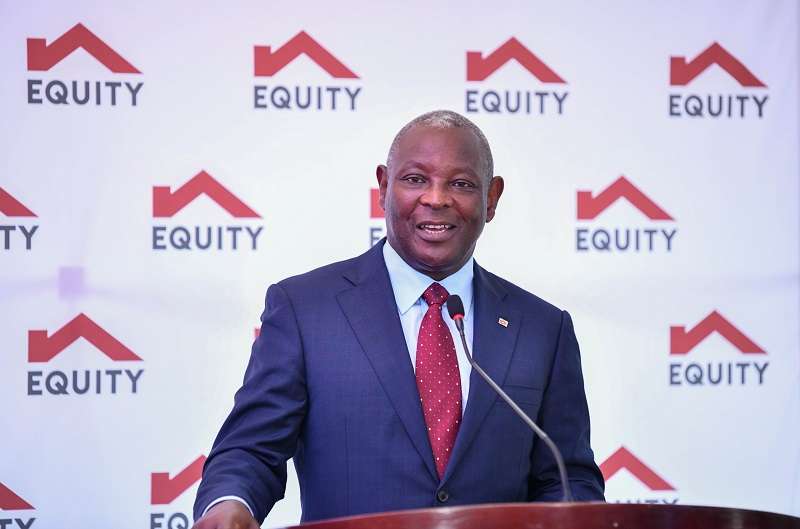
For years, African banking expansion was largely measured by branch networks, national dominance, and balance-sheet growth. Equity Group Holdings is now pushing a far more ambitious idea: scale without borders.
The Nairobi-based lender says it wants to operate in 15 countries and serve 100 million customers by 2030, a target that would place it among the most expansive financial institutions ever built on the continent. The announcement came as the group reported its strongest first-quarter performance on record, crossing the KSh 2 trillion asset threshold for the first time while posting sharp growth in profits, deposits, and regional operations.
What stands out is not simply the pace of growth. It is where that growth is increasingly coming from.
For the first time, Equity’s subsidiaries outside Kenya contributed more than half of the group’s assets and profit before tax — a symbolic milestone for a bank that built its reputation serving low-income and previously unbanked customers in Kenya before evolving into a regional financial powerhouse.
Group Managing Director and CEO Dr. James Mwangi said the lender, which currently serves 22.7 million customers across six countries, is targeting 15 countries and 100 million customers by 2030 through organic growth and acquisitions.
That strategy reflects a broader shift underway in African finance. The continent’s most aggressive banks are no longer thinking like domestic institutions with regional outposts. They are increasingly behaving like pan-African platforms competing for influence across trade corridors, mobile payments, SME lending, insurance, and digital infrastructure.
In many ways, Equity’s trajectory mirrors the evolution of African telecom giants over the past two decades — companies that expanded beyond saturated home markets into faster-growing economies with younger populations and lower banking penetration.
The Regional Bet Is Paying Off
The latest results suggest Equity’s regional diversification strategy is beginning to mature.
Operations outside Kenya now account for a majority share of the group’s business, reducing its dependence on a single economy at a time when East African markets are experiencing uneven inflation, currency pressures, and shifting interest-rate environments.
The Democratic Republic of Congo has emerged as a particularly important growth engine. Equity BCDC, the group’s Congolese subsidiary, remains its largest operation outside Kenya and continues to benefit from a vast underbanked population, strong demand for trade finance, and growing formalization within parts of the economy.
Tanzania also delivered standout growth, recording rapid expansion across loans, deposits, and profitability. That performance matters because Tanzania has historically been a difficult market for foreign banks seeking meaningful scale. Strong execution there signals Equity may be improving its ability to localize operations rather than simply replicating its Kenyan model abroad.
Uganda, meanwhile, was the lone weak spot in the quarter, highlighting a reality often overlooked in investor conversations about African banking: regional expansion can amplify risk just as easily as it amplifies opportunity.
Operating across multiple African jurisdictions means navigating different regulatory systems, currencies, tax structures, and political environments simultaneously. A slowdown in one market can quickly offset gains elsewhere.
Still, the broader direction is unmistakable. Equity is evolving from a Kenyan bank with regional subsidiaries into a regional institution with Kenyan roots.
Digital Banking Is Quietly Reshaping the Economics of Growth
One of the most consequential details in the earnings report received comparatively little public attention: nearly 90% of transactions are now happening through digital channels.
That statistic helps explain how Equity can realistically pursue 100 million customers without building thousands of expensive physical branches.
Traditional banking expansion relied heavily on brick-and-mortar infrastructure, which made continental scale extraordinarily costly. Digital banking changes the economics entirely. Customer acquisition becomes faster, operating costs decline, and services can expand into underserved markets without waiting for physical infrastructure investment.
This is especially important in Africa, where mobile penetration has dramatically outpaced traditional banking access.
According to the World Bank financial inclusion overview, digital financial services have become one of the continent’s most important tools for bringing unbanked populations into the formal economy. Kenya, in particular, has often been cited globally as a leading example of mobile-money-driven financial inclusion.
Equity’s digital lending growth also reveals another strategic advantage: data.
Banks with large digital ecosystems gain access to transaction behavior, repayment patterns, and customer activity at a scale that smaller institutions struggle to match. That data increasingly shapes credit scoring, insurance underwriting, and cross-selling opportunities.
In practical terms, the future African banking battle may not be fought primarily over branches or even deposits. It may be fought over ecosystems — who controls the customer’s daily financial activity across payments, credit, savings, insurance, and business services.
Why Investors Are Watching Asset Quality Closely
Despite the strong headline numbers, investors are unlikely to ignore one key issue: non-performing loans.
Equity’s bad loan ratio improved significantly year-on-year, but it still remains above management’s long-term target range. That matters because rapid expansion often creates pressure to grow lending aggressively, especially in frontier markets where credit information systems can be weaker.
African banks have historically struggled with balancing growth ambitions against loan-book quality. Periods of rapid expansion are often followed by painful cleanups when economic conditions tighten.
Equity appears determined to avoid that pattern. The decline in loan loss provisions and stronger IFRS coverage indicate management is prioritizing balance-sheet resilience alongside growth.
That balancing act will become increasingly important as the bank pushes deeper into higher-risk but faster-growing markets.
The wider banking sector is also operating in a more complex environment globally. Rising geopolitical uncertainty, currency volatility, and pressure on emerging-market debt are forcing lenders to rethink risk exposure across regions. Recent analysis from the International Monetary Fund financial sector analysis has warned that tighter financial conditions continue to test banking systems in developing economies.
More Than a Bank
Equity’s evolution into insurance, health coverage, and digital financial services reflects another major shift happening across African finance: the rise of the financial super-platform.
Banks increasingly want customers to remain inside a single ecosystem for everything from loans and payments to insurance and investment products. The strategy deepens customer loyalty while creating multiple revenue streams beyond traditional interest income.
That matters because banking margins are changing globally. Digital competition is compressing fees, fintech startups are targeting profitable niches, and younger consumers increasingly expect low-cost financial services delivered instantly through smartphones.
Equity’s answer appears to be scale, diversification, and ecosystem depth.
The group’s first-quarter results suggest that strategy is working — at least for now.
What happens over the next few years may determine whether Equity becomes merely East Africa’s dominant bank or one of the defining financial institutions of modern Africa.
For readers tracking the broader evolution of African banking and regional finance, the African Development Bank regularly publishes research on financial integration, digital banking, and economic growth trends across the continent.
Insurance Basics
High Court to Rule on Gachagua Impeachment Case as Kenya Awaits Major Constitutional Test

Kenya’s political and legal establishment is now focused on 8 June, when the High Court is expected to deliver its judgment in former Deputy President Rigathi Gachagua’s challenge to his impeachment — a decision likely to shape how future removals from high office are handled under the Constitution.
The ruling, set to be delivered at the Milimani Law Courts in Nairobi, follows five days of hearings before a three-judge bench comprising Justices Eric Ogolla, Freda Mugambi, and Anthony Mrima.
At the centre of the case is a question that extends far beyond one political figure: how far Parliament and the Senate can go in removing a deputy president before constitutional protections around due process, public participation, and fair hearing are tested.
More on Kenya’s judicial system and constitutional framework can be found through the Kenya Judiciary.
Gachagua’s case rests on process, not just politics
Rigathi Gachagua argues that his October 2024 impeachment violated constitutional safeguards and was conducted in a manner that denied him a meaningful opportunity to defend himself.
His legal team contends that the proceedings moved too quickly, limiting public participation and undermining procedural fairness during one of the most consequential constitutional processes available to Parliament.
The former deputy president is also seeking compensation equivalent to the salary and benefits he would have earned had he completed his term following the 2022 election.
His lawyers further relied on medical evidence presented by cardiologist Daniel Gikonyo, who told the court that Gachagua’s illness affected his ability to participate fully during Senate proceedings.
The case therefore combines political conflict with constitutional interpretation, creating what legal observers view as one of the most important institutional tests since the promulgation of Kenya’s 2010 Constitution.
Parliament and Senate defend the impeachment process
Lawyers representing Parliament and the Senate have rejected claims that the process was unconstitutional, arguing that all legal requirements were followed and that Gachagua had legal representation throughout the proceedings.
According to the respondents, the former deputy president was accorded a fair hearing and given sufficient opportunity to respond to the allegations against him.
Kithure Kindiki’s legal team also challenged the argument surrounding illness, maintaining that medical concerns did not invalidate Senate proceedings or justify postponement of the process.
Their position reflects a broader institutional argument: that constitutional impeachment mechanisms must remain functional and enforceable without being indefinitely delayed through procedural objections.
Further reading on constitutional governance and separation of powers in Kenya is available through the Katiba Institute.
Why the ruling matters beyond Gachagua
While the case is politically charged, the judgment’s long-term significance lies in the precedent it may establish for future impeachments and executive accountability.
If the court rules in Gachagua’s favour, it could raise the threshold for removing senior state officials by requiring stricter procedural standards, expanded public participation, and broader protections around fair hearing rights.
A decision upholding the impeachment, however, would reinforce Parliament’s authority in exercising oversight over top executive offices and potentially solidify impeachment as a politically viable accountability mechanism.
Either outcome is likely to influence how future political disputes are handled within constitutional institutions rather than through purely political negotiation.
A defining moment for Kenya’s constitutional order
The impeachment of a deputy president is still relatively untested territory under Kenya’s current constitutional framework, making the upcoming ruling particularly significant for legal scholars, political actors, and governance institutions.
The court’s interpretation may shape not only executive accountability, but also the balance of power between Parliament, the Senate, the judiciary, and the presidency itself.
That broader institutional impact explains why the case continues to attract national attention even beyond partisan politics.
More on constitutional interpretation and governance developments in Kenya can be followed through the Kenya Law Reports.
Political consequences likely regardless of outcome
Even before the ruling is delivered, the case has already intensified debate over executive power, parliamentary oversight, and the use of impeachment in Kenya’s evolving political system.
For supporters of Gachagua, the case represents a test of whether constitutional safeguards can withstand political pressure. For his opponents, it is a test of whether senior state officers can be held accountable through established legal mechanisms.
The June 8 judgment is therefore unlikely to end the political conversation. It may instead define the next phase of it.
Tags: Rigathi Gachagua, Kenya High Court, impeachment case, Kithure Kindiki, Kenya politics, constitutional law Kenya, Milimani Law Courts

Kenyan woman Stella Wamaitha Njoroge says one act of kindness in Dubai changed her life

DHS proposes $70,000 fee for international students seeking U.S. work experience

Undergraduate Scholarships for Kenyan Students: Bob Mwiti’s Powerful Guide to a Brighter Future

VIDEO: iPhone 17 Air Leak Reveals Ultra-Thin Design: A Bold Leap Beyond the iPhone 16 Pro

How U.S. Remittance 5% Tax Bill Could Impact Kenyan Diaspora: What You Need to Know

Motorola Launches $1,300 Razr Ultra Foldable Smartphone with AI Features, Swarovski-Enhanced Earbuds

 Tech1 year ago
VIDEO: iPhone 17 Air Leak Reveals Ultra-Thin Design: A Bold Leap Beyond the iPhone 16 Pro
- News1 year ago
How U.S. Remittance 5% Tax Bill Could Impact Kenyan Diaspora: What You Need to Know
- Tech1 year ago
Motorola Launches $1,300 Razr Ultra Foldable Smartphone with AI Features, Swarovski-Enhanced Earbuds
- Insurance Basics1 year ago
Popular Apps May Be Secretly Tracking Your Driving – And Raising Your Insurance Rates
- Tech1 year ago
Motorola Razr Ultra (2025) Launches With Free 1TB Storage Upgrade
- News1 year ago
What would you do if your Gold Digger girlfriend behaved like this?
- News1 year ago
Box Office: ‘Sinners’ Holds No. 1 Spot With $13M Friday; ‘The Accountant 2’ Debuts With $9.4M
- Insurance Basics1 year ago
Florida House Passes ‘Pam Rock Act’ Requiring Dog Registry and $100K Liability Insurance