
Business
Kenya Airways Gets Sh45.4 Billion Government Financing Boost as Turnaround Plan Advances


NAIROBI, October 9, 2026 — Kenya Airways is set to receive US$350 million (approximately Sh45.4 billion) in government shareholder financing after Cabinet approved the funding to address urgent operational costs and support the national carrier’s recovery.
The funding, announced following a Cabinet meeting at State House in Nairobi, is intended to help the airline meet pressing financial obligations, including aircraft maintenance and efforts to return grounded planes to service.
The approval marks a fresh intervention by the government, Kenya Airways’ largest shareholder, as the airline works to restore fleet capacity, strengthen its finances and pursue potential investment partnerships.

According to Reuters’ report on the Cabinet decision, the financing will be released in instalments under National Treasury oversight, with a repayment period of up to 10 years. The arrangement also allows for possible conversion into equity, subject to the required approvals.
Government targets aircraft availability and financial stability
A key priority for the new funding is to address aircraft maintenance requirements that have constrained the airline’s operational capacity.
Returning grounded aircraft to service could enable Kenya Airways to increase available capacity and improve operational flexibility. However, the Cabinet approval does not establish when individual aircraft will return to service or how quickly the funding will translate into additional flights.
The airline has previously identified global supply-chain disruptions and shortages of critical spare parts as factors affecting aircraft availability and operational reliability.
In its August 2026 financial results announcement, Kenya Airways reported that revenue increased by 9 per cent to Sh81 billion in the six months ended June 30, 2026, despite operating with 9 per cent less capacity.
The airline attributed the operating environment’s challenges partly to higher fuel costs and supply-chain constraints. It reported a loss after tax of Sh16.1 billion for the half-year, compared with Sh12.2 billion in the corresponding period a year earlier.
The latest financing is therefore intended to address immediate cash requirements while supporting the broader effort to improve fleet availability and financial resilience.
Sh122 billion in government loans targeted for restructuring
Beyond the fresh financing, Cabinet endorsed a proposal to convert approximately Sh122 billion in existing government loans, together with accrued interest, into an equity-qualifying tradable instrument.
The proposed restructuring is designed to strengthen Kenya Airways’ balance sheet and potentially improve its ability to attract new capital.
The measure is significant because the airline has been seeking strategic investors while considering options to restructure its debt and support its longer-term recovery.
However, the proposed conversion has not been completed. It remains subject to the necessary corporate, shareholder and regulatory approvals.
The government has not, through the reported decision, established that the new financing will automatically become equity or that prospective investors have committed funds under the arrangement.
A carrier under pressure to restore capacity
Kenya Airways remains an important link between Kenya and regional and international markets, supporting passenger travel, cargo transport, tourism and trade.
Its financial performance has nevertheless been affected by operating costs, aircraft availability challenges and the need to maintain its fleet.
The airline reported a net loss of Sh17.2 billion for the year ended December 2025, according to its 2025 annual report.
The government has framed the new funding and proposed debt restructuring as components of the carrier’s longer-term turnaround plan. The stated objective is to address immediate obligations while creating room for future capital raising.
The extent to which the intervention improves the airline’s financial position will depend on how the funds are deployed, the pace of aircraft restoration, operating-cost pressures and progress on the proposed balance-sheet restructuring.
Implementation remains subject to approvals
The Cabinet decision authorises a financing arrangement, but it does not by itself complete every step required to implement the measures.
The National Treasury is expected to oversee the release of the funds in tranches, while the proposed conversion of existing loans must proceed through the required approval processes.
Further details on the disbursement schedule, aircraft maintenance timelines and implementation of the debt restructuring will be important in assessing the impact of the intervention.
For now, the Sh45.4 billion financing provides Kenya Airways with an approved source of additional shareholder funding as it seeks to restore aircraft capacity, meet urgent obligations and advance its turnaround strategy.
Business
How Much Does CCTV Installation Cost in Kenya in 2026? Latest Camera Prices, Installation Charges and Buying Guide

Security has become an increasingly important investment for homeowners, landlords and business owners across Kenya. From residential estates in Nairobi and Kiambu to retail shops in Mombasa, Kisumu and Nakuru, more property owners are turning to Closed-Circuit Television (CCTV) systems to monitor their premises and deter criminal activity.
But how much does it actually cost to install CCTV cameras in Kenya in 2026?
The answer depends on the number of cameras, equipment quality, recording technology, storage capacity and complexity of installation. A basic security camera can cost just a few thousand shillings, while a professionally installed surveillance system for a large commercial property can cost hundreds of thousands.
Current Kenyan supplier listings and market price guides indicate that a basic four-camera installation may require approximately KSh 25,000 to KSh 60,000, while more sophisticated systems can cost considerably more.
For anyone planning to install CCTV at home, in a rental property, office, school or business premises, understanding these costs can help avoid unnecessary spending.
CCTV Installation Prices in Kenya in 2026
CCTV installation prices vary depending on whether you purchase individual cameras or a complete package that includes recording equipment, storage, cabling and professional installation.
The following are indicative market estimates based on available Kenyan supplier listings and published installation guides.
| CCTV installation type | Estimated cost |
|---|---|
| Single indoor Wi-Fi camera | KSh 3,500–8,000 |
| Two-camera home system | KSh 18,000–30,000 |
| Four-camera residential system | KSh 25,000–60,000 |
| Eight-camera home or office system | KSh 55,000–120,000 |
| 16-camera commercial system | KSh 100,000–250,000 |
| Advanced commercial installations | KSh 250,000–800,000+ |
These figures are budgeting estimates, not fixed quotations. Actual prices depend on the equipment supplied, storage, cable lengths, installation requirements and whether VAT is included.
A particularly important consideration is whether the quoted price covers installation. Some suppliers advertise equipment-only prices that exclude labour, cables, hard drives and other accessories.
How Much Do Individual CCTV Cameras Cost in Kenya?
Before purchasing a surveillance system, it is important to understand the cost of individual cameras.
Prices vary considerably between manufacturers and models.
Some of the brands available in Kenya include Hikvision, Dahua, EZVIZ, Imou, TP-Link and Uniview.
Indicative prices include:
| Camera type | Estimated price |
|---|---|
| Basic analogue camera | KSh 1,500–4,500 |
| 2MP Full HD camera | KSh 3,000–7,000 |
| 4MP IP camera | KSh 6,000–16,000 |
| Indoor Wi-Fi camera | KSh 3,500–8,000 |
| Outdoor Wi-Fi camera | KSh 8,000–15,000 |
| 4G solar CCTV camera | KSh 7,500–35,000 |
| PTZ surveillance camera | KSh 15,000–80,000+ |
| Premium professional cameras | KSh 25,000–150,000+ |
These are indicative ranges rather than guaranteed retail prices. Premium models, specialised equipment and advanced PTZ cameras can exceed the figures shown.
For example, a Kenyan retailer, Secom World, recently listed a Dahua four-channel Full HD CCTV kit at approximately KSh 16,340 before VAT. Its catalogue also included individual Dahua cameras at prices ranging from approximately KSh 1,000 to KSh 10,000 and above.
This demonstrates why buyers should compare complete system quotations instead of judging affordability by the price of one camera.
The Three Main Types of CCTV Systems Available in Kenya
Choosing the right CCTV technology is just as important as choosing the right price.
There are three main options worth considering.
1. Analogue CCTV Systems (DVR)
Analogue CCTV systems remain a popular option for homeowners and small businesses looking for relatively affordable surveillance.
They use coaxial cables to connect cameras to a Digital Video Recorder (DVR), which stores recorded footage on a hard drive.
Their main advantages include:
- Relatively affordable equipment.
- Reliable wired connections.
- Centralised recording.
- Suitable for shops, offices and residential compounds.
- Less dependence on Wi-Fi connectivity.
However, installation requires appropriate cabling, and expanding an existing system may involve additional wiring.
2. IP CCTV Systems (NVR)
Internet Protocol cameras transmit video through a network connection.
Many professional IP systems use Power over Ethernet (PoE), allowing a single Ethernet cable to carry both data and electrical power.
The cameras connect to a Network Video Recorder (NVR), which manages and stores video footage.
Benefits include:
- Higher-resolution camera options.
- Flexible installation and expansion.
- Remote viewing through compatible applications.
- Advanced motion detection and analytics.
- Integration with other security technologies.
Some IP systems can continue recording locally even when the internet connection is unavailable. Remote viewing, however, generally requires an internet connection.
It is also important to understand that an NVR is not automatically cloud storage. An NVR normally records footage locally unless cloud services are separately configured.
3. 4G and Solar-Powered CCTV Cameras
Solar-powered and 4G surveillance cameras are becoming increasingly attractive to property owners in areas with unreliable electricity or internet connectivity.
These systems can be particularly useful for:
- Agricultural farms and shambas.
- Construction sites.
- Remote rental properties.
- Rural homes.
- Temporary commercial installations.
- Land and property development projects.
A 4G camera uses a supported SIM card and cellular network to transmit footage. A solar panel and rechargeable battery provide power.
Depending on the model, users can monitor the camera remotely through a smartphone application.
However, buyers should consider battery capacity, solar charging performance, mobile network coverage and data costs.
A solar camera is not necessarily maintenance-free, and poor sunlight or prolonged bad weather can affect its operation.
What Determines the Cost of CCTV Installation?

Several factors influence the final amount a customer pays.
Number of Cameras
The more cameras required, the higher the equipment and installation costs.
A small apartment may need only one or two cameras, while a residential compound with several entrances, parking spaces and outdoor areas may require four to eight cameras.
Commercial buildings, warehouses and schools may require considerably more.
Camera Resolution
Camera resolution determines the level of detail captured in recorded footage.
Common options include:
- 2MP: Full HD 1080p.
- 4MP: Higher image detail.
- 5MP: Improved image clarity.
- 8MP: 4K Ultra HD.
Higher resolution can help identify people and objects, but image quality also depends on lighting, lens selection, camera positioning and compression.
Importantly, buying a 4K camera does not automatically guarantee that vehicle registration plates or faces will be identifiable at night.
Night Vision and Low-Light Performance
Outdoor security cameras should provide reliable night-time monitoring.
Some cameras use infrared illumination, while more advanced models offer colour night vision using additional lighting or specialised image sensors.
Features such as smart illumination, motion-triggered spotlights and human detection may increase the purchase price.
Storage Capacity
CCTV systems need sufficient storage to retain recorded footage.
A surveillance hard drive with a capacity of 1TB or 2TB may be sufficient for some smaller installations, but the required capacity depends on:
- Number of cameras.
- Video resolution.
- Recording frame rate.
- Motion-triggered versus continuous recording.
- Desired footage retention period.
For businesses that need to retain recordings for longer periods, larger storage drives may be necessary.
Cloud storage is another option, although subscription fees and internet bandwidth should be considered.
Building Design and Installation Complexity
Installing cameras in a small shop is different from installing them across a multi-storey commercial building.
Long cable runs, high mounting points, external conduits, trenching and difficult access can increase labour charges.
Professional installers may also recommend additional equipment such as switches, power supplies, UPS backup systems and protective enclosures.
How Much Does CCTV Installation Labour Cost?
Installation labour is another expense buyers should consider.
The amount depends on the number of cameras, building layout, mounting requirements and technical complexity.
Some Kenyan installation estimates place basic residential labour at approximately KSh 10,000–20,000, with larger commercial projects costing considerably more.
Before accepting a quotation, customers should establish whether it includes:
- Camera mounting and positioning.
- Cable installation and connections.
- DVR or NVR configuration.
- Hard drive installation.
- Smartphone remote-viewing setup.
- Testing and demonstration.
- Warranty and after-sales support.
A low quotation may exclude important components that customers later have to purchase separately.
Which CCTV Camera Is Best for a Kenyan Home?
For homeowners, the best system depends on the size of the property and the security risks involved.
A bedsitter or small apartment may only require one indoor Wi-Fi camera covering the main entrance or living area.
A standalone house may benefit from a four-camera system covering the main gate, front entrance, backyard and parking area.
Larger homes may require additional cameras to cover blind spots, perimeter walls and access points.
For homeowners who want to monitor their properties while travelling or living abroad, remote smartphone access can be particularly useful.
However, buyers should confirm that the system supports secure remote access and that recording continues when the internet connection is interrupted.
CCTV Installation for Shops and Businesses
Businesses face different security requirements from residential properties.
Retail shops, supermarkets, restaurants, offices and warehouses may need cameras covering entrances, cash-handling areas, customer spaces, stockrooms and loading zones.
For these properties, a wired IP system with an NVR may offer better scalability and centralised management.
Businesses should also consider backup power because power interruptions can leave surveillance systems inactive.
For larger premises, it may be worthwhile to integrate CCTV with access control, alarm systems and security monitoring services.
New Security Technology: AI-Powered CCTV Cameras
Artificial intelligence is increasingly becoming part of modern surveillance technology.
Some cameras can distinguish between people, vehicles and other movements, reducing unnecessary motion alerts.
More advanced systems offer:
- Human and vehicle detection.
- Intrusion alerts.
- Line-crossing detection.
- Automatic tracking.
- Number plate recognition.
- Smart perimeter monitoring.
These technologies can be useful for commercial properties, gated communities and large residential compounds.
However, advanced features are not available on every camera, and some require compatible recorders, software licences or additional configuration.
Buyers should confirm that advertised AI features are supported by the specific camera model rather than assuming every smart camera offers the same capabilities.
Is CCTV Installation Regulated in Kenya?
One important issue that property owners should not overlook is the regulation of private security services.
Kenya has a Private Security Regulatory Authority (PSRA), established under the Private Security Regulation Act, 2016.
The Authority identifies CCTV installation, surveillance, security equipment installation and related services among activities covered by the private security regulatory framework.
The PSRA also advises customers to verify whether private security providers are properly registered.
This means customers should not assume that anyone advertising CCTV installation services automatically meets the applicable regulatory requirements.
Before engaging a security company, ask for its registration details and verify them with the Authority.
CCTV Cameras and Privacy Laws in Kenya
Installing surveillance cameras does not give property owners unlimited rights to record everyone.
Kenya’s Data Protection Act, 2019, provides a legal framework governing the collection and processing of personal information.
Video footage can constitute personal data when individuals are identifiable.
Businesses and organisations using CCTV for security purposes should consider their obligations under the Data Protection Act and applicable regulations, including registration requirements administered by the Office of the Data Protection Commissioner (ODPC).
The ODPC identifies organisations processing personal data for crime prevention and operating security CCTV systems among activities that are not exempt from mandatory registration.
Property owners should also avoid unnecessarily recording neighbouring homes, private spaces or areas beyond their legitimate security requirements.
Where appropriate, CCTV notices should inform people that surveillance is taking place.
Responsible camera placement and secure handling of recorded footage are essential parts of a professional surveillance installation.
How to Choose a Reliable CCTV Installation Company
Choosing the right installer can make a significant difference in the performance and lifespan of your security system.
Before paying for installation, consider the following:
- Request a site survey: A professional installer should assess the property before recommending camera positions and equipment.
- Ask for an itemised quotation: The quotation should separate camera prices, recorders, hard drives, cabling, accessories and labour.
- Verify regulatory registration: Check the company’s applicable PSRA registration and licensing status.
- Check the warranty: Understand the warranty covering cameras, recorders and installation workmanship.
- Ask about after-sales support: Confirm whether technical assistance and maintenance are available after installation.
- Check previous work: Ask for references or examples of completed installations.
- Protect your system: Ensure default passwords are changed, remote access is secured and authorised users are properly configured.
Avoid choosing an installer simply because they offer the cheapest price.
Poor camera positioning, inadequate cabling and incorrect recorder configuration can undermine the entire investment.
Final Verdict: How Much Should You Budget for CCTV in Kenya?
For most Kenyan homeowners, a professionally installed four-camera system is a reasonable starting point.
A budget of approximately KSh 25,000–60,000 can cover many basic residential installations, although advanced IP cameras, larger storage requirements and complicated installations can push the price higher.
Small businesses should consider their entrances, customer areas, cash-handling points and stockrooms before deciding how many cameras to purchase.
For remote properties without reliable electricity or Wi-Fi, solar-powered 4G systems may offer a practical alternative.
Ultimately, the best CCTV system is not necessarily the most expensive. It is the one that provides reliable coverage, clear footage, secure storage and dependable performance within your budget.
KSN Media Hub advises buyers to compare at least three itemised quotations before committing to a CCTV installation. A properly designed surveillance system is an investment in security, accountability and peace of mind.
Business
Kenya Considers Strawberry and Vanilla-Flavoured Ugali as Country Targets Food Security for 70 Million by 2050

Kenya’s maize milling industry has been challenged to rethink traditional ugali production, with the government floating the idea of introducing strawberry and vanilla-flavoured ugali as part of efforts to expand the country’s food products into international markets.
Industry Principal Secretary Juma Mukwana made the proposal on Saturday, October 31, during the Kenya Millers Fortification Index Awards, where he urged maize millers to embrace innovation and explore new ways of making Kenya’s staple food attractive to consumers beyond the country’s borders.
Mukwana argued that Kenya must begin preparing for the food demands of a rapidly expanding population, which is projected to reach approximately 70 million people by 2050. He challenged manufacturers to think beyond conventional maize flour products and consider developing varieties of ugali that could appeal to international tastes.
He suggested that flavours such as strawberry and vanilla could help transform ugali into a more distinctive food product capable of finding markets outside Africa.
The proposal comes as Kenya’s maize milling sector faces a difficult supply situation, with domestic grain shortages putting pressure on manufacturers and raising concerns about the country’s ability to maintain adequate supplies of its most widely consumed staple food.
Cereals Millers Association of Kenya Chairman Beju Shah welcomed the challenge, saying industry players were willing to explore innovative approaches to food production. However, he cautioned that innovation alone would not address the immediate problems facing the milling industry.
Shah pointed to inadequate government grain reserves, urging the National Cereals and Produce Board (NCPB) to maintain sufficient stocks of maize to support millers whenever local supplies become insufficient.
He argued that reliable access to locally produced grain was essential for maintaining stability in the milling sector, particularly during periods of poor harvests and increased demand.
The debate over innovation comes amid a worsening maize supply deficit that has forced Kenya to consider importing as many as 25 million 90-kilogramme bags to bridge the gap. Poor domestic harvests have reduced available stocks, prompting the government to look towards Tanzania and other regional markets for additional supplies.
The situation highlights the challenge facing Kenya as it seeks to balance agricultural production, food affordability and the growing demand for staple foods.
While the suggestion of strawberry and vanilla-flavoured ugali has attracted attention, the wider conversation centres on how the country can strengthen its food production systems, improve grain storage and encourage manufacturers to develop products that can compete in international markets.
For now, Kenya’s immediate priority remains securing sufficient maize supplies for local consumption, even as the milling industry is encouraged to explore new possibilities for the future of one of the country’s most recognisable traditional foods.

Swiss luxury watch retailer TimeVallée has entered the Kenyan market with the opening of a 300-square-metre boutique at the Global Trade Centre (GTC) Mall in Nairobi, marking a new milestone in its East African expansion strategy.
The boutique, opened in partnership with Art of Luxury, brings together 10 prestigious Swiss and international watchmaking brands under one roof, giving Kenyan customers access to a wider selection of luxury timepieces.
Located in Westlands, Nairobi’s prominent business and diplomatic district, the store is positioned as Kenya’s first luxury multi-brand watch boutique, catering to customers seeking premium watches and personalised shopping experiences.
Ten Luxury Watch Brands Under One Roof
The new TimeVallée boutique features collections from Baume & Mercier, Bvlgari, Cartier, Hublot, IWC Schaffhausen, Jaeger-LeCoultre, Panerai, Roger Dubuis, TAG Heuer and Zenith.
The multi-brand concept allows customers to explore different watchmaking traditions and designs in one location, bringing together brands known for their craftsmanship, heritage and innovation.
The boutique’s open-plan layout gives each brand space to showcase its collections while maintaining a unified luxury retail experience.
It also features Le Salon, a private lounge designed to provide personalised services and access to specialist watchmaking expertise.
Nairobi’s Luxury Retail Market
TimeVallée’s entry into Kenya introduces a retail concept that combines luxury shopping with an emphasis on customer engagement and watchmaking heritage.
The boutique’s interior incorporates the retailer’s signature design elements, including a watchband-inspired marquee, golden tubes and champagne-coloured finishes.
The design blends traditional watchmaking influences with contemporary retail aesthetics, creating an environment intended to encourage customers to explore the craftsmanship behind the featured timepieces.
The location at GTC Mall also places the retailer within Nairobi’s established commercial and luxury retail environment, positioning the boutique to serve local customers and international visitors.
Partnership With Art of Luxury
TimeVallée Chief Executive Officer Hélène Maslin said the Kenyan opening demonstrates the company’s ability to expand its luxury retail concept into international markets.
“TimeVallée once again demonstrates its ability to deploy a unique luxury retail concept internationally,” Maslin said.
She added that the company was pleased to partner with Art of Luxury, describing the firm as a trusted partner that shares its vision of offering customers more than a conventional boutique experience.
According to Maslin, the concept is designed to provide a watchmaking journey supported by a passionate sales team.
Art of Luxury Director Mahesh Shahani said the partnership would expand the retailer’s luxury offering and bring internationally recognised watchmaking brands closer to customers in Nairobi.
“Our commitment to deliver an elevated experience that reflects the city’s sophisticated taste is reflected in every detail of the boutique,” Shahani said.
Addition to Kenya’s Luxury Retail Sector
The opening adds another international luxury retail concept to Nairobi’s growing premium shopping market, with TimeVallée seeking to connect customers with established watchmaking brands through a single destination.
By combining multiple luxury labels, personalised services and a dedicated private lounge, the boutique offers an alternative to visiting individual brand stores.
The Kenyan launch also extends TimeVallée’s international presence, with its partnership with Art of Luxury providing a local platform for introducing the retailer’s multi-brand concept to the market.
For Nairobi’s luxury watch enthusiasts, the new boutique brings together 10 international brands in one location, expanding access to premium timepieces and specialised retail services.

Death Announcement: Joyce Nyokabi Magu of Hoover, Alabama

From Tel Aviv to Nakuru: Kenyan Man Overcomes Family Doubts to Marry German Sweetheart

From Tel Aviv to Nakuru: Kenyan Man Overcomes Family Doubts to Marry German Sweetheart

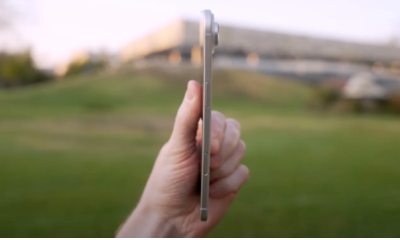
VIDEO: iPhone 17 Air Leak Reveals Ultra-Thin Design: A Bold Leap Beyond the iPhone 16 Pro

How U.S. Remittance 5% Tax Bill Could Impact Kenyan Diaspora: What You Need to Know

Motorola Launches $1,300 Razr Ultra Foldable Smartphone with AI Features, Swarovski-Enhanced Earbuds

-
 Tech2 years ago
VIDEO: iPhone 17 Air Leak Reveals Ultra-Thin Design: A Bold Leap Beyond the iPhone 16 Pro
-
 News1 year ago
How U.S. Remittance 5% Tax Bill Could Impact Kenyan Diaspora: What You Need to Know
-
 Tech2 years ago
Motorola Launches $1,300 Razr Ultra Foldable Smartphone with AI Features, Swarovski-Enhanced Earbuds
-

 Insurance Basics2 years ago
Popular Apps May Be Secretly Tracking Your Driving – And Raising Your Insurance Rates
-

 Tech2 years ago
Motorola Razr Ultra (2025) Launches With Free 1TB Storage Upgrade
-

 News2 years ago
What would you do if your Gold Digger girlfriend behaved like this?
-

 News2 years ago
Box Office: ‘Sinners’ Holds No. 1 Spot With $13M Friday; ‘The Accountant 2’ Debuts With $9.4M
-
 Insurance Basics2 years ago
Florida House Passes ‘Pam Rock Act’ Requiring Dog Registry and $100K Liability Insurance